How to Propagate Drooping forked fern?
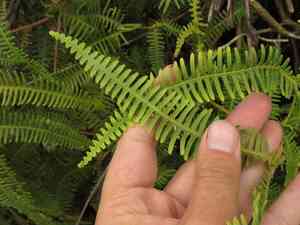
The drooping forked fern, an enduring evergreen, frequently inhabits damp, shadowed environments. For multiplying this plant, splitting is the most efficient technique. Gently detach the rhizomes, making sure every segment possesses robust fronds and roots. Immediately replant them in adequately draining, somewhat acidic earth, maintaining moisture for the divisions until they are firmly rooted. This variety flourishes with little attention once acclimated, rendering it appropriate for inexperienced horticulturists.
Optimal Period for Propagating Drooping Forked Fern
Propagation Method
Division
Propagation Period
Spring,Autumn
Tools Required for Drooping Forked Fern Propagation
Sharp Knife or Garden Scissors
Utilized for precise separation of drooping forked fern rhizomes. Ensures clean cuts, minimizing harm to plant sections, vital for successful propagation.
Rooting Hormone
Facilitates the development of new roots from the divided portions of drooping forked fern. It promotes root formation, increasing the likelihood of successful establishment post-division.
Sterilizing Solution
Employed to sanitize tools before and after use to prevent disease transmission among the separated sections of drooping forked fern. Maintaining sterile conditions is crucial for plant well-being.
Potting Mix
A well-draining substrate is essential for planting the divided sections of drooping forked fern. It offers the correct balance of moisture and air circulation to encourage root development.
Watering Can with Fine Rose
Used to gently irrigate the divided sections, preventing soil compaction and ensuring uniform moisture distribution. Careful watering is important for newly divided plants.
Markers or Labels
Assists in identifying the various divisions of drooping forked fern during the propagation process, enabling proper tracking and care.
Plastic Bags or Humidity Domes
Utilized to create a moist environment around the freshly divided sections of drooping forked fern, which helps prevent dehydration and promotes root growth.
Pruning Shears
Useful for trimming any dead or damaged fronds from drooping forked fern before and after division, maintaining plant health and appearance.
Method for Propagating Drooping Forked Fern
Propagation Type
Easy
Post-Propagation Care for Your Drooping Forked Fern
Post-Propagation Care for Your Drooping Forked Fern
Following propagation, maintain a high-humidity environment and position the plants in a shaded area with indirect sunlight. Keep the soil consistently moist but avoid saturation. Monitor the plants for signs of stress and adjust water and humidity levels as needed. Fertilize lightly with a diluted, balanced fertilizer every 4-6 weeks during the growing season.
Common Errors to Avoid When Propagating Drooping Forked Fern
Overwatering
Excessive moisture can lead to root rot and fungal infections, both of which can severely harm or kill drooping forked fern.
Incorrect Soil Type
Using soil that lacks proper drainage can cause water to accumulate around the roots, leading to similar problems as overwatering.
Insufficient Light
Placing drooping forked fern in a location with inadequate light can hinder its growth and increase its susceptibility to diseases.
Improper Handling
Rough handling during propagation can damage delicate root systems and fronds, reducing the chances of successful growth.
Advice for Propagating Drooping Forked Fern
Well-draining Soil
Employ a potting mix that allows excess water to drain rapidly to prevent root waterlogging.
Moderate Watering
Water drooping forked fern adequately but ensure the soil is not perpetually soggy. Allow the top layer of soil to dry before rewatering.
Indirect Light
Position drooping forked fern in a bright spot with indirect sunlight to encourage healthy growth without causing leaf burn.
Gentle Handling
Be cautious when dividing or transplanting drooping forked fern to avoid damaging its fragile roots and fronds.



