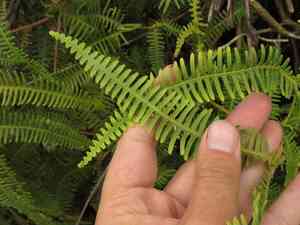
Drooping forked fern (Dicranopteris flexuosa)
Also known as: Forked fern
The Bracken Fern (Pteridium aquilinum) is a fern recognized for its arching, branch-like fronds that create dense, thicket-like formations. Its fronds have a unique V-shaped spread with finely divided leaflets, giving it a delicate, feathery look. This fern flourishes in humid settings, often blanketing forest floors, which helps stabilize soil and retain moisture. It is visually striking and plays a crucial role in its ecosystem by providing cover and aiding in water and soil conservation.
In This Article
Attributes of Drooping forked fern
Lifespan
Perennial
Plant Type
Fern
Plant Height
Up to 1 meter
Spread
N/A
Leaf Color
Green
Flower Size
N/A
Flower Color
N/A
Images of Drooping forked fern
Quickly Identify Drooping forked fern
1
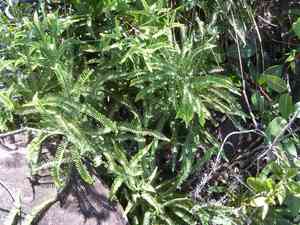
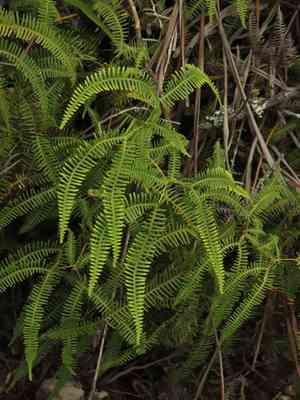
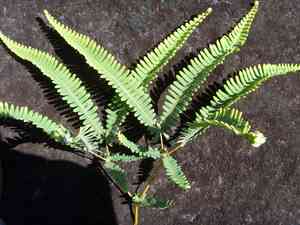
This fern can be identified by its dichotomously forked fronds that often form dense mats or thickets. The fronds are typically narrow and have a distinctive V-shape at each fork.
Scientific Classification of Drooping forked fern
Phylum
Vascular plants
Class
Ferns
Order
Gleicheniales
Family
Forked ferns
Genus
Dicranopteris
Species
Drooping forked fern
Planting and Growing of Drooping forked fern
Care Difficulty
Hard
Watering Schedule
Every 3 days
Sunlight Requirements
Partial sun
Sunshine Duration
4-8 hours
Ideal Temperature
68-77℉
Soil Type
Potting Mix, Peat Mix
Soil pH
6.5-7.5
Fertilizer Type
Balanced
Pruning Season
Spring, Summer
Pruning Area
Branches, Leaves
Pruning Frequency
2 times a year
Repotting Season
Spring
Pot Type
Plastic, Ceramic
 How to Water Drooping forked fern?
The watering amount for Dicranopteris flexuosa should be moderate, around 500ml each time. This amount ensures the soil is sufficiently moist without waterlogging it. Aim for thorough watering, allowing excess water to drain freely from the pot base.
What are the symptoms of an underwatered Drooping forked fern?
›
What should I do if my Drooping forked fern is not getting enough water?
›
What are the symptoms of an overwatered Drooping forked fern?
›
How to save an overwatered Drooping forked fern?
›
 What Are the Sunlight Requirements for Drooping forked fern?
Partial sun to full shade light conditions are ideal. This range allows Dicranopteris flexuosa to conduct efficient photosynthesis without risking dehydration or sunburn, promoting healthy foliage and vigorous growth.
How much sunlight is ideal?
›
What is the best way to achieve ideal sunlight conditions?
›
Benefits of receiving ideal sunlight
›
 What Is the Ideal Temperature Range for Drooping forked fern?
The ideal temperature range for Dicranopteris flexuosa is between 68°F and 77°F. This range supports optimal growth and photosynthesis, providing the plant with an environment that mimics its natural habitat. Consistent temperatures within this range can help in maintaining healthy foliage and promoting vigorous growth.
 What Soil is Best for Drooping forked fern?
Dicranopteris flexuosa thrives best in nutrient-rich soil, which helps promote its lush growth and green foliage. Soils that are high in organic matter provide essential nutrients, encouraging vigorous plant development. An impeccable drainage system is crucial for Dicranopteris flexuosa since excess water can lead to root rot. A sandy or loamy soil type ensures that water doesn't stagnate near the roots, fostering a healthy root system. Although drainage is vital, the soil should also retain some moisture to keep the roots hydrated. Loamy soils, with their balanced texture, maintain this requisite moisture, ensuring that the plant does not stress during dry spells.
 How to Fertilize Drooping forked fern?
Dicranopteris flexuosa, also known as the flexible fork fern, requires a balanced approach to fertilization. When using liquid fertilizer, dilute it to half the recommended strength to prevent over-fertilizing. Apply around 1 teaspoon per square foot when using slow-release granular fertilizers. These amounts ensure the plant receives adequate nutrients without overwhelming its roots.
 How to Prune Drooping forked fern?
Begin pruning by identifying any dead or damaged fronds and carefully removing them with clean, sharp scissors or pruning shears. Ensure to cut at the base of the frond, close to its junction with the main stem. Regular trimming of healthy fronds can also be done to shape the plant and encourage bushier growth. Promote airflow by thinning out areas that appear overcrowded. Use clean, sharp scissors or pruning shears to make precise cuts. Disinfect tools before and after pruning to prevent disease spread. Have a pair of gardening gloves to protect your hands against the plant’s rough texture.
More About Pruning Techniques→
 How to Propagate Drooping forked fern plant?
1
To propagate Dicranopteris flexuosa by seeds, collect mature spores from the fronds during the late summer. Dry them in a warm, shaded area before sowing in a well-draining soil mix in early spring.
2
Divide the plant in its dormant season, in early spring. Carefully dig up the root clump and separate it into sections with intact roots, ensuring each has a frond stem attached.
3
Replant divided sections immediately in a suitable location or pots. Ensure each section is planted at the same soil depth and water thoroughly to settle the soil around the roots.
 How to Repot Drooping forked fern plant?
1
Repotting for Dicranopteris flexuosa is ideally done when you notice the roots beginning to circle around the pot's base or when the plant appears to be outgrowing its current container. Indications include slowed growth, wilting despite watering, or visible roots coming out of drainage holes.
2
Select a pot that is one size larger than the current one, ensuring it has ample drainage holes to prevent waterlogging. The material of the pot should complement your watering habits—clay pots dry out faster, making them ideal for those who tend to over-water.
3
Opt for a well-draining peat-based soil mix, which allows for adequate moisture retention without becoming waterlogged. This type of soil provides the necessary aeration for roots, supporting healthy growth and minimizing the risk of root rot.



