How to Propagate Anderson's larkspur?
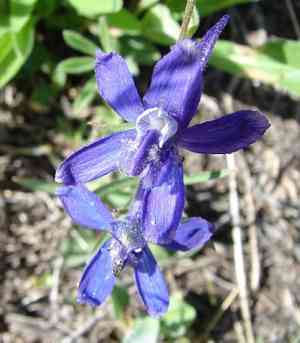
Anderson's larkspur flourishes in adequately draining substrate under conditions ranging from partial to complete sun exposure. For reproduction, employ seeding techniques; the seeds necessitate a duration of cold stratification to guarantee effective sprouting. Following stratification, embed the seeds in a blend of sand and potting medium, making certain they are superficially concealed. Preserve steady dampness without saturating the soil. Periodically inspect for indications of development and confirm that the young plants receive ample illumination and air movement.
Optimal Period for Propagating Anderson's Larkspur
Propagation Method
Seeding
Propagation Period
Spring
Tools Utilized in Anderson's Larkspur Propagation
Seed Tray
Employed for planting anderson's larkspur seeds in a regulated setting. Facilitates the ideal depth and spacing necessary for seed sprouting and development.
Sterilized Potting Mix
Guarantees a pathogen-free medium for seed germination. It offers the essential aeration and drainage crucial for anderson's larkspur seeds.
Plastic Dome Cover
Sustains humidity and warmth, creating a miniature greenhouse effect. This aids in quicker and more efficient germination of anderson's larkspur's seeds.
Spray Bottle
Utilized for misting seeds and young sprouts. Ensures the growing medium stays damp without excessive watering, vital for the delicate anderson's larkspur seeds.
Heating Mat
Delivers consistent warmth from below, which is fundamental for the germination process of anderson's larkspur, particularly in cooler climates.
Seed Dibber
Assists in the precise placement of seeds at the correct depth. Important for ensuring the delicate anderson's larkspur seeds are sown at the ideal depth for germination.
Labels and Marker
Crucial for tracking various seed types and planting dates. Helps in accurately monitoring the growth progress of anderson's larkspur.
Fine Mesh Sieve
Used to lightly cover seeds with a thin layer of potting mix or sand. This helps protect anderson's larkspur seeds without burying them too deeply.
How to Propagate Anderson's Larkspur?
Propagation Type
Simple
Caring for Your Newly Propagated Anderson's Larkspur
Caring for Your Newly Propagated Anderson's Larkspur
After propagation, anderson's larkspur needs well-draining soil and moderate watering. Ensure plants receive full sun to partial shade. Regularly inspect for pests and diseases, applying suitable treatments if necessary. Mulch around the plant bases to retain moisture and suppress weeds. Fertilize with a balanced, slow-release product during the growing season to support healthy growth and vibrant blooms.
Common Errors to Avoid When Propagating Anderson's Larkspur
Excessive Watering
This can lead to root decay and other fungal infections, which are detrimental to the health and successful propagation of anderson's larkspur.
Incorrect Soil pH
Employing soil that is either too acidic or too alkaline can impede nutrient uptake, resulting in poor growth and failed propagation.
Insufficient Light
Providing either too much intense sunlight or inadequate light can stress the plant, impacting its growth and ability to propagate successfully.
Using Old Seeds
Seeds that are not fresh may have reduced viability, leading to lower germination rates and less successful propagation.
Advice For Propagating Anderson's Larkspur
Well-Draining Soil
Ensure the soil used drains effectively to prevent waterlogging, which can help avoid root diseases.
Moderate Watering
Water the plant moderately, keeping the soil moist but not saturated, to prevent root rot and ensure healthy growth.
Optimal Soil pH
Maintain a soil pH around 6.0-7.0, as this range is optimal for nutrient absorption and healthy growth.
Proper Light Conditions
Provide moderate sunlight, such as filtered light or partial shade, to mimic the plantâs natural habitat and promote healthy propagation.
Fresh Seeds or Healthy Cuttings
Use fresh seeds or healthy cuttings to improve the chances of successful germination and rooting.



