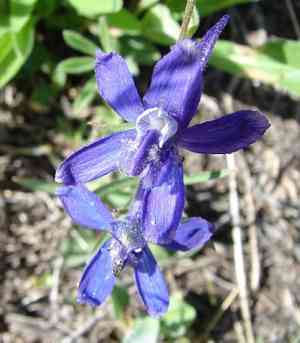
Anderson's larkspur (Delphinium andersonii)
Also known as: Sagebrush larkspur
Anderson's larkspur (Delphinium andersonii) is characterized by its tall, upright stems adorned with clusters of vibrant blue to violet flowers, each featuring a distinctive spur. The plant's deeply lobed leaves are a notable feature, contributing to its graceful appearance. Adapted to dry, rocky environments, Anderson's larkspur is commonly found in sagebrush scrub, pinyon-juniper woodlands, and open forests. It prefers well-drained soils and thrives at elevations between 3,000 and 9,000 feet, particularly in the mountainous regions of California, Nevada, and Oregon. Its robust root system helps it endure the variable conditions of its native habitats.
In This Article
Attributes of Anderson's larkspur
Lifespan
Perennial
Plant Type
Herb
Plant Height
20 to 80 cm
Spread
Typically not applicable as it grows with tall, slender, unbranched stems
Leaf Color
Green
Flower Size
2 to 4 cm
Flower Color
Blue, Violet
Images of Anderson's larkspur
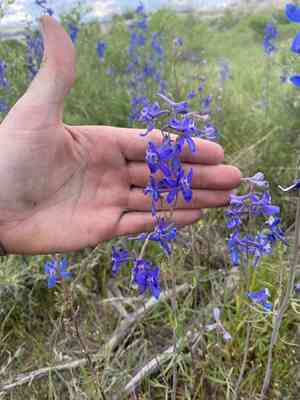
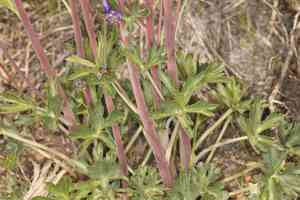
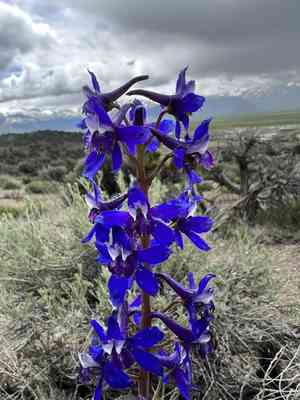
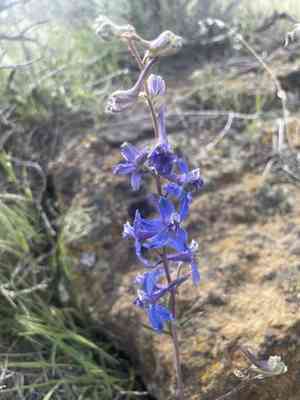
Quickly Identify Anderson's larkspur
1
Identify Delphinium andersonii by its tall, unbranched, slender stems and distinctive blue to violet flowers. The plant often has deeply lobed leaves and blooms from late spring to early summer.
Scientific Classification of Anderson's larkspur
Phylum
Vascular plants
Class
Dicotyledons
Order
Ranunculales
Family
Buttercup
Genus
Larkspurs
Species
Anderson's larkspur
Planting and Growing of Anderson's larkspur
Care Difficulty
Moderate
Watering Schedule
Every 3 days
Sunlight Requirements
Partial sun
Sunshine Duration
6-10 hours
Ideal Temperature
60-75℉
Soil Type
Potting Mix, Peat Mix
Soil pH
6.5-7.5
Fertilizer Type
Balanced
Pruning Season
Spring, Summer
Pruning Area
Branches, Leaves
Pruning Frequency
Once a year
Repotting Season
Spring
Pot Type
Plastic, Ceramic
 How to Water Anderson's larkspur?
Delphinium andersonii prefers its soil to be kept slightly moist but not soggy. It's important to ensure that the soil drains well, as standing water can cause root rot. Water deeply but infrequently, ensuring the soil dries somewhat between waterings.
What are the symptoms of an underwatered Anderson's larkspur?
›
What should I do if my Anderson's larkspur is not getting enough water?
›
What are the symptoms of an overwatered Anderson's larkspur?
›
How to save an overwatered Anderson's larkspur?
›
 What Are the Sunlight Requirements for Anderson's larkspur?
Delphinium andersonii ideally requires partial sun, meaning they should enjoy a blend of shade and direct sunlight. This balance promotes healthy growth, vibrant foliage, and an increase in the number of blossoms during blooming season.
How much sunlight does Delphinium andersonii need daily?
›
What solutions exist for achieving ideal light conditions?
›
What benefits are there from ideal light exposure?
›
 What Is the Ideal Temperature Range for Anderson's larkspur?
The ideal temperature range for Delphinium andersonii growth is between 60°F and 75°F. Within this range, the plant can effectively carry out processes such as photosynthesis and nutrient uptake, leading to robust growth and flowering. Exceeding these limits may cause growth stress or reduced flower production.
 What Soil is Best for Anderson's larkspur?
Delphinium andersonii thrives in well-draining soil, which prevents waterlogging that can lead to root rot. The ability of water to drain off efficiently keeps the roots healthy, thus promoting vigorous growth and blooming. A nutrient-rich environment is essential for Delphinium andersonii, ensuring the soil is fertile with organic matter. This enriches the plant's growth by providing necessary nutrients, leading to robust stems and lush foliage. While drainage is crucial, retaining some moisture helps provide a consistent level of hydration. Loam and sandy loam balance moisture retention with porosity, ensuring that roots have access to water without drying out entirely.
 How to Fertilize Anderson's larkspur?
Delphinium andersonii requires a careful balance of nutrients. Typically, when using liquid fertilizer, dilute to one-quarter strength to prevent burning the roots. For slow-release granules, apply approximately 30 grams per square meter to ensure steady growth without overwhelming the plant.
 How to Prune Anderson's larkspur?
Be cautious not to remove more than one-third of the plant at a time. Over-pruning can stress the plant and hinder its growth, making it more susceptible to disease. Discard any pruned material away from the garden area to avoid attracting pests or spreading pathogens. Proper disposal is key to maintaining garden health. After pruning, monitor the plant for signs of stress or disease. Regularly inspecting your plant allows you to catch potential issues early and address them promptly. Take note of your local climate and adjust your pruning practices accordingly. Some climatic conditions may require more or less pruning to optimize growing conditions.
More About Pruning Techniques→
 How to Propagate Anderson's larkspur plant?
1
Choose healthy Delphinium andersonii seeds from a reputable source. Inspect the seeds for any signs of damage or disease to ensure successful germination.
2
Prepare a well-draining soil mix. This typically involves combining quality potting soil with perlite or sand. The soil should be slightly acidic to neutral in pH.
3
Sow the Delphinium seeds in the seed tray, lightly covering them with soil. Maintain a consistent temperature and humidity level, ideally using a propagator lid.
 How to Repot Anderson's larkspur plant?
1
Observe for signs such as roots growing out of the drainage holes or a slowing down in growth. These are clear indicators that your Delphinium andersonii needs repotting. Ideally, repot during early spring when the plant is ready to initiate new growth. This timing allows the plant to recuperate quickly and take full advantage of the growing season.
2
Select a pot that is one size larger than the current one. Ensure it has ample drainage holes to prevent waterlogging. The right pot provides enough room for root expansion while enhancing drainage and soil aeration, essential for robust growth. Clay or ceramic pots can provide stability and moisture retention advantages.
3
Opt for a high-quality loamy soil mix that offers excellent drainage and aeration. Include perlite or sand to improve drainage. Such a soil composition prevents root rot and secures a steady supply of nutrients and oxygen to the roots, promoting healthier and lusher growth.
Toxicity
Ingestion
WARNING
The judgment on toxicity and danger is for reference only. We DO NOT GUARANTEE any accuracy of such judgment. Therefore, you SHALL NOT rely on such judgment. It is IMPORTANT TO SEEK PROFESSIONAL ADVICE in advance when necessary.
Learn More About Anderson's larkspur Diseases
Anthracnose
Bacterial Leaf Spot
Bacterial Soft Rot
Bacterial Wilt
Crown Gall
Cyst Nematode
Damping-off
Downy Mildew
Drought Stress
Fusarium Wilt
Gray Mold
Leaf Curl
Leaf Spot
Mosaic
Nutrient Deficiency
Nutrient Toxicity
Powdery Mildew
Root Rot
Root-knot Nematode
Rusts
Sooty Mold
Spider Mites
Temperature Stress
Thrips Damage
White Mold



