How to Propagate Japanese thistle?
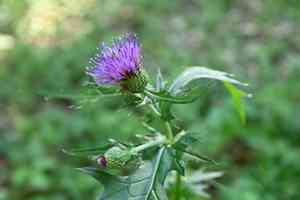
Originating from Japan and various Asian regions, japanese thistle is recognized for its thorny look and vivid violet blossoms. Reproducing this variety via seeding proves successful, and cultivators ought to ensure the provision of adequately draining earth. It is vital to sustain uniform dampness without oversaturation. Seeds may be gently blanketed with soil since they require contact to ensure development. Spacing out is essential as young plants mature, allowing space for the strongest specimens to flourish. Despite its fragility in initial phases, japanese thistle, once rooted, transforms into a robust feature in landscapes.
What Is the Best Time To Propagate Japanese Thistle?
Propagation Type
Sowing
Propagation Season
Spring
What Tools Are Used in Japanese Thistle Propagation?
Seed trays
Seed trays are vital for germinating japanese thistle seeds. They offer a structured environment where numerous seeds can be planted at consistent depths and spacing. Using seed trays ensures each seed has ample room to grow without early competition, which is especially important for japanese thistle, allowing individual plants to be easily monitored and managed.
Fine vermiculite or seed-starting mix
A fine vermiculite or seed-starting mix is essential for japanese thistle seed germination. These mediums provide excellent air circulation and moisture retention, creating an optimal environment for japanese thistle seeds to sprout. Proper aeration is crucial to prevent fungal diseases, which can devastate young seedlings. Additionally, these materials are typically sterile, reducing the risk of soil-borne pathogens affecting the seeds.
Misting bottle or gentle watering system
A misting bottle or a gentle watering system is important for keeping japanese thistle seeds and seedlings moist without disturbing them with strong water flow. Consistent, gentle misting helps maintain the necessary humidity around japanese thistle, promoting successful germination and preventing the dislodging of seeds that can occur with more forceful watering methods. This tool is particularly beneficial during the delicate phase of sprout development.
Grow lights or a well-lit space
Grow lights or placement in a well-lit area is crucial when propagating japanese thistle from seeds, especially if natural light conditions are suboptimal. Consistent, sufficient lighting promotes stronger and healthier development. Grow lights offer the advantage of controlling light exposure duration and intensity, which can be adjusted to optimize the growth phase of japanese thistle seedlings.
How to Propagate Japanese Thistle?
Propagation Type
Easy
How to Care for Your Newly Propagated Japanese Thistle?
How to Care for Your Newly Propagated Japanese Thistle?
After propagation, provide japanese thistle with care suited to its growth requirements. This includes placing it in full sun or partial shade, watering regularly but allowing the soil to dry slightly between waterings to prevent root rot. Japanese thistle thrives in well-drained soil and needs minimal fertilization. Periodically check for pests and diseases and address any issues promptly to ensure vigorous growth.
Common Mistakes to Avoid When Propagating Japanese Thistle
Over-watering
Excessive moisture can lead to root rot in japanese thistle, impeding its ability to establish a healthy root system.
Deep planting
Planting japanese thistle cuttings or seeds too deeply can hinder proper germination and growth due to insufficient access to light and air.
Ignoring soil requirements
Japanese thistle thrives in well-draining soil; neglecting this can result in waterlogged conditions unfavorable to the plant's health.
Neglecting cutting health
Using damaged or diseased cuttings for propagation can reduce the success rate and spread pathogens to japanese thistle plants.
Overcrowding
Densely planting japanese thistle seeds or cuttings may lead to competition for resources, affecting overall plant vigor and development.
Tips For Propagating Japanese Thistle
Healthy cutting selection
Choose robust, disease-free cuttings from japanese thistle to enhance the likelihood of successful root development.
Soil preparation
Ensure the planting medium is well-draining and fertile to support the growth of japanese thistle.
Proper planting depth
Sow japanese thistle seeds or plant cuttings at the correct depth, which should be shallow enough for light to reach the seeds and keep cuttings upright.
Moderate watering
Keep the soil of japanese thistle moist but not waterlogged to prevent root rot and encourage strong root growth.
Spacing
Provide adequate space between each japanese thistle plant to ensure sufficient access to sunlight, nutrients, and air circulation.



