How to Propagate Spineless hornwort?
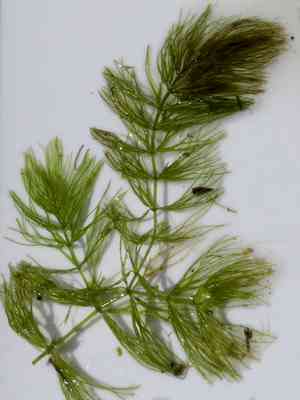
Spineless hornwort predominantly reproduces via seeding. To achieve successful cultivation, cultivators must ensure uniform dispersal of the seeds within nutrient-rich aquatic substrate, abundant in organic compounds. Sustaining ideal water conditions is vital, as consistent water characteristics foster germination and initial growth. Consistent illumination assists in the sprouting and well-being of the young plants, mimicking the natural aquatic habitats where this species flourishes.
When Is the Best Time to Propagate Spineless Hornwort?
Propagation Type
Sowing
Propagation Season
Spring
What Tools Are Used in Spineless Hornwort Propagation?
Aquarium or Pond Setup
This involves a water container or a controlled aquatic environment, vital for spineless hornwort propagation. As an aquatic plant, an aquarium or pond setup allows for proper submersion, mimicking its natural habitat. This setup supports the growth of new shoots or fragments in a controlled setting, ensuring suitable water chemistry and light levels for its health and proliferation.
Fine-meshed Netting
Fine-meshed netting or a planting basket is used to hold spineless hornwort while allowing it ample space to expand. This tool is especially useful for preventing the plant from drifting in a larger water body and for managing its growth within a defined area. The mesh size should be small enough to contain plant fragments yet large enough for water circulation.
Substrate
Although spineless hornwort does not root, a fine-grained substrate can be beneficial in an aquarium or pond to imitate a natural water body bottom, contributing to a more stable environment. The substrate can also encourage nutrient accumulation, which can aid the plant's growth, even without direct rooting.
Water Quality Test Kit
This kit is essential for maintaining appropriate water parameters for spineless hornwort's health during propagation. Spineless hornwort can be sensitive to pH, temperature, and nutrient level changes. A water quality test kit enables the gardener to closely monitor these parameters and adjust as needed to ensure optimal conditions for propagation and healthy growth.
Plant Shears
Plant shears or scissors are necessary for cleanly cutting spineless hornwort fragments during propagation. Clean cuts are important to prevent damage to plant tissues, which could lead to decay or disease. Proper cutting helps manage size, health, and encourages new growth.
Storage Containers
These are used for holding plant segments before planting them in the propagation environment. Storage containers should be filled with water from the same source as the propagation environment to prevent shock from differing water parameters, providing a temporary yet crucial space for plant cuttings.
How to Propagate Spineless Hornwort?
Propagation Type
Easy
How to Care for Your Newly Propagated Spineless Hornwort?
How to Care for Your Newly Propagated Spineless Hornwort?
Once seeds have germinated and seedlings are established, gradually move spineless hornwort to its intended aquatic environment. Ensure stable water conditions, including temperature, pH, and hardness. Regularly check for algae and maintain a balanced ecosystem to support spineless hornwort's growth. Prune as needed to encourage healthy growth and prevent overcrowding.
Common Mistakes to Avoid When Propagating Spineless Hornwort
Insufficient water
As spineless hornwort is an aquatic plant, underestimating its water needs during propagation can lead to dehydration and stunted growth. Insufficient water reduces the plant's ability to perform photosynthesis effectively, hindering growth and vitality.
Poor light conditions
Exposing spineless hornwort to too much or too little light can impede its development. Excessive light can cause algae growth on the plant, which competes for nutrients and can suffocate spineless hornwort. Conversely, insufficient light hinders photosynthesis, crucial for spineless hornwort's growth and health.
Incorrect water quality
Spineless hornwort requires specific water conditions, including pH and hardness. Using water that is too hard or too soft can prevent spineless hornwort from absorbing necessary minerals and nutrients, affecting its growth and ability to propagate.
Tips For Propagating Spineless Hornwort
Consistent water quality
Maintain a consistent water quality suitable for spineless hornwort, including appropriate pH levels and hardness. Regularly testing and adjusting water parameters ensures that spineless hornwort receives optimal conditions for growth and reproduction.
Optimal light conditions
Provide spineless hornwort with moderate lighting that is neither too intense nor too dim. This balances the plant's needs for photosynthesis with preventing excessive algae growth, which can be harmful.
Frequent monitoring
Regularly check on spineless hornwort's health and growth, making environmental adjustments as necessary. Monitoring helps in catching any issues early, such as changes in water quality or signs of disease, allowing for timely interventions.



