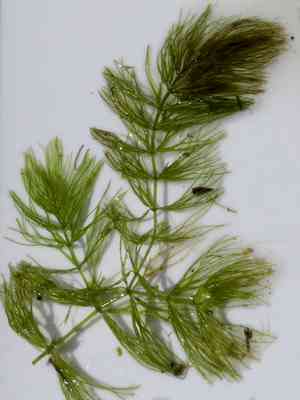
Spineless hornwort (Ceratophyllum echinatum)
Also known as: Prickly coontail
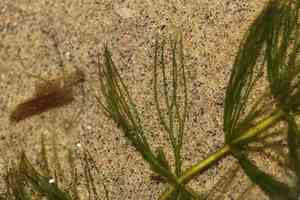
Ceratophyllum echinatum, known as spiny hornwort, is an aquatic plant that typically lacks roots and has freely branching stems that can reach lengths of 30 to 400 cm. The submerged leaves are arranged in whorls of 5 to 12 and are finely divided with spiny edges. The small, inconspicuous flowers lack petals but have 3 to 15 sepals, which can be mistaken for petals.
In This Article
Attributes of Spineless hornwort
Lifespan
Perennial
Plant Type
Herb
Plant Height
0.5 to 3 meters (length in submerged conditions)
Spread
Not applicable for submerged plants
Leaf Color
Green
Flower Size
1 to 3 millimeters
Flower Color
Red Brown
Images of Spineless hornwort
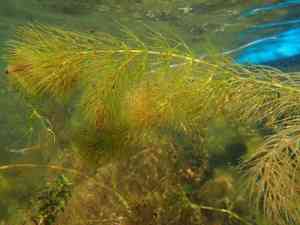
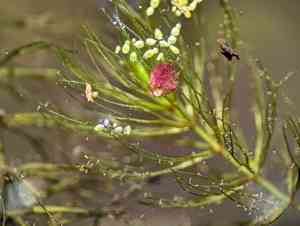
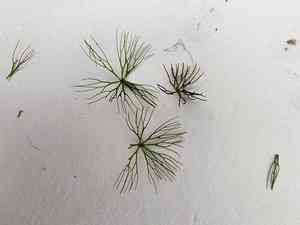
Quickly Identify Spineless hornwort
1
Identifying Prickly hornwort can be done by observing its finely divided, fan-shaped leaves which are arranged in whorls. The plant does not have true roots but has rhizoids that anchor it to the substrate. Additionally, it produces small flowers and prickly fruits.
Scientific Classification of Spineless hornwort
Phylum
Vascular plants
Class
Dicotyledons
Order
Ceratophyllales
Family
Hornworts
Genus
Coontails
Species
Spineless hornwort
Planting and Growing of Spineless hornwort
Care Difficulty
Easy
Watering Schedule
Every 4 days
Sunlight Requirements
Partial sun
Sunshine Duration
6-10 hours
Ideal Temperature
72-79℉
Soil Type
Potting Mix, Peat Mix
Soil pH
6.5-7.5
Fertilizer Type
Balanced
Pruning Season
Spring, Summer
Pruning Area
Branches, Leaves
Pruning Frequency
Once a year
Repotting Season
Spring
Pot Type
Plastic, Ceramic
 How to Water Spineless hornwort?
Ceratophyllum echinatum thrives best with consistent hydration levels. For this aquatic plant, aim to maintain water that submerges the plant completely, with about 500ml in each care session ensuring the plant's roots remain wet but not suffocated. It’s crucial to avoid letting the water stagnate to prevent bacterial growth.
What are the symptoms of an underwatered Spineless hornwort?
›
What should I do if my Spineless hornwort is not getting enough water?
›
What are the symptoms of an overwatered Spineless hornwort?
›
How to save an overwatered Spineless hornwort?
›
 What Are the Sunlight Requirements for Spineless hornwort?
Partial sun exposure provides the ideal range for Ceratophyllum echinatum. This range ensures photosynthesis proceeds optimally without risking dehydration or sun damage, promoting lush, robust growth in this aquatic plant.
Ideal Daylight Hours
›
Supplementary Light Sources
›
Shade Management
›
 What Is the Ideal Temperature Range for Spineless hornwort?
For the optimal growth of Ceratophyllum echinatum, maintaining a temperature range between 72°F and 79°F is essential. This range ensures that the plant can perform physiological activities effectively, such as photosynthesis and nutrient uptake. Keeping within this temperature range also minimizes stress on the plant, allowing it to thrive.
 What Soil is Best for Spineless hornwort?
Ceratophyllum echinatum thrives in nutrient-rich substrate that can supply it with essential minerals. This kind of soil promotes strong growth and resilience, ensuring the plant remains healthy and vibrant. The plant benefits from soil that allows good air circulation around its roots. Loamy soil provides such aeration, preventing root rot and enhancing growth. A consistently moist soil environment is crucial, as Ceratophyllum echinatum does not tolerate drying out well. Maintaining moisture helps the plant photosynthesize effectively.
 How to Fertilize Spineless hornwort?
For Ceratophyllum echinatum, use a balanced liquid fertilizer diluted to half strength, approximately 1 ml per liter of water. Due to its aquatic nature, ensure the fertilizer is evenly dispersed in the water to provide consistent nutrient access.
 How to Prune Spineless hornwort?
Before pruning, examine your Ceratophyllum echinatum to identify areas of dense or overgrown foliage. Target these areas for pruning to encourage a balanced and visually appealing growth pattern. Begin by gently removing any dead or decaying parts of the plant. Trim back overgrown stems, aiming for a uniform height. If the plant anchors in a substrate, ensure not to disturb the roots while pruning above water.
More About Pruning Techniques→
 How to Propagate Spineless hornwort plant?
1
Seeds can be collected from mature plants of Ceratophyllum echinatum. Carefully gather seeds once the plant has reached the end of its blooming cycle, ensuring that they are ripe.
2
Select healthy stems with no disease or damage. Use sterilized sharp pruning shears to cut 4-6 inches sections. Remove any lower leaves to prevent rot when planted.
3
For cuttings, plant them in a well-draining substrate with a depth that supports the cuttings without collapsing. Keep the medium evenly moist for optimal growth.
 How to Repot Spineless hornwort plant?
1
Ceratophyllum echinatum, also known as Spineless Hornwort, should be repotted when you notice its growth is stunted, roots are overcrowded, or the water quality deteriorates quickly. These signals imply that the plant has outgrown its current container and needs fresh soil and space to thrive. Repotting during the active growing seasons of spring or summer gives the plant ample time to adjust and flourish.
2
Select a pot that is slightly larger than the current one, with no drainage holes since this is an aquatic plant. The additional space will accommodate future growth and improve water circulation, contributing to healthier plant development. Wide pots are preferred as they provide room for the plant to spread horizontally, mimicking its natural environment.
3
Use a nutrient-rich and dense aquatic soil to ensure that Ceratophyllum echinatum receives ample nutrition. Such soil helps anchor the plant firmly, preventing it from floating away in the water. The dense characteristics of aquatic soil also make it ideal for holding nutrients accessible to the plant's roots, boosting healthy growth.



