How to Propagate Emory's sedge?
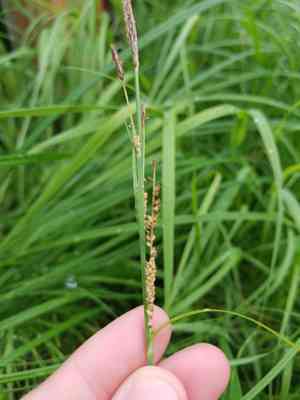
Emory's sedge flourishes in damp, gritty substrates, frequently encountered beside riverbanks and marshlands. For propagation via separation, gently divide clumps when transplanting, making certain each segment possesses ample roots and nascent stems. This technique preserves genetic uniformity and encourages robust development. Position the separated portions in appropriate moist environments for optimal outcomes.
Optimal Time for Emory's Sedge Propagation
Propagation Type
Division
Propagation Season
Spring,Autumn
Tools for Emory's Sedge Propagation
Spade
Utilized to excavate and carefully extract emory's sedge clumps from the earth. Its sharp, flat edge ensures clean cuts, minimizing root damage during separation.
Hori Hori knife
Perfect for dividing the emory's sedge clump into smaller portions. Its serrated edge enables precise root cutting, aiding successful plant re-establishment.
Garden fork
Assists in gently lifting and separating emory's sedge roots, ensuring minimal disruption to the root system, vital for the plant's health and vitality.
Pruning shears
Employed to trim damaged or overly long roots before replanting emory's sedge sections. This fosters healthy root development and prevents rot.
Root stimulator
A solution applied to divided emory's sedge sections to encourage rapid root growth and lessen transplant shock, ensuring vigorous establishment post-propagation.
Plant labels
Crucial for marking different emory's sedge sections after division and planting, to track their growth and care requirements.
Watering can with fine rose
Delivers gentle and even watering to newly planted emory's sedge sections, ensuring the soil stays moist but not waterlogged, promoting healthy root establishment.
Propagating Emory's Sedge
Propagation Type
Easy
Caring for Newly Propagated Emory's Sedge
Caring for Newly Propagated Emory's Sedge
Post-propagation, ensure divisions are kept in partial shade and receive consistent moisture. Apply mulch around plants to retain soil moisture and suppress weeds. Monitor for signs of stress or pests. Once established, emory's sedge tolerates wetter conditions and thrives along water edges or in moist, well-drained locations.
Common Errors to Avoid When Propagating Emory's Sedge
Overwatering
Excessive moisture can lead to root rot, which is detrimental to emory's sedge's health and hinders successful propagation.
Improper soil choice
Using poorly draining soil can cause waterlogging, which is harmful to emory's sedge's root system.
Insufficient light
Providing inadequate light can stunt emory's sedge's growth and result in weak plants less likely to thrive.
Ignoring spacing requirements
Planting emory's sedge too close together can lead to competition for resources, resulting in poor growth and propagation failures.
Incorrect division timing
Dividing emory's sedge at the wrong time can stress the plant, reducing its ability to establish and grow successfully.
Tips For Propagating Emory's Sedge
Use well-draining soil
Ensure the soil mix allows for proper drainage to prevent waterlogging and root rot.
Water appropriately
Maintain consistent soil moisture without overwatering, allowing it to dry out slightly between waterings.
Provide adequate light
Place emory's sedge in an area with ample natural light to support robust growth and development.
Space plants properly
Follow recommended spacing guidelines to minimize competition and encourage healthy, vigorous growth.
Careful division
When dividing emory's sedge, use a sharp, sterile tool and handle roots gently to reduce stress and promote successful establishment.



