How to Propagate Bailey's sedge?
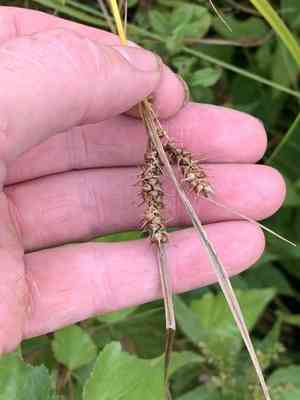
A indigenous marshland species recognized for its decorative grass-like look, bailey's sedge flourishes in damp environments and can be successfully multiplied by splitting. This method involves dividing the thick root masses into smaller segments during the plant's vigorous growth phase. It is crucial to guarantee that every new segment possesses a robust amount of roots and shoots for proper establishment. Following division, these segments ought to be promptly planted at the identical soil level as the parent plant, and regularly irrigated to preserve soil humidity, which is vital for bailey's sedge's root formation and general well-being.
Optimal Period for Bailey's Sedge Propagation
Propagation Method
Division
Propagation Season
Spring,Autumn
Tools Utilized in Bailey's Sedge Propagation
Garden Spade
A garden spade is crucial for excavating bailey's sedge from its current location. It allows for precise handling and minimal damage to the root system, which is vital as bailey's sedge requires maintaining healthy roots during division.
Rooting Hormone Powder
Applying rooting hormone powder to the severed root sections of bailey's sedge can greatly boost root development in new divisions. This encourages faster establishment and more vigorous growth in the propagated plants.
Watering Can with Fine Rose
Post-propagation of bailey's sedge, it's essential to ensure uniform soil moisture, which aids in root recovery and growth. A watering can with a fine rose attachment helps in gently irrigating newly planted divisions without disturbing the soil or harming delicate roots.
Pruning Shears
Sharp, clean pruning shears are necessary for making precise cuts on bailey's sedge's roots during division. This helps prevent disease and minimizes plant stress, increasing the survival rate of new divisions.
Garden Fork
A garden fork is employed to gently lift bailey's sedge from the ground, reducing disturbance to surrounding soil and plants. It's especially useful for loosening soil around the root zone, simplifying plant removal for division while preserving root integrity.
How to Propagate Bailey's Sedge?
Propagation Type
Easy
Caring for Your Newly Propagated Bailey's Sedge
Caring for Your Newly Propagated Bailey's Sedge?
After propagation, ensure bailey's sedge receives consistent moisture, especially during dry spells, to aid root establishment in its new spot. Mulch around the base to retain soil moisture and suppress weeds. Bailey's sedge needs minimal feeding; an annual application of a balanced, slow-release fertilizer should suffice. Monitor for pests or diseases, but generally, bailey's sedge is hardy and resistant to major threats. With proper care, new plants should flourish and spread over time.
Common Errors to Avoid When Propagating Bailey's Sedge
Overwatering
Providing excessive water to bailey's sedge during propagation can lead to root rot and fungal infections, severely damaging the plant's roots and reducing its survival chances.
Deep planting
Placing bailey's sedge rhizomes or seeds too deep in the soil can hinder proper germination and root establishment. This mistake limits their access to essential oxygen, thereby stunting growth.
Using unsuitable soil mix
Employing a soil mix that drains poorly or lacks adequate nutrients can impede the proper development of bailey's sedge roots. Poor soil conditions can also cause nutrient deficiencies, affecting overall plant health.
Tips For Propagating Bailey's Sedge
Appropriate watering
Ensure moderate watering for bailey's sedge, keeping the soil consistently moist but not waterlogged. Proper moisture levels are crucial for root development without risking diseases associated with excessive wetness.
Shallow planting
Plant bailey's sedge rhizomes or seeds just beneath the surface to facilitate easier germination and root emergence. This practice ensures the plant can quickly establish itself and access sunlight and air.
Use well-draining soil
Utilize a well-draining, nutrient-rich soil mix for propagating bailey's sedge. This promotes healthy growth by allowing adequate drainage and providing essential nutrients, creating an optimal growing environment.



