How to Propagate Beavertail grass?
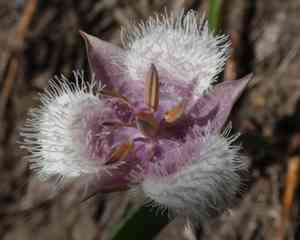
Beavertail grass, a species within the Liliaceae family, is recognized for its appealing flowers. Effective propagation entails utilizing tubers, verifying their health and absence of disease prior to planting. Select a growing medium that drains efficiently to prevent excessive moisture. During the early stages of development, maintain damp soil, progressively decreasing irrigation as the specimen ages. For optimal outcomes, ensure sufficient sunlight and regularly inspect for insect pests.
Optimal Period for Beavertail Grass Propagation
Propagation Type
UtilizeTubers
Propagation Season
Spring
Tools for Beavertail Grass Propagation
Trowel
A trowel is vital for carefully digging and lifting beavertail grass tubers, minimizing harm. Its slender, pointed blade enables precise excavation, crucial for protecting delicate tubers.
Tubers Separator
A separator aids in gently dividing beavertail grass tubers without damage. This tool is especially useful for ensuring each separated piece has viable parts for regrowth.
Rooting Hormone
Applying rooting hormone to separated beavertail grass tubers boosts their chances of successful rooting and growth by stimulating root development.
Potting Mix
A well-draining potting mix that mimics beavertail grass's natural environment supports healthy growth by preventing waterlogging and promoting air circulation.
Planting Trays
Using planting trays allows for organized placement of beavertail grass tubers. It simplifies monitoring and managing the developing plants.
Watering Can with Fine Rose
A watering can with a fine rose attachment ensures gentle, even watering. This prevents soil and tuber disturbance during early propagation stages.
Labeling Stakes
Labeling stakes are essential for tracking different stages of beavertail grass's propagation. Proper labeling ensures specific care instructions are followed for each set of tubers.
How to Propagate Beavertail Grass?
Propagation Type
Simple
Caring for Newly Propagated Beavertail Grass
Caring for Newly Propagated Beavertail Grass
Once tubers begin to grow, continue to water them sparingly, keeping the soil moist but not saturated. Provide partial sunlight and shield young plants from harsh weather. Regularly inspect for pests and diseases, and maintain well-draining soil. Fertilize lightly with a balanced, slow-release fertilizer to encourage robust growth. As beavertail grass matures, adjust care to meet adult plant needs, including gradual acclimatization to outdoor conditions if initially grown indoors.
Common Mistakes to Avoid When Propagating Beavertail Grass
Overwatering
This can lead to root rot, fungal issues, and poor plant health, as beavertail grass prefers well-drained soil.
Planting Depth
Planting beavertail grass seeds too deeply can hinder proper germination, as they require light for growth.
Incorrect Soil
Using heavy or clay-rich soil can restrict root expansion and drainage, which are vital for beavertail grass's well-being.
Lack of Sunlight
Planting in shaded areas can impede growth because beavertail grass needs ample sunlight to flourish.
Ignoring Pest Control
Failing to monitor for pests like aphids and slugs can cause significant damage, impacting the plant's overall growth and health.
Tips For Propagating Beavertail Grass
Well-Draining Soil
Use sandy or loamy soil to ensure proper drainage, crucial for beavertail grass's root health.
Adequate Light
Ensure beavertail grass receives ample sunlight to support its growth and development.
Surface Sowing
Sow seeds on the soil surface or cover them only slightly to facilitate proper germination.
Pest Monitoring
Regularly check for pests and take appropriate measures, such as using natural pesticides, to protect beavertail grass.
Moderate Watering
Water sparingly, allowing the soil to dry out between waterings to prevent root rot and other water-related problems.



