How to Propagate Garden asparagus?
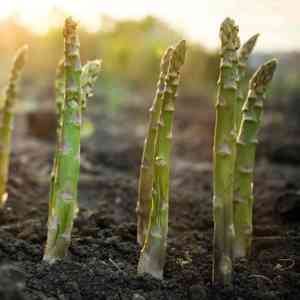
Garden asparagus multiplies most effectively via separation, ideally in Spring or Autumn. This plant is simple to propagate, and successful multiplication is indicated by fresh shoots. Provide sufficient room and attention for the best outcomes.
Optimal Period for Garden Asparagus Propagation
Propagation Method
Division
Propagation Period
Spring, Autumn
Tools Utilized in Garden Asparagus Propagation
Garden Trowel
A garden trowel is vital for excavating around garden asparagus plants, extracting them from the earth, and aiding in the separation of the root system without excessive harm. Its slender blade is particularly advantageous for navigating confined spaces between garden asparagus roots, ensuring minimal plant disruption.
Sharp Knife or Secateurs
For dividing garden asparagus, a sharp knife or secateurs are employed to cleanly sever thicker roots. This is critical for a precise cut that will heal rapidly, diminishing the risk of disease entry through ragged edges. For garden asparagus, a clean division is especially important due to their susceptibility to rot.
Garden Fork
To divide larger garden asparagus clumps, a garden fork is used to gently lift and loosen the soil surrounding the plants. This minimizes damage to the root systems and crowns. A garden fork is particularly beneficial for garden asparagus as it allows for careful handling of the extensive root network.
Rooting Hormone Powder or Liquid
Applying a rooting hormone to the cut surfaces of garden asparagus can encourage faster root development and enhance overall propagation success rates. Rooting hormones stimulate new root growth, which is especially important for garden asparagus where root establishment is crucial for successful cultivation.
Watering Can with a Fine Rose
Following division and replanting, garden asparagus requires gentle watering to help settle the soil and eliminate air pockets around the roots. A watering can with a fine rose attachment disperses water evenly and delicately, preventing soil erosion and minimizing disturbance to new plantings.
Plant Labels
Utilizing plant labels to mark garden asparagus divisions assists in tracking newly propagated plants, monitoring growth, and ensuring appropriate care for various maturity stages. Labels can include planting date information, which is helpful for later stages of garden asparagus cultivation.
How to Propagate Garden Asparagus?
Propagation Method
Division
Difficulty Level
Easy
How to Nurture Your Newly Propagated Garden Asparagus?
How to Nurture Your Newly Propagated Garden Asparagus?
Water garden asparagus regularly to maintain consistently moist but not waterlogged soil. Apply a balanced fertilizer in early spring. Mulch the bed to retain moisture and suppress weeds. Allow the ferns to grow and refrain from harvesting spears in the first year post-propagation to allow plants to establish. Cut ferns back to ground level in late fall after they have yellowed. Over multiple seasons, asparagus plants can be harvested for a few weeks each spring when spears are approximately 6-8 inches tall.
Common Errors to Avoid When Propagating Garden Asparagus
Overcrowding seeds
Excessive seed density can restrict garden asparagus growth due to competition for light, nutrients, and air circulation. This may result in weak plants more prone to disease.
Ignoring soil conditions
Planting garden asparagus in soil lacking proper drainage or the correct pH can impede root development and nutrient absorption, leading to poor plant health.
Inadequate watering
Both excessive and insufficient watering of garden asparagus during the propagation stage can negatively impact root development. Too much moisture can cause root rot, while too little will stress the plant.
Neglecting disease control
Failing to monitor for diseases, such as Fusarium or crown rot, which can be devastating during the propagation phase of garden asparagus, potentially leading to the loss of propagated plants.
Tips For Propagating Garden Asparagus
Seed stratification
Cold stratifying garden asparagus seeds for several weeks prior to planting can break dormancy and synchronize germination, leading to more successful propagation.
Sandy loam soil
Employing a well-draining and nutrient-rich sandy loam soil helps garden asparagus establish a robust root system, essential for healthy growth.
Root cutting care
When propagating garden asparagus via root division, care must be taken to ensure each section possesses at least one growing 'eye' or bud and is planted immediately to prevent desiccation.
Consistent moisture
Maintaining consistent moisture levels without waterlogging is crucial for garden asparagus, especially during the initial weeks after planting, to aid young plant establishment.



