How to Propagate Anemone hupehensis?
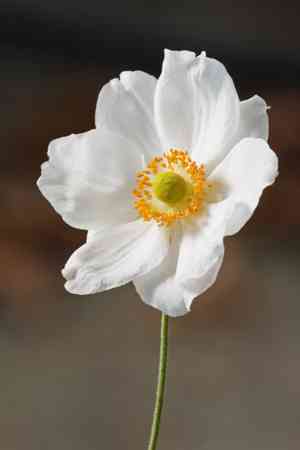
Anemone hupehensis flourishes when reproduced via the precise technique of seeding. Cultivators advise guaranteeing a porous soil substrate to encourage peak development. The seeds perform best when thinly blanketed with earth, which aids in preserving adequate dampness without inducing decay. It is advantageous to uphold a regular irrigation regimen, keeping the substrate uniformly hydrated to facilitate sprouting and initial development.
Optimal Period for Anemone Hupehensis Propagation
Propagation Type
Seeding
Propagation Season
Springtime
Tools Utilized in Anemone Hupehensis Propagation
Seed trays and pots
Seed trays and pots are essential for initiating anemone hupehensis seeds. They offer a controlled setting for seed germination and initial seedling development. These containers must provide adequate drainage and support multiple seeds, promoting optimal root growth and simpler transplanting later.
Seed starting mix
A sterile, well-draining seed starting mix is crucial for successful anemone hupehensis seed germination. This medium supplies necessary nutrients and moisture retention while minimizing disease and pest risks that could hinder young seedling growth.
Watering can with a fine rose
A watering can fitted with a fine rose attachment is perfect for gently irrigating newly sown anemone hupehensis seeds without disturbing them. The fine spray ensures even soil moistening without erosion or exposing seeds, vital for maintaining the integrity and placement of delicate seeds.
Dibber or small stick
A dibber or small stick assists in creating precise holes in the seed starting mix for placing anemone hupehensis seeds. This tool helps achieve the correct depth and spacing, which is key for optimal growth and preventing overcrowding that can lead to poor air circulation and fungal issues.
Clear plastic cover or humidity dome
A clear plastic cover or humidity dome fits over seed trays to maintain high humidity and stable temperatures, both critical for anemone hupehensis seed germination. The dome also helps keep the soil moist between waterings and protects seeds from external disturbances.
How to Propagate Anemone Hupehensis?
Propagation Type
Simple
Caring for Your Newly Propagated Anemone Hupehensis
Caring for Your Newly Propagated Anemone Hupehensis
Post-germination, gradually introduce seedlings to outdoor conditions by increasing sunlight exposure and decreasing humidity over time. Transplant seedlings into individual pots or directly into the garden once they have at least two true leaf sets. Keep the soil consistently moist but not waterlogged, and provide a location with partial shade. Apply mulch around the base to retain moisture and suppress weeds, ensuring anemone hupehensis thrives in its growing environment.
Common Errors to Avoid When Propagating Anemone Hupehensis
Overwatering
Excessive watering can lead to soil saturation, reducing oxygen availability for anemone hupehensis roots. This may cause root rot, hinder growth, or even result in plant death.
Planting depth
Planting anemone hupehensis divisions or tubers too deeply can impede their ability to sprout and establish. Incorrect depth stresses the plant, delaying or preventing successful propagation.
Ignoring soil type
Anemone hupehensis thrives in well-draining soil. Disregarding the soil type and using heavy or poorly aerated soils can lead to inadequate root development and reduced plant vigor.
Advice for Propagating Anemone Hupehensis
Correct division technique
When propagating anemone hupehensis by division, ensure careful separation of the root ball to keep as many roots intact as possible. This aids the plant in recovering and growing more efficiently.
Soil preparation
Amend the soil with organic matter to enhance drainage and nutrient content. This provides a healthy growing medium, essential for the vigorous growth of anemone hupehensis.
Moisture management
Maintain consistent moisture after planting, but be careful not to overwater. Balancing soil moisture is crucial for the establishment of anemone hupehensis post-propagation.



