How to Propagate Largeflower onion?
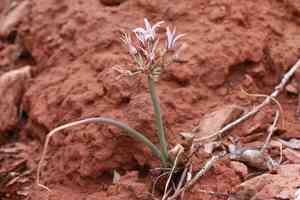
Largeflower onion flourishes when reproduced via its underground storage organs. The secret to successful cultivation involves carefully detaching the tubers from the primary plant, ensuring negligible harm. Insert these sections into soil that drains effectively, situated at a level marginally deeper than their initial growing environment. This method fosters vigorous root expansion, resulting in more resilient growth.
Optimal Time for Largeflower Onion Propagation?
Propagation Method
UtilizeTubers
Propagation Period
Spring
Tools for Largeflower Onion Propagation?
Garden Trowel
A garden trowel is crucial for excavating and manipulating earth during the planting of largeflower onion's tubers. Its compact, pointed blade enables precise placement when setting tubers at the correct depth, preventing damage. The trowel also aids in gently firming soil around tubers, fostering good contact between them and the soil, vital for root initiation and growth.
Watering Can with a Fine Rose
This implement is essential for delivering a gentle, uniform water distribution, ensuring newly planted largeflower onion tubers are adequately hydrated without causing soil erosion or exposing them. The fine rose attachment helps regulate water flow, minimizing disturbance to tubers or soil structure.
Label and Marker
Labels and permanent markers are important for tracking planted largeflower onion tubers. Marking planting locations assists in monitoring growth progress and maintenance. It is crucial for ensuring proper care schedules are followed during critical root development stages.
Gardening Gloves
Gardening gloves protect hands during digging and handling soil and largeflower onion tubers. They prevent potential irritation from soil particles or pests and offer a better grip on tools, enhancing safety and efficiency in the planting process.
How to Propagate Largeflower Onion?
Propagation Type
Simple
Caring for Newly Propagated Largeflower Onion?
Caring for Newly Propagated Largeflower Onion?
Largeflower onion requires minimal care post-propagation. Consistent watering is important, especially during dry spells, but avoid waterlogged soil. Fertilize plants at the start of the growing season to support strong growth. Apply a layer of mulch to retain soil moisture and suppress weeds.
Common Mistakes to Avoid When Propagating Largeflower Onion
Overwatering
Excessive watering can lead to rotting of largeflower onion bulbs, which are sensitive to too much soil moisture. This can be harmful, as it hinders root formation and can ultimately kill the plant.
Planting depth
Planting largeflower onion bulbs too deep or too shallow can impede their ability to sprout and establish. Incorrect depth can affect temperature regulation around the bulb, which is crucial for germination and initial growth.
Crowding bulbs
Planting largeflower onion bulbs too close together can result in competition for resources like nutrients, light, and water. This can lead to smaller plants or failure to thrive, reducing overall propagation success.
Tips For Propagating Largeflower Onion
Appropriate soil preparation
Use well-draining soil rich in organic matter for largeflower onion bulbs. This ensures adequate drainage and nutrient availability, vital for healthy growth and bulb development.
Correct bulb spacing
Space largeflower onion bulbs appropriately to prevent overcrowding. Sufficient space allows for good air circulation and resource access, supporting robust growth.
Regular monitoring
Keep an eye on moisture levels and the general health of largeflower onion during early growth stages. This helps detect issues early and rectify them before they impact plant health.



