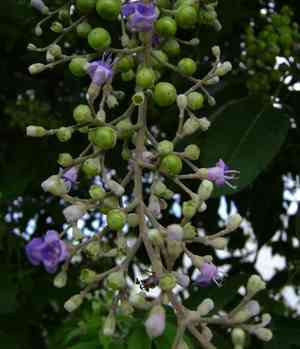
Simpleleaf chastetree (Vitex trifolia)
Also known as: The hand of mary
The simpleleaf chastetree (Vitex trifolia) is commonly found as a large shrub in tropical coastal regions stretching from East Africa to Polynesia. The name 'Vitex' is derived from the Latin 'vieo,' meaning "to weave," a reference to its historical use in basketry. The species name 'trifolia' points to its characteristic trifoliate leaf arrangement, where leaves typically grow in clusters of three.
In This Article
Attributes of Simpleleaf chastetree
Lifespan
Perennial
Plant Type
Tree, Shrub
Plant Height
4 m
Spread
5 m
Leaf Color
Green
Flower Size
2.5 cm
Flower Color
Purple Pink Blue Violet
Images of Simpleleaf chastetree
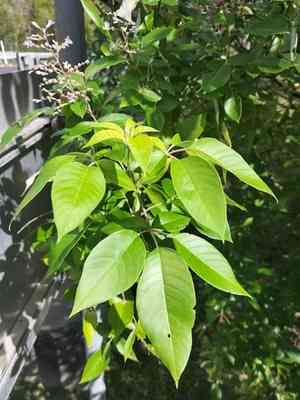
Quickly Identify Simpleleaf chastetree
1
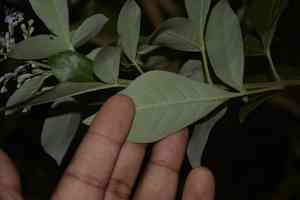
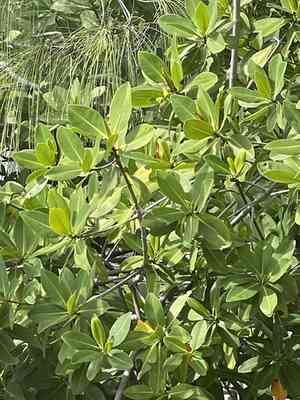
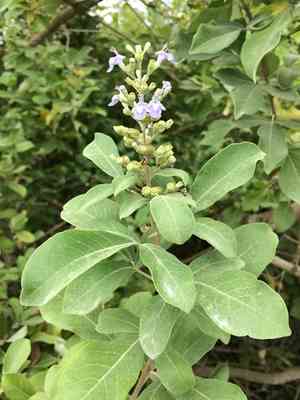
The plant can be identified by its trifoliate leaves, which are usually covered with fine hairs, and its small, fragrant, purple flowers that appear in clusters.
Scientific Classification of Simpleleaf chastetree
Phylum
Vascular plants
Class
Dicotyledons
Order
Lamiales
Family
Mint
Genus
Chaste trees
Species
Simpleleaf chastetree
Planting and Growing of Simpleleaf chastetree
Care Difficulty
Easy
Watering Schedule
Every 4 days
Sunlight Requirements
Full sun
Sunshine Duration
6-8 hours
Ideal Temperature
75-85℉
Soil Type
Potting Mix, Peat Mix
Soil pH
6.5-7.5
Fertilizer Type
Balanced
Pruning Season
Spring, Summer
Pruning Area
Branches, Leaves
Pruning Frequency
2 times a year
Repotting Season
Spring
Pot Type
Plastic, Ceramic
 How to Water Simpleleaf chastetree?
Vitex trifolia thrives on moderate watering. The plant requires around 500 milliliters per session, ensuring the soil remains consistently moist but not soggy. It's important to water until the top few inches of soil are thoroughly wet, allowing excess to drain completely to prevent root rot.
What are the symptoms of an underwatered Simpleleaf chastetree?
›
What should I do if my Simpleleaf chastetree is not getting enough water?
›
What are the symptoms of an overwatered Simpleleaf chastetree?
›
How to save an overwatered Simpleleaf chastetree?
›
 What Are the Sunlight Requirements for Simpleleaf chastetree?
Vitex trifolia benefits from full to partial sun exposure, ideally receiving between 6 to 8 hours of sunlight per day, ensuring vigorous growth and abundant blooming.
More About Sunlight Requirements Techniques→
What is the best environment?
›
How to achieve ideal lighting?
›
What are the benefits of ideal lighting?
›
 What Is the Ideal Temperature Range for Simpleleaf chastetree?
Vitex trifolia thrives best within temperatures ranging from 75°F to 85°F. This range ensures optimal photosynthesis and growth, providing an environment where the plant can effectively utilize sunlight and nutrients for maximum health.
 What Soil is Best for Simpleleaf chastetree?
Vitex trifolia thrives in well-drained soils that prevent waterlogging. This is crucial to avoid root rot and ensure healthy growth. Adequate drainage allows the plant to access oxygen and nutrients more efficiently, promoting a robust root system. A nutrient-rich soil is essential for Vitex trifolia, as it ensures a steady supply of the necessary minerals and nutrients. Enriching the soil with organic matter like compost boosts its fertility, supporting lush foliage and abundant flowering. While Vitex trifolia can tolerate a range of pH levels, it shows a preference for slightly alkaline conditions. A pH close to 7.5 helps in nutrient uptake, especially calcium and magnesium, which are vital for its growth and development.
 How to Fertilize Simpleleaf chastetree?
Vitex trifolia thrives when given a balanced amount of nutrients. Typically, apply about 1-2 tablespoons of a balanced 10-10-10 NPK fertilizer per square foot for mature plants. When using liquid fertilizer, dilute it to half strength to prevent nutrient burn. Always make sure that the soil is moist before applying fertilizer to avoid damaging the roots.
 How to Prune Simpleleaf chastetree?
Before starting, inspect the entire plant to identify branches that are dead, diseased, or crossing. These should be the first to go. Look for areas where the growth is dense and could be thinned to improve air circulation. Begin your pruning by eliminating branches that show signs of disease or rot. Cut these branches down to the base or to the nearest healthy node to prevent the disease from spreading. Focus on shaping the plant by trimming back overgrown sections. Cut back to a pair of outward-facing buds to encourage new, healthy growth. This keeps the plant looking neat and well-maintained. After you've completed the primary shaping, step back and review the plant's symmetry. Make any additional adjustments needed to balance its shape. Always ensure that the final structure is open enough to let light penetrate to the inner branches.
More About Pruning Techniques→
 How to Propagate Simpleleaf chastetree plant?
1
Select healthy, non-flowering stems of Vitex trifolia. Cut a 4 to 6-inch section just below a node using pruning shears. Remove the leaves from the lower half of the cutting to reduce moisture loss.
2
Dip the cut end of the Vitex trifolia cuttings into rooting hormone. Ensure the hormone covers the area where roots are expected to emerge for optimal growth.
3
Plant the prepared cuttings into a pot filled with a well-draining potting mix. Keep the mix consistently moist but not waterlogged to encourage root growth.
 How to Repot Simpleleaf chastetree plant?
1
Vitex trifolia needs repotting when its roots begin to outgrow the current pot or you notice roots protruding from the drainage holes. The ideal time to repot is when the plant appears too large for its current container, or it shows signs of stunted growth, indicating it needs more space.
2
Select a pot with good drainage and that's slightly larger than the existing one. A pot 2-3 inches wider is ideal. The extra space allows roots to expand without being too large, preventing excessive soil moisture that might lead to root rot.
3
Opt for a well-draining potting mix, ideally one enriched with organic matter. This type of soil provides essential nutrients while allowing excess water to drain away, protecting the plant from developing root rot.



