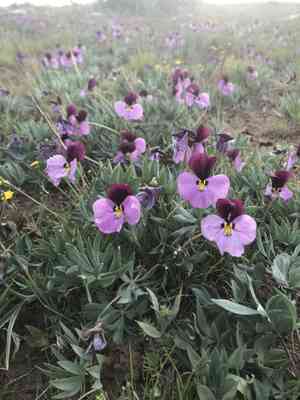
Rainier violet (Viola trinervata)
Also known as: Sagebrush violet
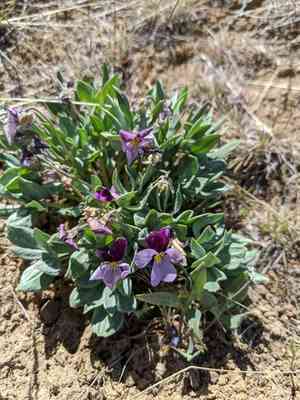
The Rainier violet is a distinctive perennial herb, recognized by its trio of symmetrically arranged, deep green leaves and its charming violet-purple to white flowers, which often feature intricate vein patterns. This plant flourishes in subalpine to alpine settings, particularly favoring rocky, well-drained soils. It thrives in cool, moist environments and is commonly found in the understory of forests, where it forms a delicate ground cover. Its presence not only adds beauty but also supports pollinators, enhancing the ecosystem's biodiversity.
In This Article
Attributes of Rainier violet
Lifespan
Perennial
Plant Type
Herb
Plant Height
5 cm to 8 cm
Spread
N/A
Leaf Color
Green
Flower Size
Around 1 inch
Flower Color
Violet-blue
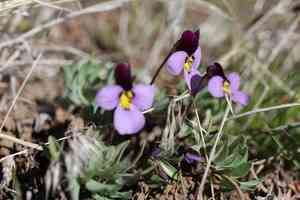
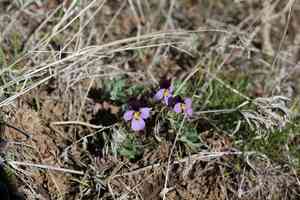
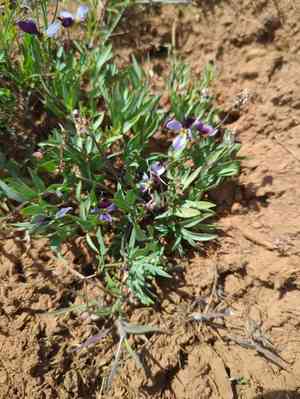
Images of Rainier violet
Quickly Identify Rainier violet
1
To identify Viola trinervata, look for its small, violet-colored flowers and unique three-veined leaves. The leaves are usually heart-shaped with a toothed margin. The flowers typically have five petals with two upper petals, two side petals, and one lower petal.
Scientific Classification of Rainier violet
Phylum
Vascular plants
Class
Dicotyledons
Order
Malpighiales
Family
Violet
Genus
Violets
Species
Rainier violet
Planting and Growing of Rainier violet
Care Difficulty
Moderate
Watering Schedule
Every 4 days
Sunlight Requirements
Partial sun
Sunshine Duration
4-8 hours
Ideal Temperature
60-70℉
Soil Type
Potting Mix, Peat Mix
Soil pH
6.5-7.5
Fertilizer Type
Balanced
Pruning Season
Spring, Summer
Pruning Area
Branches, Leaves
Pruning Frequency
Once a year
Repotting Season
Spring
Pot Type
Plastic, Ceramic
 How to Water Rainier violet?
For Viola trinervata, it's crucial to maintain moist soil without causing waterlogging. Watering should ensure the soil is consistently damp but not soggy. Aim for an approximate amount of 250ml which allows the moisture to reach the roots without causing oversaturation or water pooling at the base.
What are the symptoms of an underwatered Rainier violet?
›
What should I do if my Rainier violet is not getting enough water?
›
What are the symptoms of an overwatered Rainier violet?
›
How to save an overwatered Rainier violet?
›
 What Are the Sunlight Requirements for Rainier violet?
Viola trinervata thrives in partial sun environments, receiving gentle morning light. Ideal lighting promotes vibrant floral displays and maintains healthy foliage, crucial in its development and resilience against environmental stresses.
What is the best light environment for Viola trinervata?
›
How can one achieve ideal lighting for Viola trinervata?
›
What benefits does ideal lighting offer to Viola trinervata?
›
 What Is the Ideal Temperature Range for Rainier violet?
For healthy growth, Viola trinervata thrives best in temperatures between 60°F and 70°F. This range ensures adequate soil warming and optimal metabolic processes crucial for the plant's development. Ensuring temperatures are kept within this range is essential for maintaining its health and ensuring vibrant blooms.
 What Soil is Best for Rainier violet?
Viola trinervata thrives in well-drained soil, which prevents waterlogging and root rot, allowing the roots to breathe and absorb nutrients effectively. It prefers moderately fertile soil, which provides essential nutrients to promote healthy growth and vibrant flowers without overwhelming the plant. Maintaining consistent soil moisture is crucial for Viola trinervata, ensuring the plant remains hydrated, which supports flowering and foliage vitality.
 How to Fertilize Rainier violet?
For Viola trinervata, use a balanced liquid fertilizer diluted to half-strength. Typically, you should apply approximately 1-2 teaspoons of fertilizer mixed in one quart of water. For solid fertilizers, about 1 tablespoon per square foot annually should suffice, ideally split into two applications.
 How to Prune Rainier violet?
Start by inspecting your Viola trinervata for any dead, dying, or leggy stems that may require trimming. Focus on removing stems that appear weak or are crossing over others, as well as those which are significantly taller than the rest of the plant. These steps help improve air circulation and light penetration to the inner areas, encouraging a fuller and more aesthetically pleasing appearance. When pruning, use sharp, clean scissors or pruning shears. You should make cuts just above a leaf node at a 45-degree angle to encourage proper regrowth. Avoid leaving stubs, as these can invite disease and pests. Instead, aim for clean cuts close to the node to help the plant heal efficiently.
More About Pruning Techniques→
 How to Propagate Rainier violet plant?
1
Begin by choosing a well-draining soil mix suitable for Viola trinervata. Sterilize the soil by heating it in an oven at 180°F for 30 minutes to eliminate pathogens and weed seeds.
2
Sow the seeds on the surface of the soil, pressing them gently to ensure contact with the soil. Do not cover them entirely as they require light to germinate.
3
Select healthy, non-flowering stems and cut a 4-6 inch section. Remove the lower leaves and dip the base in rooting hormone to encourage root development before planting it in the prepared soil mix.
 How to Repot Rainier violet plant?
1
Viola trinervata should be repotted when you notice roots growing out of the drainage holes, or when growth seems stunted. Repotting in early spring or autumn gives the plant time to establish itself in its new pot before extreme temperatures set in.
2
Choose a pot with good drainage, preferably a size larger than the current one, allowing roots some space to grow. A pot that is too large can lead to water retention and root rot, whereas one too small might restrict growth.
3
Opt for a well-draining loamy mix that retains some moisture but does not get waterlogged. This soil will provide the right balance of moisture and aeration, critical for the health of Viola trinervata roots.
Learn More About Rainier violet Diseases
Anthracnose
Bacterial Leaf Spot
Bacterial Soft Rot
Black Spot
Chemical Injury
Damping-off
Downy Mildew
Drought Stress
Fusarium Wilt
Gray Mold
Leaf Curl
Leaf Spot
Mosaic
Nutrient Deficiency
Nutrient Toxicity
Powdery Mildew
Root Rot
Root-knot Nematode
Rusts
Sooty Mold
Spider Mites
Temperature Stress
Thrips Damage
White Mold



