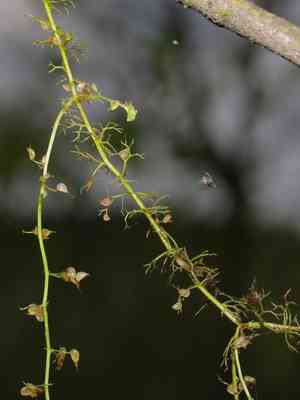
Lesser bladderwort (Utricularia minor)
Also known as: Lesser Bladderwort
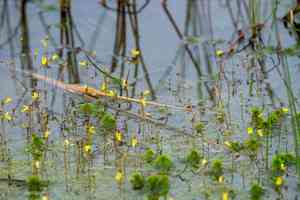
Utricularia minor, commonly known as lesser bladderwort, is indigenous to regions across Asia, North America, and Europe. It typically thrives in shallow, nutrient-poor freshwater environments like ponds, marshes, and ditches. This plant can grow attached to other aquatic vegetation or freely suspended in the water.
In This Article
Attributes of Lesser bladderwort
Lifespan
Perennial
Plant Type
Herb
Plant Height
5 cm to 15 cm
Spread
4 cm to 10 cm
Leaf Color
Green
Flower Size
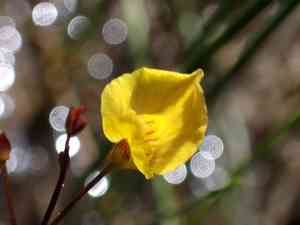
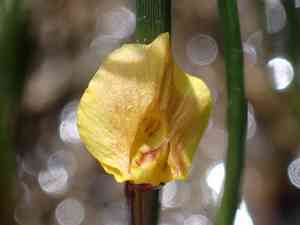
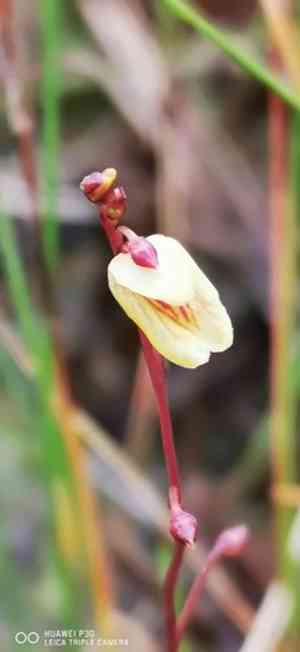
Approximately 2 to 3 mm (0.08 to 0.12 inches)
Flower Color
Yellow
Images of Lesser bladderwort
Quickly Identify Lesser bladderwort
1
Look for small, delicate aquatic plants with finely divided, thread-like leaves. The bladders (tiny traps) are usually visible under magnification and are a key identifying feature.
Scientific Classification of Lesser bladderwort
Phylum
Vascular plants
Class
Dicotyledons
Order
Lamiales
Family
Bladderworts
Genus
Bladderworts
Species
Lesser bladderwort
Planting and Growing of Lesser bladderwort
Care Difficulty
Hard
Watering Schedule
Every 3 days
Sunlight Requirements
Partial sun
Sunshine Duration
4-8 hours
Ideal Temperature
60-75℉
Soil Type
Potting Mix, Peat Mix
Soil pH
4.5-6.5
Fertilizer Type
Balanced
Pruning Season
Spring, Summer
Pruning Area
Branches, Leaves
Pruning Frequency
2 times a year
Repotting Season
Spring
Pot Type
Plastic, Ceramic
 How to Water Lesser bladderwort?
For Utricularia minor, a precise watering routine is crucial. Aim for 150 ml per session, enough to keep the soil consistently moist but not waterlogged. This ensures the plant's aquatic environment mimics its natural habitat, encouraging healthy growth.
What are the symptoms of an underwatered Lesser bladderwort?
›
What should I do if my Lesser bladderwort is not getting enough water?
›
What are the symptoms of an overwatered Lesser bladderwort?
›
How to save an overwatered Lesser bladderwort?
›
 What Are the Sunlight Requirements for Lesser bladderwort?
Partial sunlight and full shade provide the most beneficial conditions for Utricularia minor. It adapts well under these light conditions, ensuring optimal growth and maintaining its natural health and vitality.
What is the ideal lighting for Utricularia minor?
›
How can I provide ideal lighting for Utricularia minor?
›
What benefits does Utricularia minor gain with ideal lighting?
›
 What Is the Ideal Temperature Range for Lesser bladderwort?
The ideal temperature range for Utricularia minor is between 60°F to 75°F. This range provides the necessary warmth for optimal growth and development. Temperatures within this range ensure that the plant can efficiently photosynthesize and absorb nutrients, promoting vibrant and healthy growth.
 What Soil is Best for Lesser bladderwort?
Utricularia minor thrives in soils that are consistently moist. The constant water availability ensures their carnivorous traps function effectively, capturing prey while aiding in nutrient acquisition. This plant prefers nutrient-poor soils, often relying on its carnivorous nature to fulfill its nutritional needs. Environments with fewer nutrients help avoid competition with other plants. Despite requiring a moisture-rich environment, proper aeration ensures oxygen reaches the roots. Well-aerated peat maintains appropriate water saturation levels, benefiting the plant's health.
 How to Fertilize Lesser bladderwort?
For Utricularia minor, minimal fertilization is recommended due to its natural habitat in nutrient-poor bogs. Apply diluted liquid fertilizer at half the strength of general plant fertilizer. This helps mimic the plant’s native environment, avoiding nutrient overload.
 How to Prune Lesser bladderwort?
While it might be tempting to prune extensively, especially if parts of the plant appear unhealthy, overcutting can stress Utricularia minor. It's essential to remove only the parts that are genuinely dead to maintain a balance in the plant's growth. Though Utricularia minor is a carnivorous plant, it can still fall prey to pests that love aquatic environments. Regular pruning can help you spot any pests early before they cause extensive damage. Pruning can introduce organic matter into the plant's water, potentially affecting its quality. Ensure that you replace or clean the water reservoir after pruning to maintain optimal growth conditions.
More About Pruning Techniques→
 How to Propagate Lesser bladderwort plant?
1
Collect seeds from matured Utricularia minor plants. Ensure that the seeds are fully ripe by checking their color and texture, which should be dark and hard.
2
Use a well-draining, acidic medium for sowing seeds or division. A mix of sand and peat is suitable as it mimics the plant's natural boggy habitat.
3
For division propagation, carefully separate the root clumps with a knife, being cautious not to damage the rhizomes. Plant immediately in moist soil.
 How to Repot Lesser bladderwort plant?
1
Utricularia minor needs repotting primarily when its growth begins to slow due to overcrowding or if the substrate begins to break down which inhibits water absorption. Spring and summer are ideal times as the plant is in active growth and can recover more swiftly.
2
Opt for a shallow, wide pot to accommodate the spreading nature of this aquatic plant. Plastic or glazed ceramic pots work well to retain moisture. The shallow design fosters healthy root and bladder growth essential for its nutrient absorption.
3
Utilize peat or sphagnum moss-based mixes, which replicate the plant's natural wetland habitat. These soils maintain consistent moisture levels and provide an acidic environment that Utricularia minor thrives in, promoting optimal growth.



