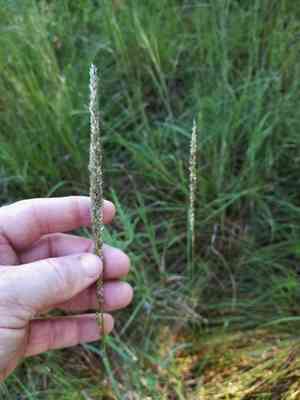
Long-spike tridens (Tridens strictus)
Also known as: Longspike Tridens, Long-spike Trichochloa
Purpletop (Tridens flavus) is a perennial grass native to the central and eastern United States. It thrives in various habitats including fields, open areas, ditches, wastelands, and roadsides, and can handle both wet and dry conditions. Known for its bushy appearance, it features distinctive purplish spike-like inflorescences that are visible from summer through fall, making it occasionally popular as an ornamental plant.
In This Article
Attributes of Long-spike tridens
Lifespan
Perennial
Plant Type
Grass
Plant Height
61 cm to 1.2 m
Spread
45 cm to 75 cm
Leaf Color
Green, often with a reddish base
Flower Size
10 cm to 30 cm
Flower Color
Purple to brown
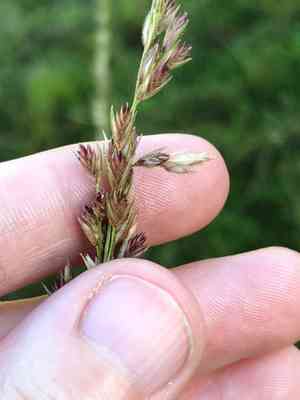
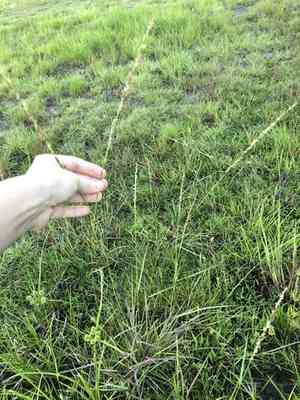
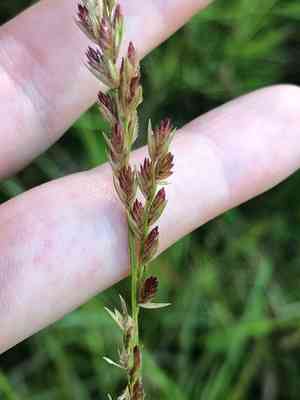
Images of Long-spike tridens
Quickly Identify Long-spike tridens
1
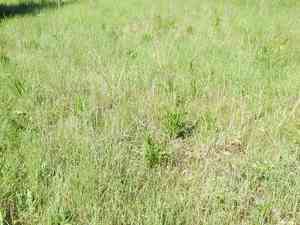
Tridens strictus can be identified by its tall, slender stems which can reach heights of 3 to 5 feet. The spikelets are tightly packed and form long, slender, cylindrical inflorescences. The leaves are flat and narrow, and the plant often exhibits a reddish tint at the base.
Scientific Classification of Long-spike tridens
Phylum
Vascular plants
Class
Monocotyledons
Order
Poales
Family
Grass
Genus
Tridens
Species
Long-spike tridens
Planting and Growing of Long-spike tridens
Care Difficulty
Easy
Watering Schedule
Every 2 days
Sunlight Requirements
Full sun
Sunshine Duration
6-10 hours
Ideal Temperature
60-75℉
Soil Type
Potting Mix, Peat Mix
Soil pH
6.5-7.5
Fertilizer Type
Balanced
Pruning Season
Spring, Summer
Pruning Area
Branches, Leaves
Pruning Frequency
2 times a year
Repotting Season
Spring
Pot Type
Plastic, Ceramic
 How to Water Long-spike tridens?
When watering Tridens strictus, aim to provide about 500 ml of water. The goal is to ensure that the soil is evenly moist but not waterlogged. You should water until you see a little runoff from the drainage holes, indicating a thorough watering. Never let the plant sit in standing water, as this can lead to root rot.
What are the symptoms of an underwatered Long-spike tridens?
›
What should I do if my Long-spike tridens is not getting enough water?
›
What are the symptoms of an overwatered Long-spike tridens?
›
How to save an overwatered Long-spike tridens?
›
 What Are the Sunlight Requirements for Long-spike tridens?
Tridens strictus prospers in full sun to partial sun conditions. Ideal light ensures vigorous growth, promoting lush foliage and full-bodied grass, enhancing its visual appeal and structural robustness.
More About Sunlight Requirements Techniques→
What is the ideal light for Tridens strictus?
›
How can you achieve ideal lighting?
›
What are the benefits of ideal lighting?
›
 What Is the Ideal Temperature Range for Long-spike tridens?
Tridens strictus thrives best in temperatures ranging from 60°F to 75°F. This range provides optimal conditions for its growth and photosynthetic processes. Such an environment closely mirrors its native habitat, offering a balanced climate that neither stresses the plant with cold nor with excessive heat.
 What Soil is Best for Long-spike tridens?
Tridens strictus thrives best in well-drained soil. Proper drainage prevents root rot, ensuring the plant's roots can breathe and access necessary nutrients. A slightly nutrient-rich soil supports the robust growth of Tridens strictus. The plant utilizes essential nutrients to fortify its structure and boost its resistance to pests. This plant prefers soil with moderate moisture content. This balances water availability, avoiding over-saturation which can lead to root damage.
 How to Fertilize Long-spike tridens?
For Tridens strictus, it is important to use a balanced fertilizer blend. Typically, applying approximately 1 tablespoon of liquid fertilizer per gallon of water is sufficient. Make sure to dilute the fertilizer correctly to prevent any damage. For solid fertilizers, if you are using slow-release granules, apply around 1/4 cup per square foot of area.
 How to Prune Long-spike tridens?
Begin by cutting back older, woodier stems to encourage fresh growth. Next, thin out overcrowded areas to ensure sunlight reaches all parts of the plant, promoting even development. Prune to shape the plant by selectively cutting back stems to maintain a tidy appearance. Ensure symmetrical growth by trimming evenly around the plant.
More About Pruning Techniques→
 How to Propagate Long-spike tridens plant?
1
Gather seeds from mature plants once seed heads have dried. Clean seeds by removing any debris or excess plant material. This step ensures healthy seed stock for successful propagation.
2
Sow seeds in seed trays or directly in the ground, spaced evenly apart. Cover lightly with soil and water gently. Ensure good sunlight exposure to encourage germination.
3
For division, dig up established clumps in early spring. Use a sharp knife or spade to separate the plant into smaller sections. Replant divisions at the same depth they were growing before.
 How to Repot Long-spike tridens plant?
1
You should consider repotting Tridens strictus when you notice the roots growing out of the drainage holes, or the soil is compacted and retaining too much water. These signs usually indicate that the plant has outgrown its current pot or the soil quality has degraded, which can hinder growth.
2
Opt for a pot that's about one size larger than the current one, ensuring it has excellent drainage holes. This provides room for root expansion while preventing water accumulation, which can lead to root rot. The pot material, whether ceramic or plastic, should suit the environmental conditions - ceramic provides stability while plastic is lighter and easier to move.
3
A well-draining sandy mix is ideal for Tridens strictus. This mix helps maintain proper aeration and prevents excessive moisture retention, which is crucial for avoiding root diseases. Incorporating organic material like peat or coco coir can enhance the soil's nutrient profile.
Learn More About Long-spike tridens Diseases
Anthracnose
Bacterial Leaf Spot
Bacterial Wilt
Black Spot
Chemical Injury
Cyst Nematode
Damping-off
Downy Mildew
Drought Stress
Fusarium Wilt
Gray Mold
Leaf Spot
Mosaic
Nutrient Deficiency
Nutrient Toxicity
Powdery Mildew
Root Rot
Root-knot Nematode
Rusts
Sooty Mold
Spider Mites
Temperature Stress
Thrips Damage
White Mold



