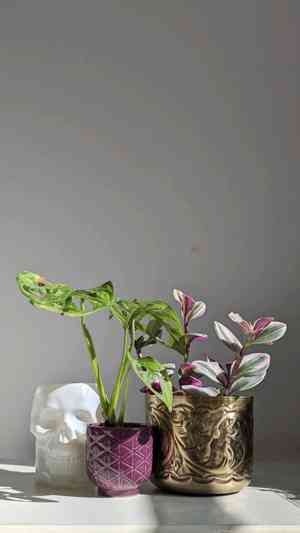
Flowering inch plant (Tradescantia cerinthoides)
Also known as: Flowering Inchplant, Widow's Tears, Velvet Hearts, Emerald Ripple, Inch Plant, Purple Heart
Flowering inch plant is a delightful trailing plant with bright green stripes on its leaves.
In This Article
Attributes of Flowering inch plant
Lifespan
Perennial
Plant Type
Herb
Plant Height
45 cm
Spread
25 cm
Leaf Color
Green, Purple, Silver (variegated)
Flower Size
1-2 cm
Flower Color
Pink, Purple, White
Images of Flowering inch plant
Quickly Identify Flowering inch plant
1
Tradescantia cerinthoides can be identified by its trailing stems, small three-petaled flowers, and broad, slightly hairy leaves. The leaves often have variegated patterns, including shades of green, purple, and silver. The stems are succulent and can form roots at the nodes, making it easy to propagate.
Scientific Classification of Flowering inch plant
Phylum
Vascular plants
Class
Monocotyledons
Order
Commelinales
Family
Spiderwort
Genus
Spiderworts
Species
Flowering inch plant
Planting and Growing of Flowering inch plant
Care Difficulty
Easy
Watering Schedule
Every 4 days
Sunlight Requirements
Partial sun
Sunshine Duration
6-10 hours
Ideal Temperature
65-75℉
Soil Type
Potting Mix, Peat Mix
Soil pH
6.5-7.5
Fertilizer Type
Balanced
Pruning Season
Spring, Summer
Pruning Area
Branches, Leaves
Pruning Frequency
2 times a year
Repotting Season
Spring
Pot Type
Plastic, Ceramic
 How to Water Flowering inch plant?
When watering Tradescantia cerinthoides, it's essential to moisten the soil thoroughly without allowing it to become soggy. Aim to pour about 200 ml of water directly onto the soil until it's saturated, ensuring excess water drains out of the pot. This avoids waterlogging the roots and promotes healthy growth.
What are the symptoms of an underwatered Flowering inch plant?
›
What should I do if my Flowering inch plant is not getting enough water?
›
What are the symptoms of an overwatered Flowering inch plant?
›
How to save an overwatered Flowering inch plant?
›
 What Are the Sunlight Requirements for Flowering inch plant?
Partial sun exposure with 4 to 6 hours of light is ideal for Tradescantia cerinthoides. Such lighting promotes vibrant leaf coloration and compact growth, enhancing its ornamental qualities.
How much sunlight does it need?
›
What are the best solutions to achieve this lighting?
›
What happens if it gets ideal light?
›
 What Is the Ideal Temperature Range for Flowering inch plant?
Tradescantia cerinthoides thrives best in temperatures between 65°F to 75°F. This range ensures robust growth and maintains the vibrancy of the plant's foliage. Temperatures within this ideal range encourage healthy photosynthesis and overall plant vigor.
 What Soil is Best for Flowering inch plant?
Tradescantia cerinthoides requires well-draining soil to prevent root rot. Ensuring the soil can effectively drain excess water helps in maintaining healthy root systems and lush foliage. Moderate fertility in the soil provides necessary nutrients for Tradescantia cerinthoides without overwhelming the plant. This balance helps in sustaining robust growth and vibrant leaves. A neutral to slightly acidic pH between 6.5 to 7.5 allows optimal nutrient uptake for Tradescantia cerinthoides, promoting healthy development and maximizing resistance to diseases.
 How to Fertilize Flowering inch plant?
For Tradescantia cerinthoides, it's crucial to adhere to the right fertilization amounts to maintain plant health. When using liquid fertilizers, mix according to the package instructions, typically up to a quarter or half the recommended strength to prevent over-fertilization. For slow-release fertilizers, apply in small quantities as per the label directions, usually around one teaspoon per pot, spread evenly over the soil surface.
 How to Prune Flowering inch plant?
Locate any overgrown or leggy stems on your Tradescantia cerinthoides. These are the sections that you want to trim back to encourage a more compact and appealing growth structure. Use sharp scissors or pruning shears to make clean, precise cuts on the stems just above a leaf node. This helps the plant heal faster and minimizes stress, leading to better regrowth. As part of your pruning routine, regularly remove any dead or yellowing leaves. This not only keeps the plant looking its best but also prevents potential pest problems.
More About Pruning Techniques→
 How to Propagate Flowering inch plant plant?
1
Choose healthy, non-flowering stems for your cuttings. Aim for stems that are about 4-6 inches long, with several leaves, and free from pests or diseases.
2
Cut the selected stems just below a node with sharp shears. Remove the leaves from the bottom portion to prevent rotting when inserted into soil.
3
Insert the prepared cuttings into a well-draining potting mix until the node is buried. Firm the soil around the base to hold the cutting upright.
 How to Repot Flowering inch plant plant?
1
Repot Tradescantia cerinthoides when the roots start to outgrow the current pot, typically every 1-2 years. Another indication is when water takes too long to drain, suggesting the soil has compacted. Spring or early summer is ideal for repotting, as the plant enters its most vigorous growth phase.
2
Select a pot that is one size larger, around 1-2 inches in diameter than the current one. This allows space for root expansion without overwhelming the plant. Ensure the pot has drainage holes to prevent waterlogging, which can lead to root rot. A slightly heavier pot can provide stability as Tradescantia can become top-heavy.
3
Opt for a well-draining potting mix, ideally a combination of peat, perlite, and compost. This blend retains sufficient moisture to support growth while allowing excess water to escape easily, preventing root rot. A good mix also supplies the necessary nutrients and promotes strong root structure.
Toxicity
Ingestion or contact with sap
WARNING
The judgment on toxicity and danger is for reference only. We DO NOT GUARANTEE any accuracy of such judgment. Therefore, you SHALL NOT rely on such judgment. It is IMPORTANT TO SEEK PROFESSIONAL ADVICE in advance when necessary.



