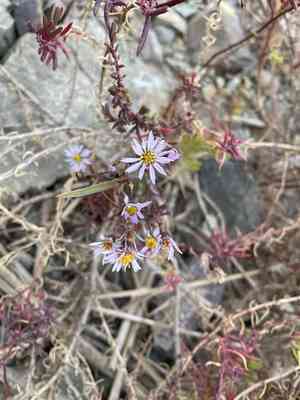
Asian common seepweed (Suaeda glauca)
Also known as: Seepweed
The Asian common seepweed is a coastal plant well-suited to saline and alkaline habitats. It resembles the Seepweed plant but differs in its preference for salty environments. Unlike its freshwater-loving relative, the Asian common seepweed exclusively grows in salt-rich areas like coastal marshes and tidal flats.
In This Article
Attributes of Asian common seepweed
Lifespan
Annual
Plant Type
Herb
Plant Height
1 m
Spread
N/A
Leaf Color
Bluish-green, often with red tinges
Flower Size
1-2 mm
Flower Color
Yellow Green
Images of Asian common seepweed
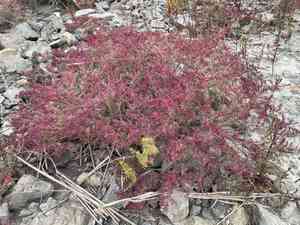
Quickly Identify Asian common seepweed
1
Suaeda glauca can be identified by its succulent, cylindrical leaves which are bluish-green and often tinged with red. The inflorescences are small and inconspicuous, typically greenish in color.
Scientific Classification of Asian common seepweed
Phylum
Vascular plants
Class
Dicotyledons
Order
Pinks, cacti, and allies
Family
Amaranth
Genus
Seepweeds
Species
Asian common seepweed
Planting and Growing of Asian common seepweed
Care Difficulty
Easy
Watering Schedule
Every 2 days
Sunlight Requirements
Full sun
Sunshine Duration
6-10 hours
Ideal Temperature
68-77℉
Soil Type
Potting Mix, Peat Mix
Soil pH
6.5-8.5
Fertilizer Type
Balanced
Pruning Season
Spring, Summer
Pruning Area
Branches, Leaves
Pruning Frequency
2 times a year
Repotting Season
Spring
Pot Type
Plastic, Ceramic
 How to Water Asian common seepweed?
For Suaeda glauca, providing around 300 ml of water per session is typically sufficient. It's essential to ensure the soil is moist but not waterlogged, simulating the plant's natural environment where it grows in saline conditions. Overwatering can lead to root rot, so the goal is to keep the soil just damp enough to support healthy growth.
What are the symptoms of an underwatered Asian common seepweed?
›
What should I do if my Asian common seepweed is not getting enough water?
›
What are the symptoms of an overwatered Asian common seepweed?
›
How to save an overwatered Asian common seepweed?
›
 What Are the Sunlight Requirements for Asian common seepweed?
Suaeda glauca thrives in conditions ranging from partial to full sunlight, benefiting from increased photosynthesis efficiency and improved vigor under ideal light conditions.
More About Sunlight Requirements Techniques→
What is the best kind of sunlight for Suaeda glauca?
›
How can you achieve ideal sunlight conditions for this plant?
›
What benefits does ideal sunlight provide to Suaeda glauca?
›
 What Is the Ideal Temperature Range for Asian common seepweed?
Suaeda glauca thrives best in an ideal temperature range of 68°F to 77°F. Within this range, the plant can perform optimal photosynthesis, promoting robust growth and healthy foliage. Maintaining consistent temperatures in this range helps prevent environmental stress, allowing the plant to allocate resources efficiently for growth and reproduction.
 What Soil is Best for Asian common seepweed?
Suaeda glauca thrives in well-drained soils, which prevent root rot by allowing excess water to easily escape. This provides the plant with an environment where root growth is optimized, promoting overall health and nutrient uptake. The plant prefers soils with moderate fertility. It does not require heavily fertilized soils, as they can lead to excessive leaf growth at the expense of flower and seed production. This balance supports both vegetative and reproductive phases effectively. Suaeda glauca is known for its tolerance to saline conditions. This means it can grow in soils that may be too salty for other plants, an attribute that enables it to thrive in coastal and other saline-prone areas.
 How to Fertilize Asian common seepweed?
Suaeda glauca, commonly known as Seepweed, is a resilient plant native to saline environments. When fertilizing, use a balanced fertilizer with an N-P-K ratio around 20-20-20. Apply at a rate of two tablespoons per gallon of water for liquid solutions. For slow-release granules, follow the package's recommended amount, usually about 1 ounce per square foot. This ensures adequate nutrient provision without overwhelming the plant.
 How to Prune Asian common seepweed?
Begin pruning Suaeda glauca by identifying any dead or damaged stems and branches. Use clean, sharp gardening shears to cut them back to the base or to a healthy section. Trim overgrown areas to maintain the desired shape, ensuring not to remove more than one-third of the plant at a time. This supports aeration and light penetration, enhancing overall growth. For shaping, approach pruning with an artistic eye, taking into account the natural growth form of Suaeda glauca. Initially, trim the top and outer sides of the plant to maintain a compact, bushy appearance. Angled cuts just above the leaf nodes will encourage new branch development, enhancing the plant's fullness and beauty.
More About Pruning Techniques→
 How to Propagate Asian common seepweed plant?
1
Choose mature seeds from healthy Suaeda glauca plants. Inspect them for any signs of damage or disease, which could affect germination rates. Viable seeds are usually plump and well-formed.
2
Select healthy stems for cuttings, ideally around 4-6 inches long. Use pruning shears to make a clean cut just below a leaf node. Remove the leaves from the lower half of the cutting to prepare it for planting.
3
Fill seed trays with a well-draining, sterile potting mix. Sow seeds on the surface and cover lightly with soil. For cuttings, insert the prepared end directly into the soil, ensuring stability. Water gently and consistently to maintain soil moisture.
 How to Repot Asian common seepweed plant?
1
Observe for signs like slowed growth, roots protruding from the drainage holes, or soil that dries out very quickly. Suaeda glauca typically signals it needs repotting when the plant looks cramped in its current container.
2
Opt for a pot that is 1-2 inches larger in diameter than the current one. Terra cotta pots are beneficial as they promote better airflow and drainage, helping to prevent root rot.
3
Use a mix that mimics coastal environments, primarily sandy soil with good drainage. This ensures excess water doesn't stagnate, which is crucial for preventing root rot and promoting healthy growth.



