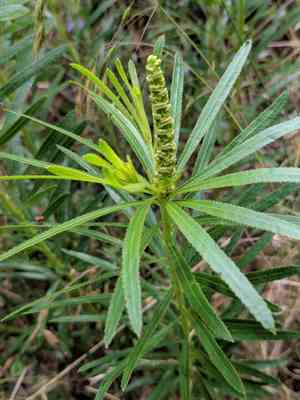
Texas toothleaf (Stillingia texana)
Also known as: None
The Texas toothleaf, named for its serrated leaves, produces a white sap that can sometimes cause skin irritation or allergic reactions. To handle it safely, wear gloves to prevent direct contact with the sap, and wash your hands thoroughly afterward. Avoid touching your face, particularly your eyes, before washing up. Dispose of any plant material carefully to minimize exposure.
In This Article
Attributes of Texas toothleaf
Lifespan
Perennial
Plant Type
Herb
Plant Height
20 cm to 61 cm
Spread
0.3 meters
Leaf Color
Green
Flower Size
5 cm
Flower Color
Yellow Green
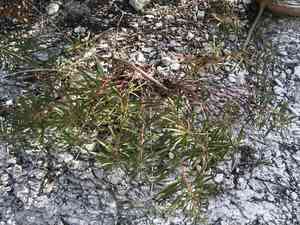
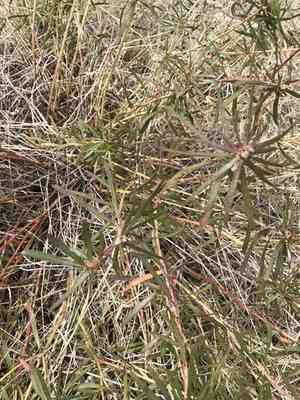
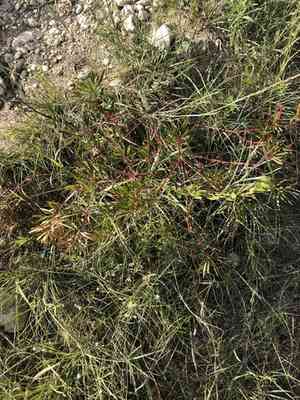
Images of Texas toothleaf
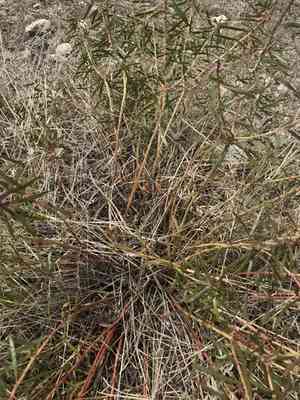
Quickly Identify Texas toothleaf
1
To identify Stillingia texana, look for its narrow, toothed leaves and small, yellowish-green flowers that appear in clusters. The plant typically grows up to 0.5 meters in height.
Scientific Classification of Texas toothleaf
Phylum
Vascular plants
Class
Dicotyledons
Order
Malpighiales
Family
Spurge
Genus
Toothleaf
Species
Texas toothleaf
Planting and Growing of Texas toothleaf
Care Difficulty
Easy
Watering Schedule
Every 2 days
Sunlight Requirements
Full sun
Sunshine Duration
4-10 hours
Ideal Temperature
68-77℉
Soil Type
Potting Mix, Peat Mix
Soil pH
6.5-7.5
Fertilizer Type
Balanced
Pruning Season
Spring, Summer
Pruning Area
Branches, Leaves
Pruning Frequency
2 times a year
Repotting Season
Spring
Pot Type
Plastic, Ceramic
 How to Water Texas toothleaf?
For Stillingia texana, the watering amount should be just enough to moisten the soil thoroughly while ensuring good drainage. This plant prefers the soil to dry out somewhat between waterings, so aim to provide approximately 250 ml of water per session. Be sure to allow the soil to feel damp but not waterlogged, avoiding any standing water.
What are the symptoms of an underwatered Texas toothleaf?
›
What should I do if my Texas toothleaf is not getting enough water?
›
What are the symptoms of an overwatered Texas toothleaf?
›
How to save an overwatered Texas toothleaf?
›
 What Are the Sunlight Requirements for Texas toothleaf?
Stillingia texana thrives in full to partial sun. Ideal sunlight ensures robust health by promoting efficient photosynthesis, leading to stronger growth, increased blooming, and enhanced resilience to environmental stresses.
More About Sunlight Requirements Techniques→
How much sunlight does Stillingia texana ideally need?
›
What are the best strategies to ensure Stillingia texana gets ideal lighting?
›
What benefits does proper lighting provide Stillingia texana?
›
 What Is the Ideal Temperature Range for Texas toothleaf?
The ideal temperature range for cultivating Stillingia texana is between 68°F and 77°F, where the plant experiences optimal growth. Within this range, physiological processes such as photosynthesis, respiration, and nutrient uptake occur efficiently, contributing to vigorous growth and healthy development. Maintaining consistent temperatures within this range helps minimize stress and promotes robust flowering and seed production.
 What Soil is Best for Texas toothleaf?
Stillingia texana prefers well-drained soil to prevent root rot caused by water stagnation. This type of soil ensures that the plant's roots are adequately aerated, promoting healthy growth and vibrant foliage. The plant thrives in soil with moderate fertility, as it doesn't require overly nutrient-rich conditions. This balance supports sustainable growth without the risk of excessive vegetative issues or poor development. The ideal pH range for Stillingia texana is between 6.5 and 7.5. This pH level is conducive to optimal nutrient uptake, aiding the plant in thriving and producing robust growth.
 How to Fertilize Texas toothleaf?
Stillingia texana generally requires moderate fertilization to thrive. A balanced 10-10-10 liquid fertilizer should be diluted to half strength, and about 100 milliliters should be applied per plant during the growing season. For slow-release granules, a small handful, approximately 30 grams, scattered evenly around the base of the plant twice a year should suffice.
 How to Prune Texas toothleaf?
Begin with clean and sharp pruning shears to minimize damage to the plant. Choose a tool size suitable for the thickness of the branches you intend to cut. Clean your tools before and after pruning to prevent disease propagation. Focus on removing dead, diseased, or damaged branches first. Identify any branches crossing or rubbing against each other, as these can cause damage and hinder healthy growth. Also, trim to enhance the overall shape of the plant. Make clean cuts at a 45-degree angle to prevent water damage and infection. For thicker branches, consider using a pruning saw to ensure a smooth cut. Always prune at a node or just above a leaf bud to direct new growth.
More About Pruning Techniques→
 How to Propagate Texas toothleaf plant?
1
Fill the seed tray or pots with a well-draining potting mix, leaving a small gap from the top to allow for watering without overflow.
2
Scatter the Stillingia texana seeds evenly across the surface of the soil. Lightly cover them with a thin layer of soil or vermiculite, as they need light for germination.
3
Gently water the seeds using a fine mist to avoid displacing them. Keep the soil consistently moist but not waterlogged to promote healthy germination.
 How to Repot Texas toothleaf plant?
1
Repotting should be considered when Stillingia texana outgrows its current container or when you notice roots coming out of the drainage holes. Another sign is if the soil dries quickly after watering, indicating the roots have taken up most of the pot.
2
Select a pot that's one size larger than the current one, offering enough space for root growth without overwhelming the plant. A pot with good drainage holes is essential to prevent waterlogging, which could cause root rot.
3
Opt for a well-draining sandy soil mix as Stillingia texana thrives in these conditions, mimicking its natural habitat. This type of soil prevents water retention, reducing the risk of root rot and promoting healthier growth.
Toxicity
Ingestion
WARNING
The judgment on toxicity and danger is for reference only. We DO NOT GUARANTEE any accuracy of such judgment. Therefore, you SHALL NOT rely on such judgment. It is IMPORTANT TO SEEK PROFESSIONAL ADVICE in advance when necessary.
Learn More About Texas toothleaf Diseases
Anthracnose
Bacterial Leaf Spot
Bacterial Soft Rot
Bacterial Wilt
Black Spot
Chemical Injury
Crown Gall
Cyst Nematode
Damping-off
Downy Mildew
Drought Stress
Fusarium Wilt
Gray Mold
Leaf Curl
Leaf Spot
Mosaic
Nutrient Deficiency
Nutrient Toxicity
Powdery Mildew
Root Rot
Root-knot Nematode
Rusts
Sooty Mold
Spider Mites
Temperature Stress
Thrips Damage
White Mold



