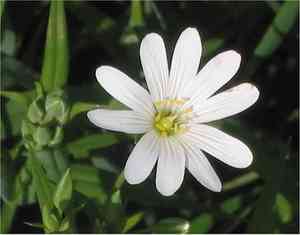
Greater stitchwort (Stellaria holostea)
Also known as: Satin flower
A possible plant that fits your description is the Greater Stitchwort (Stellaria holostea). This herbaceous perennial typically reaches heights of 20 to 30 cm. It showcases white star-shaped flowers that bloom from spring through summer. The seeds of Greater Stitchwort make a distinctive popping sound as they ripen and disperse. It prefers partial shade and is often found along forest edges and in parks. This plant attracts bees, butterflies, and other pollinators with its sweet nectar.
Attributes of Greater stitchwort
Images of Greater stitchwort
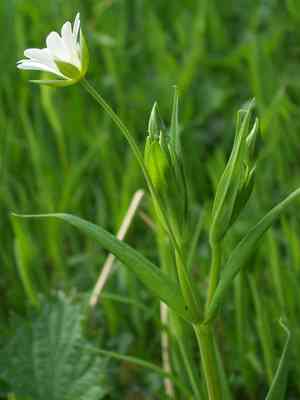
Quickly Identify Greater stitchwort
Scientific Classification of Greater stitchwort
Planting and Growing of Greater stitchwort
 How to Water Greater stitchwort?
 What Are the Sunlight Requirements for Greater stitchwort?
 What Is the Ideal Temperature Range for Greater stitchwort?
 What Soil is Best for Greater stitchwort?
 How to Fertilize Greater stitchwort?
 How to Prune Greater stitchwort?
 How to Propagate Greater stitchwort plant?
 How to Repot Greater stitchwort plant?
Toxicity of Greater stitchwort
Is Greater stitchwort toxic to humans?
Greater stitchwort exhibits a mild toxicity level towards humans, primarily when ingested. The entire plant is known to contain saponins, which are responsible for its toxic characteristics. Even in small amounts, the consumption of greater stitchwort can trigger a variety of symptoms. Affected individuals may face gastrointestinal issues, including nausea, vomiting, and diarrhea. Moreover, the saponins present can irritate mucous membranes, leading to discomfort such as sore throat and abdominal pain. It is essential for individuals to exercise caution and prevent accidental ingestion of greater stitchwort, since every part of the plant could potentially result in harmful health effects.



