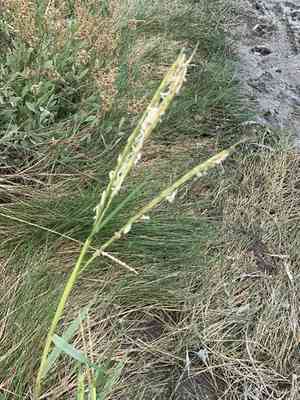
Common cordgrass (Sporobolus anglicus)
Also known as: Common Cord-grass, Smooth Cordgrass
Smooth cordgrass (**Spartina alterniflora**) is a perennial herbaceous plant that was initially introduced to various saltwater regions to help with soil stabilization and land reclamation. Nonetheless, it has spread beyond its intended areas in regions like North America, turning into an invasive species. Its growth can overshadow native habitats, hindering wading birds from accessing their feeding grounds.
In This Article
Attributes of Common cordgrass
Lifespan
Perennial
Plant Type
Grass
Plant Height
30-100 cm
Spread
Not typically measured by crown diameter due to its grass-like growth form
Leaf Color
Green
Flower Size
Small, not typically measured
Flower Color
White
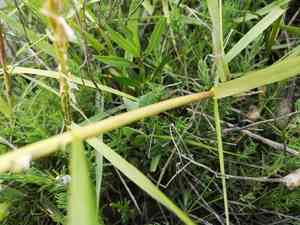
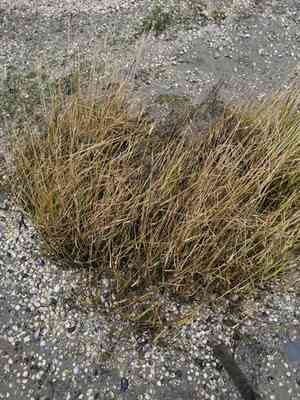
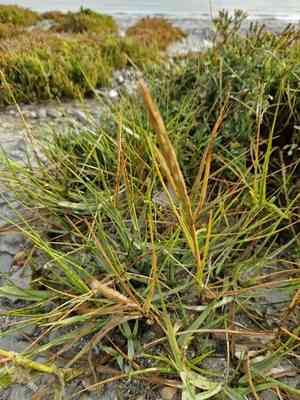
Images of Common cordgrass
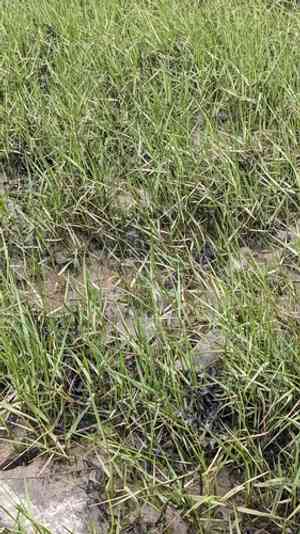
Quickly Identify Common cordgrass
1
The plant can be identified by its dense clumps of stiff, wiry leaves that are narrow and taper to a sharp point. It produces long, spike-like flower heads that are often purplish-brown.
Scientific Classification of Common cordgrass
Phylum
Vascular plants
Class
Monocotyledons
Order
Poales
Family
Grass
Genus
Dropseeds
Species
Common cordgrass
Planting and Growing of Common cordgrass
Care Difficulty
Easy
Watering Schedule
Every 4 days
Sunlight Requirements
Full sun
Sunshine Duration
6-10 hours
Ideal Temperature
60-75℉
Soil Type
Potting Mix, Peat Mix
Soil pH
6.5-7.5
Fertilizer Type
Balanced
Pruning Season
Spring, Summer
Pruning Area
Branches, Leaves
Pruning Frequency
2 times a year
Repotting Season
Spring
Pot Type
Plastic, Ceramic
 How to Water Common cordgrass?
For Sporobolus anglicus, it is essential to ensure the soil is consistently moist, but not waterlogged. Each watering should penetrate the soil to a depth of at least a few inches to accommodate this grass's natural preference for damp environments. Typically, about 250 milliliters per session suffices, but ensure excess water drains well.
What are the symptoms of an underwatered Common cordgrass?
›
What should I do if my Common cordgrass is not getting enough water?
›
What are the symptoms of an overwatered Common cordgrass?
›
How to save an overwatered Common cordgrass?
›
 What Are the Sunlight Requirements for Common cordgrass?
Sporobolus anglicus prefers full to partial sun, thriving with 6 to 8 hours of sunlight daily. Adequate exposure leads to optimal photosynthesis, contributing to lush growth and enhanced plant robustness.
How much sunlight does Sporobolus anglicus need?
›
What solutions can help provide ideal lighting conditions?
›
What are the benefits of ideal lighting for Sporobolus anglicus?
›
 What Is the Ideal Temperature Range for Common cordgrass?
The ideal temperature range for cultivating Sporobolus anglicus is between 60°F and 75°F. This range provides optimal conditions for growth and health, ensuring the plant has adequate energy for photosynthesis and metabolic processes. Maintaining this temperature range can help prevent stress and promote robust development.
 What Soil is Best for Common cordgrass?
Sporobolus anglicus thrives in soils that retain moisture well but do not become waterlogged. Loamy soils provide excellent moisture retention, ensuring the plant receives the adequate hydration it needs for optimal growth without risk of root rot. Rich, nutrient-laden loamy and sandy loam soils support the robust growth of Sporobolus anglicus. These soils are known for their capacity to supply essential nutrients, facilitating healthy plant development and enhanced photosynthesis. Good drainage is crucial for Sporobolus anglicus as it prevents water stagnation around the root zone. Well-drained sandy loam soils ensure excess water moves away from the roots, reducing the likelihood of fungal diseases.
 How to Fertilize Common cordgrass?
For Sporobolus anglicus, it's important to use a balanced fertilizer. For liquid fertilizer, use approximately 1 teaspoon per gallon of water. Avoid over-concentration as it may lead to nutrient burn.
 How to Prune Common cordgrass?
After pruning, water the plant adequately to help it recover. Consider mulching around its base to retain moisture and add nutrients. Be cautious not to remove more than one-third of the plant at any one time, as excessive pruning can stress the plant and inhibit its growth.
More About Pruning Techniques→
 How to Propagate Common cordgrass plant?
1
Select a healthy, mature plant for division or taking cuttings. Ensure it's well-watered a day before to reduce stress during propagation.
2
Carefully dig around the plant to expose the roots, then separate the plant into smaller clumps using a sharp knife or garden fork. Ensure each division has roots and shoots.
3
For cutting propagation, select a healthy stem and use pruners to snip a piece that is 3-4 inches long. Remove lower leaves and allow the cutting to dry briefly before planting.
 How to Repot Common cordgrass plant?
1
Sporobolus anglicus exhibits a few clear signs when it's time to repot. If you notice roots growing out of the drainage holes or see that the soil no longer retains moisture, it's time to consider a change. Additionally, if the growth has slowed noticeably or the plant appears unstable in its pot, these are indicators that repotting may be necessary.
2
Select a pot that is one size larger than the current one, with good drainage holes. The pot should provide enough space for root expansion while preventing waterlogging. Using the right-sized pot helps the plant establish a robust root system, improves aeration, and ensures better moisture balance for healthy growth.
3
Opt for a rich, loamy soil that is well-draining to support the plant’s growth. The ideal soil should retain moisture without becoming waterlogged and should have a mixture of organic matter to aid in providing necessary nutrients. A well-structured soil will facilitate proper root expansion and aeration, essential for vigorous growth.



