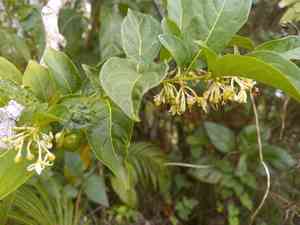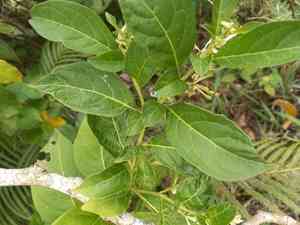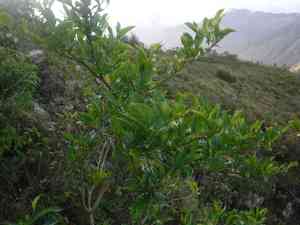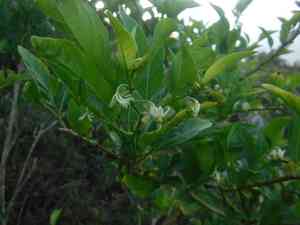
Forest nightshade(Solanum nudum)

Forest nightshade (Solanum nudum)

Also known as: Naked Nightshade

Forest nightshade (Solanum nigrum) is characterized by its smooth, dark green leaves with wavy or lobed edges and small, star-shaped flowers that can be white or light purple. The plant produces round, glossy berries that transition from green to black or dark purple as they mature.

**Key Characteristics**:
- **Leaves**: Ovate, dark green, and sometimes lobed.
- **Flowers**: Small, typically white or light purple, with five petals.
- **Fruit**: Shiny berries that ripen from green to black or purple.
- **Height**: Grows between 30 cm to 120 cm tall.

**Growing Conditions**:
- **Soil**: Prefers well-drained soil but is adaptable to various soil types.
- **Light**: Grows best in full sun to partial shade.
- **Water**: Needs moderate watering; can withstand some drought once established.
- **Habitat**: Commonly found in temperate and subtropical regions, including disturbed areas and agricultural lands.

Note: Handle with caution, as some parts of the plant can be toxic if ingested.

Attributes of Forest nightshade

Lifespan
Perennial
Plant Type
Tree, Shrub
Plant Height
1.5 m to 3 m
Spread
1 to 2 meters
Leaf Color
Green
Flower Size
8 mm to 9 mm
Flower Color
Green

ForwardPlant - Identify plants with a snap

Identify and diagnose plants, get toxicity alerts, and explore safety guides for all types of fungi.

Try for Free

Images of Forest nightshade

Forest nightshade(Solanum nudum)

Quickly Identify Forest nightshade

1
Solanum nudum can be identified by its small, shrub-like structure, smooth leaves, and small white or purple flowers. The berries are typically small and green when immature, turning to a yellow or orange color when ripe.

Scientific Classification of Forest nightshade

Phylum
Vascular plants
Class
Dicotyledons
Order
Solanales
Family
Nightshade
Genus
Nightshades
Species
Forest nightshade

Planting and Growing of Forest nightshade

Care Difficulty
Easy
Watering Schedule
Every 2 days
Sunlight Requirements
Partial sun
Sunshine Duration
6-10 hours
Ideal Temperature
68-77℉
Soil Type
Potting Mix, Peat Mix
Soil pH
6.5-7.5
Fertilizer Type
Balanced
Pruning Season
Spring, Summer
Pruning Area
Branches, Leaves
Pruning Frequency
2 times a year
Repotting Season
Spring
Pot Type
Plastic, Ceramic

water icon How to Water Forest nightshade?

When watering Solanum nudum, ensure the soil is evenly moist without being soggy. The plant prefers moderate watering; you should see the water draining from the pot's bottom holes, indicating enough moisture has reached the roots without excess. Avoid standing water, which can lead to root rot.
What are the symptoms of an underwatered Forest nightshade?
What should I do if my Forest nightshade is not getting enough water?
What are the symptoms of an overwatered Forest nightshade?
How to save an overwatered Forest nightshade?

sunlight icon What Are the Sunlight Requirements for Forest nightshade?

Sunlight Requirements: Partial sun
Duration of light: 4 to 6 hours
Solanum nudum benefits from partial sun conditions which equates to receiving moderate light throughout the day, promoting strong growth and vibrant foliage.
Light Preference
Acquiring Optimal Light
Benefits of Ideal Lighting
More About Sunlight Requirements Techniques

temperature icon What Is the Ideal Temperature Range for Forest nightshade?

Ideal Temperature: 68 ~ 77℉
The ideal temperature range for Solanum nudum is between 68°F and 77°F. Within this range, the plant thrives and exhibits optimal growth and productivity. Temperatures in this range mimic the natural habitat of this plant, providing conditions for healthy metabolic processes and resistance to disease.

soil icon What Soil is Best for Forest nightshade?

Soil type: Loam, Sandy loam, Acidic soil
Soil PH: 6.5 ~ 7.5
Solanum nudum thrives in well-drained soil, ensuring that excess water does not accumulate and cause root rot. This requirement enables the plant to grow strong roots, enhancing its overall health and increasing resilience against pests. The plant requires a nutrient-rich medium to support its growth and fruit development. A mix of organic compost and mineral-rich topsoil is ideal, as it provides essential nutrients, leading to healthier foliage and more vigorous flowering. Although Solanum nudum needs well-drained soil, it also requires some level of moisture retention. Sandy loam or loam soils can provide this balance, allowing roots to access consistent moisture without becoming waterlogged.

fertilize icon How to Fertilize Forest nightshade?

Fertilizer type: Balanced
For Solanum nudum, use a balanced fertilizer, such as a 10-10-10 formula. Apply liquid fertilizer at a concentration of 1 teaspoon per gallon of water during active growth periods.

prune icon How to Prune Forest nightshade?

Pruning Time: Spring, Summer
Start by inspecting the plant for any dead or diseased branches. Cut back these areas, making clean cuts at a 45-degree angle to promote healing. Continue by shaping the plant by trimming overgrown areas, maintaining its natural form. Ensure sufficient airflow by thinning dense areas, and consistently remove suckers at the base. Pay special attention to where branches intersect with the main stem or other branches. Remove those that are crossing or rubbing against each other, as this can cause damage and invite pests or diseases. More About Pruning Techniques

propagate icon How to Propagate Forest nightshade plant?

Propagate Time: Spring,Late spring
1
Begin by soaking seeds in warm water for 24 hours to soften their coating, enhancing germination rates. After soaking, sow seeds in a well-draining potting mix at a shallow depth about twice the size of the seed.
2
Using a sterile scalpel, cut semi-hardwood stems just below a node. Ensure each cutting is about 10-15cm long with several leaves. Remove leaves from the lower half to prevent rot once planted.
3
Dip the cut end of the cutting into a rooting hormone for better root development. Plant it into a potting mix, firm the soil gently around the base, and ensure the soil remains moist but not waterlogged.

repot icon How to Repot Forest nightshade plant?

Repotting frequency: Every 1-2 years
1
You should consider repotting Solanum nudum when you notice roots crowding the bottom of the current pot or the plant appears stunted despite regular care. These are clear signs it's outgrowing its current home. Repotting in early Spring or Summer is ideal as it coincides with the plant's active growth period, allowing it to adjust better to the new pot.
2
Select a pot that's one size larger than the current one, with drainage holes to prevent waterlogging. Terra cotta or ceramic pots are great as they allow soil to breathe, promoting healthy root development. Ensure the new pot provides room for root expansion, which will enhance overall plant health and vigor.
3
Opt for a well-draining potting mix that can hold some moisture but doesn't stay soggy. This prevents root rot and ensures the plant receives adequate aeration. A mix containing peat, perlite, and some organic matter is often ideal, offering a balance of nutrients and drainage.

ForwardPlant - Identify plants with a snap

Find the best spots for them to optimize their health, simply using your phone.

Try for Free

Toxicity

ingestion

Identify toxic plants for your safety

Learn which plants are harmful to you and your pets, and make informed choices for a safer home!

Try for Free
WARNING
The judgment on toxicity and danger is for reference only. We DO NOT GUARANTEE any accuracy of such judgment. Therefore, you SHALL NOT rely on such judgment. It is IMPORTANT TO SEEK PROFESSIONAL ADVICE in advance when necessary.