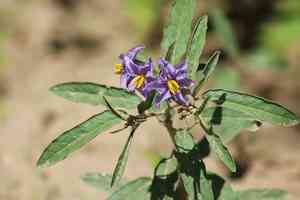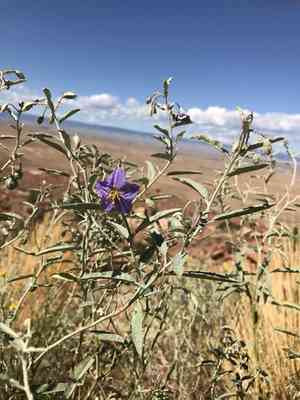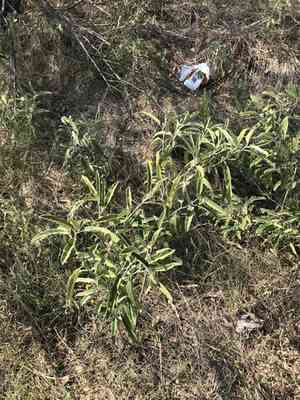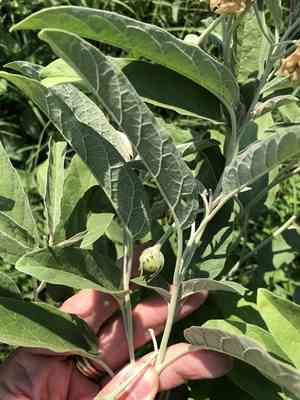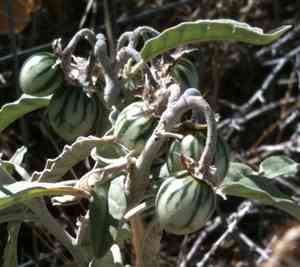
Silverleaf nightshade(Solanum elaeagnifolium)

Silverleaf nightshade (Solanum elaeagnifolium)

Also known as: Silverleaf nettle, Silver nightshade, Silver-leaf bitter-apple, Bull-nettle

Silverleaf nightshade (Solanum elaeagnifolium) is a prevalent weed found across North America, South America, and Africa. Known as "Satan's bush" in South Africa, it is considered toxic to horses if ingested.

Attributes of Silverleaf nightshade

Lifespan
Perennial
Plant Type
Herb
Plant Height
30 cm to 91 cm
Spread
30 cm
Leaf Color
Green Silver Blue Yellow
Flower Size
1.9 cm
Flower Color
Purple White Blue Lavender

ForwardPlant - Identify plants with a snap

Identify and diagnose plants, get toxicity alerts, and explore safety guides for all types of fungi.

Try for Free

Images of Silverleaf nightshade

Silverleaf nightshade(Solanum elaeagnifolium)

Quickly Identify Silverleaf nightshade

1
Solanum elaeagnifolium can be identified by its lance-shaped, silver-colored leaves, which have a dense covering of star-shaped hairs. The plant produces purple or occasionally white flowers with five petals and yellow stamens. The fruit is a small, round berry that turns yellow when mature.

Scientific Classification of Silverleaf nightshade

Phylum
Vascular plants
Class
Dicotyledons
Order
Solanales
Family
Nightshade
Genus
Nightshades
Species
Silverleaf nightshade

Planting and Growing of Silverleaf nightshade

Care Difficulty
Hard
Watering Schedule
Every 2 days
Sunlight Requirements
Full sun
Sunshine Duration
4-8 hours
Ideal Temperature
68-86℉
Soil Type
Potting Mix, Peat Mix
Soil pH
6.5-7.5
Fertilizer Type
Balanced
Pruning Season
Spring, Summer
Pruning Area
Branches, Leaves
Pruning Frequency
2 times a year
Repotting Season
Spring
Pot Type
Terracotta, Plastic

water icon How to Water Silverleaf nightshade?

For Solanum elaeagnifolium, ensuring an adequate yet moderate amount of water is critical. Water approximately 250 milliliters each time, almost like you're providing a small drink rather than a flood. The soil should feel moist to the touch, not soaked, allowing any excess water to drain freely from the pot.
What are the symptoms of an underwatered Silverleaf nightshade? ›
What should I do if my Silverleaf nightshade is not getting enough water? ›
What are the symptoms of an overwatered Silverleaf nightshade? ›
How to save an overwatered Silverleaf nightshade? ›

sunlight icon What Are the Sunlight Requirements for Silverleaf nightshade?

Sunlight Requirements: Full sun
Duration of light: 6 to 8 hours
For ideal growth, access to full sun exposure is critical, allowing the plant to thrive and enhance its natural resilience and productivity.
What is the best lighting solution? ›
How to achieve ideal lighting? ›
What are the benefits of ideal lighting? ›

temperature icon What Is the Ideal Temperature Range for Silverleaf nightshade?

Ideal Temperature: 68 ~ 86℉
Solanum elaeagnifolium thrives best when temperatures are maintained between 68°F and 86°F. This range supports optimal metabolic and physiological processes, aiding in robust growth and development. Proper temperature conditions facilitate nutrient absorption and overall plant vigor.

soil icon What Soil is Best for Silverleaf nightshade?

Soil type: Sandy soil, Sandy loam, Calcareous soil
Soil PH: 6.5 ~ 7.5
Solanum elaeagnifolium thrives in soil with excellent drainage. Good drainage prevents root rot and ensures that the roots receive adequate oxygen. Using sandy or sandy loam soil enhances this drainage quality, thus supporting healthy plant development. This plant requires minimal nutrients due to its hardy nature. A nutrient-rich environment is not essential, making it suitable for low-fertility sandy soils. Such soils avoid excessive nutrient buildup, beneficial for controlling disease and promoting natural growth cycles. While Solanum elaeagnifolium can tolerate a range of pH between 6.5 and 7.5, a neutral to slightly alkaline environment is ideal. This pH range facilitates optimal nutrient absorption, avoiding deficiencies or toxicities, thus supporting vigorous growth.

fertilize icon How to Fertilize Silverleaf nightshade?

Fertilizer type: Balanced
Solanum elaeagnifolium, commonly known as silverleaf nightshade, benefits from a balanced nutrient supply due to its hardy nature. When using liquid fertilizers, apply at a rate of 1/2 teaspoon per gallon of water for an average-sized plant. For slow-release granules, scatter them lightly over the soil surface, using about 1 tablespoon per plant, being careful not to burn the roots or leaves.

prune icon How to Prune Silverleaf nightshade?

Pruning Time: Spring, Summer, Autumn
When handling Solanum elaeagnifolium, it is essential to wear gloves and long sleeves, as the plant can be a skin irritant. Take care to avoid contact with the eyes or mouth. Solanum elaeagnifolium can exude a sticky sap when cut, which may stain tools and clothing. Ensure to clean pruning tools after use to avoid sticky residues that might foster bacterial growth or rust. After pruning, discard or destroy the removed plant material properly to prevent any potential regrowth or spreading of seeds, as Solanum elaeagnifolium can be quite invasive if not controlled adequately.

propagate icon How to Propagate Silverleaf nightshade plant?

Propagate Time: Spring, Early summer
1
Prepare a well-draining soil mix that is slightly acidic. Mix it with sand and compost to enhance aeration and nutrient availability, ensuring it supports root development during early stages.
2
Sow the seeds about half an inch deep in the prepared soil. Space them out evenly to avoid overcrowding, which can lead to poor growth and increased susceptibility to fungal infections.
3
Select healthy stems for cuttings. Each cutting should be around 6 inches long with at least one node. This ensures there are enough growth points to encourage root formation once planted.

repot icon How to Repot Silverleaf nightshade plant?

Repotting frequency: Every 2-3 years
1
Recognize the signals for repotting Solanum elaeagnifolium by observing rapid root growth, roots protruding out of drainage holes, or soil compaction. These cues indicate that the plant needs more space to thrive. Spring or summer is ideal, as the plant is in its active growth phase and can quickly adjust to new conditions.
2
Select a pot that is one size larger than the current one, offering fresh space for roots without overwhelming the plant. Ensure the pot has ample drainage holes to prevent water-logging. Opting for a terracotta or clay pot can help in maintaining appropriate moisture levels, providing a breathable environment for the soil.
3
For repotting Solanum elaeagnifolium, opt for a well-draining sandy soil mix that mimics its native desert environment. This type of soil not only prevents waterlogging by allowing effective water drainage but also offers the necessary aeration for healthy root development and plant growth.

ForwardPlant - Identify plants with a snap

Find the best spots for them to optimize their health, simply using your phone.

Try for Free

Toxicity of Silverleaf nightshade

Is Silverleaf nightshade toxic to humans?

Silverleaf nightshade is an extremely toxic plant species. Its fruits harbor the poisonous glycoalkaloid solanine, while the roots, leaves, and stems also contain harmful alkaloids. Consuming the berries can lead to significant neurological, gastrointestinal, and cardiac complications. Symptoms may include abdominal cramps, nausea, vomiting, and diarrhea. Additional effects such as headaches, vomiting, dizziness, and confusion may manifest, along with irregular heart rhythms. When ingested in larger amounts, these berries can result in long-lasting health consequences or prove fatal. The plant is generally not hazardous to adults, yet it can attract children due to the enticing ripe berries.

Is Silverleaf nightshade toxic to cat?

Silverleaf nightshade presents a moderate toxic risk to cats. Exposure happens when a cat consumes any portion of the plant, since all parts are poisonous. Following ingestion, cats might show several symptoms of physical discomfort or sickness. Prompt veterinary attention is crucial to address the health hazards linked to silverleaf nightshade. Pet owners must ensure their animals cannot reach this plant to avert possible poisoning.

Is Silverleaf nightshade toxic to dog?

Silverleaf nightshade presents a moderate risk of toxicity to dogs. All parts of this plant are toxic, and ingestion of any component can lead to poisoning in canines. Symptoms such as gastrointestinal disturbances, neurological problems, or other systemic reactions may arise if a dog consumes parts of silverleaf nightshade. Therefore, it is important for dog owners to be watchful and keep their pets away from locations where silverleaf nightshade is present. Should a dog accidentally ingest this plant, prompt veterinary assistance is vital to effectively address the poisoning.

Identify toxic plants for your safety

Learn which plants are harmful to you and your pets, and make informed choices for a safer home!

Try for Free
WARNING
The judgment on toxicity and danger is for reference only. We DO NOT GUARANTEE any accuracy of such judgment. Therefore, you SHALL NOT rely on such judgment. It is IMPORTANT TO SEEK PROFESSIONAL ADVICE in advance when necessary.
More About Toxic Techniques→