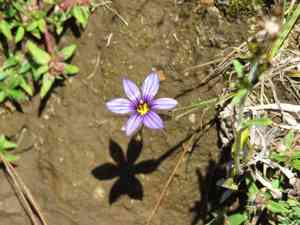
Swordleaf blue-eyed grass (Sisyrinchium scabrum)
Also known as: Blue-eyed Grass, Purple-eyed Grass
Swordleaf blue-eyed grass (Sisyrinchium angustifolium) is a perennial herb admired for its ornamental value in gardens. It is characterized by its slender, sword-like leaves and striking six-petaled, star-shaped blue flowers with a bright yellow center. One notable behavior is its diurnal blooming pattern: the flowers open in the morning, revealing their vibrant colors, and close by late afternoon or evening, responding to the presence of sunlight.
In This Article
Attributes of Swordleaf blue-eyed grass
Lifespan
Perennial
Plant Type
Herb
Plant Height
45 cm
Spread
30 cm
Leaf Color
Green
Flower Size
2.5 cm
Flower Color
Purple Blue
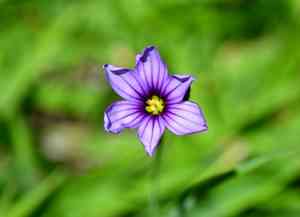
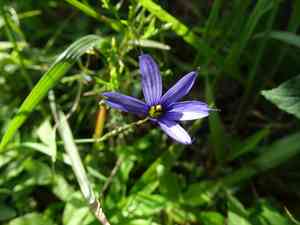
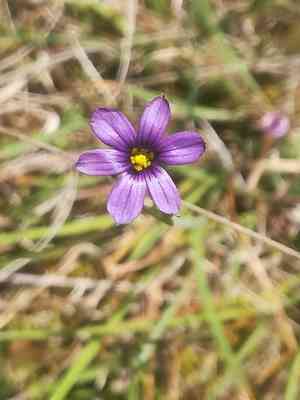
Images of Swordleaf blue-eyed grass
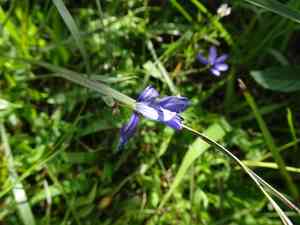
Quickly Identify Swordleaf blue-eyed grass
1
Identifying Sisyrinchium scabrum involves looking for its grass-like foliage and star-shaped flowers with six purple or blue petals and a yellow center. The flowers typically bloom in the late spring to early summer.
Scientific Classification of Swordleaf blue-eyed grass
Phylum
Vascular plants
Class
Monocotyledons
Order
Asparagales
Family
Iris
Genus
Blue-eyed grasses
Species
Swordleaf blue-eyed grass
Planting and Growing of Swordleaf blue-eyed grass
Care Difficulty
Easy
Watering Schedule
Every 3 days
Sunlight Requirements
Partial sun
Sunshine Duration
6-12 hours
Ideal Temperature
60-75℉
Soil Type
Potting Mix, Peat Mix
Soil pH
6.5-7.5
Fertilizer Type
Balanced
Pruning Season
Spring, Summer
Pruning Area
Branches, Leaves
Pruning Frequency
2 times a year
Repotting Season
Spring
Pot Type
Plastic, Ceramic
 How to Water Swordleaf blue-eyed grass?
When watering Sisyrinchium scabrum, aim to keep the soil consistently moist but not waterlogged. Water about 250 milliliters each time, ensuring that it reaches the root zone to promote healthy growth. This plant thrives when the soil is allowed to dry out slightly between waterings, preventing root rot.
What are the symptoms of an underwatered Swordleaf blue-eyed grass?
›
What should I do if my Swordleaf blue-eyed grass is not getting enough water?
›
What are the symptoms of an overwatered Swordleaf blue-eyed grass?
›
How to save an overwatered Swordleaf blue-eyed grass?
›
 What Are the Sunlight Requirements for Swordleaf blue-eyed grass?
Sisyrinchium scabrum does best in partial sun, receiving at least 4-6 hours of light daily. Providing this range ensures robust growth, colorful blooms, and strong, healthy foliage density.
What is the ideal sunlight exposure for Sisyrinchium scabrum?
›
How can I achieve ideal sunlight for Sisyrinchium scabrum?
›
What are the benefits of achieving ideal sunlight conditions?
›
 What Is the Ideal Temperature Range for Swordleaf blue-eyed grass?
Sisyrinchium scabrum thrives best in an environment where temperatures range between 60°F and 75°F. This range provides optimal warmth for photosynthesis, which is crucial for the plant's energy production. Adequate energy allows the plant to grow robustly and produce vibrant flowers.
 What Soil is Best for Swordleaf blue-eyed grass?
Sisyrinchium scabrum thrives best in well-drained soil which allows water to filter freely, preventing root rot and ensuring healthy plant development. Incorporating organic matter into the soil improves nutrient content and moisture retention, providing essential nourishment for Sisyrinchium scabrum. The soil should have moderate fertility, which supports steady growth without the risk of nutrient burns commonly seen with overly rich soils.
 How to Fertilize Swordleaf blue-eyed grass?
Sisyrinchium scabrum, commonly known as blue-eyed grass, benefits from moderate fertilization. A balanced 10-10-10 water-soluble fertilizer is ideal. For liquid fertilizers, a dilution to half the recommended strength helps prevent root damage. As a general guide, apply 1 tablespoon of diluted liquid fertilizer per plant.
 How to Prune Swordleaf blue-eyed grass?
To prune Sisyrinchium scabrum, start by using sterilized pruning shears to prevent disease spread. Trim back any dead or damaged stems by cutting them close to the base to encourage healthier growth. Focus on maintaining a natural shape, removing any straggly or unbalanced growth to ensure an even appearance. To enhance blooming, remove old flower stems promptly after flowering. This prevents seed formation and redirects energy into producing new growth and more flowers. Deadhead spent flowers regularly to keep the plant looking tidy and prolong its blooming period. Periodically check for any loose, sprawling stems and prune them to maintain a compact and attractive form. Regular shaping ensures the plant does not get leggy and remains aesthetically pleasing in your garden.
More About Pruning Techniques→
 How to Propagate Swordleaf blue-eyed grass plant?
1
Sow the seeds of Sisyrinchium scabrum in a seed tray with well-draining soil. Ensure that the soil is kept moist but not waterlogged. Provide indirect sunlight and maintain temperate room conditions for optimal germination.
2
To propagate by division, use a garden fork to carefully lift mature plants from the soil. Divide the clump into smaller sections, making sure each section has a healthy root system. Replant the divisions promptly in a prepared garden bed.
3
For both seed propagation and division, establish a regular watering schedule. Water the plants deeply after planting and maintain consistent moisture in the soil to support initial growth stages.
 How to Repot Swordleaf blue-eyed grass plant?
1
Sisyrinchium scabrum needs repotting when its roots start circling the pot, indicating it's root-bound. You may also notice stunted growth or poor flowering. Early spring or summer, during its active growing phase, is ideal for minimizing stress and promoting quick acclimation.
2
Select a pot that's one size larger with good drainage holes. This size allows the plant space to grow without overwhelming it with excessive soil, which can lead to water retention issues. Opting for breathable materials like terracotta is beneficial as it encourages air flow to the roots.
3
Utilize a well-draining loamy soil mix, potentially enhanced with sand or perlite. Such a mix prevents the roots from sitting in water, which Sisyrinchium scabrum dislikes, and supports healthy growth by providing adequate aeration and nutrient availability.
Learn More About Swordleaf blue-eyed grass Diseases
Anthracnose
Bacterial Leaf Spot
Bacterial Soft Rot
Bacterial Wilt
Black Spot
Chemical Injury
Crown Gall
Cyst Nematode
Damping-off
Downy Mildew
Drought Stress
Fusarium Wilt
Gray Mold
Leaf Curl
Leaf Spot
Mosaic
Nutrient Deficiency
Nutrient Toxicity
Powdery Mildew
Root Rot
Root-knot Nematode
Rusts
Sooty Mold
Spider Mites
Temperature Stress
Thrips Damage
White Mold



