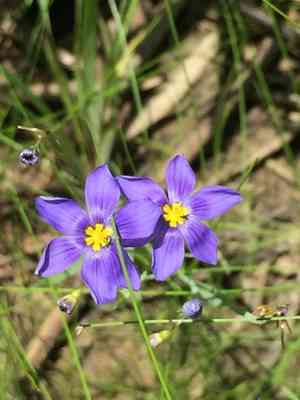
Roadside blue-eyed grass (Sisyrinchium langloisii)
Also known as: Langlois' Blue-eyed Grass
Roadside blue-eyed grass (Sisyrinchium montanum) is a delightful perennial featuring slender, grass-like foliage that grows in clumps. It produces striking blue to violet flowers with distinctive yellow centers, providing a beautiful contrast against its green leaves. This plant prefers moist, well-drained soils and thrives in conditions ranging from full sun to partial shade. Its vibrant blooms, appearing from late spring to early summer, are particularly attractive to pollinators such as bees and butterflies, drawn to the flowers' vivid colors and nectar.
In This Article
Attributes of Roadside blue-eyed grass
Lifespan
Perennial
Plant Type
Herb
Plant Height
0 mm to 30 cm
Spread
N/A (non-woody plant)
Leaf Color
Green
Flower Size
Less than 1 inch (around 2.5 cm)
Flower Color
Blue to Violet
Images of Roadside blue-eyed grass
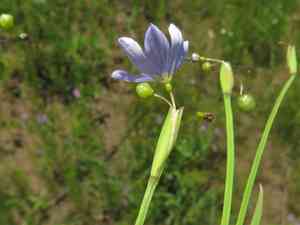
Quickly Identify Roadside blue-eyed grass
1
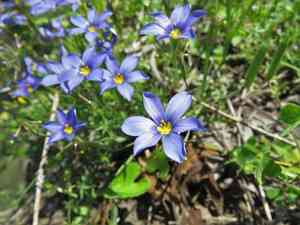
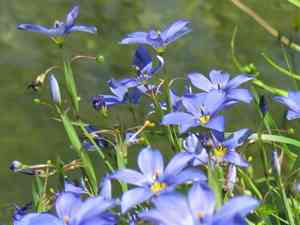
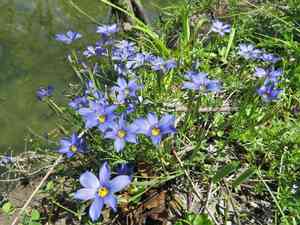
To identify Sisyrinchium langloisii, look for its characteristic blue to violet flowers with a yellow center, typically less than an inch in diameter. The leaves are slender, grass-like, and can grow up to 50 cm in length. The plant\'s height usually ranges from 10 to 30 cm.
Scientific Classification of Roadside blue-eyed grass
Phylum
Vascular plants
Class
Monocotyledons
Order
Asparagales
Family
Iris
Genus
Blue-eyed grasses
Species
Roadside blue-eyed grass
Planting and Growing of Roadside blue-eyed grass
Care Difficulty
Moderate
Watering Schedule
Every 4 days
Sunlight Requirements
Partial sun
Sunshine Duration
6-10 hours
Ideal Temperature
65-75℉
Soil Type
Potting Mix, Peat Mix
Soil pH
6.5-7.5
Fertilizer Type
Balanced
Pruning Season
Spring, Summer
Pruning Area
Branches, Leaves
Pruning Frequency
2 times a year
Repotting Season
Spring
Pot Type
Plastic, Ceramic
 How to Water Roadside blue-eyed grass?
For Sisyrinchium langloisii, the watering amount should be about 200 ml per session. The goal is to keep the soil lightly moist but not soggy, allowing it to dry slightly between waterings. Always check the top inch of the soil and water only when it feels dry.
What are the symptoms of an underwatered Roadside blue-eyed grass?
›
What should I do if my Roadside blue-eyed grass is not getting enough water?
›
What are the symptoms of an overwatered Roadside blue-eyed grass?
›
How to save an overwatered Roadside blue-eyed grass?
›
 What Are the Sunlight Requirements for Roadside blue-eyed grass?
Partial sun offers Sisyrinchium langloisii balanced light, enhancing photosynthesis, promoting healthy flowering, and maintaining vibrant leaf colors.
What is the best location for Sisyrinchium langloisii?
›
How can you ensure the plant gets ideal light conditions?
›
What benefits does ideal lighting offer for this plant?
›
 What Is the Ideal Temperature Range for Roadside blue-eyed grass?
The ideal temperature range for Sisyrinchium langloisii is between 65°F and 75°F. This range ensures optimal growth and blooming. It is important to maintain these temperatures for robust health and flowering, as variations might affect its growth cycle.
 What Soil is Best for Roadside blue-eyed grass?
Sisyrinchium langloisii thrives in well-drained soils, which prevent waterlogging that can lead to root rot. This soil condition ensures healthy root systems and supports better nutrient uptake. Though not demanding of rich soils, Sisyrinchium langloisii benefits from moderate fertility, where organic content supports growth without overwhelming the plant with nutrients. The soil should have good moisture retention to cater to the plant’s need for consistent moisture, especially during dry spells, which helps in sustaining its lush foliage and vibrant blooms.
 How to Fertilize Roadside blue-eyed grass?
For Sisyrinchium langloisii, always aim for a balanced approach with fertilizers. Use a 10-10-10 balanced liquid fertilizer, mixing about 1 tablespoon per gallon of water for each application to ensure optimal health without overfeeding.
 How to Prune Roadside blue-eyed grass?
Start by removing any dead or damaged leaves at the base. This encourages new growth and prevents diseases from taking hold, keeping the plant vibrant and healthy. Look for any stems that appear overgrown or leggy. Trim these back to a node to encourage new side shoots and bushy growth, enhancing the plant's appearance. Prune the plant to maintain a desired shape. Focus on keeping the overall size in check and remove any wayward stems. This helps in maintaining its ornamental appeal.
More About Pruning Techniques→
 How to Propagate Roadside blue-eyed grass plant?
1
Sow Sisyrinchium langloisii seeds in seed trays filled with well-draining soil in early spring. Cover them lightly with soil and keep the soil moist but not waterlogged. Ensure they are in a warm location to promote germination.
2
In spring, carefully dig up mature Sisyrinchium langloisii plants. Use a garden fork to divide the clumps into smaller sections, ensuring each section has a healthy root system. Replant them immediately in a prepared bed.
3
Once seedlings have several true leaves, gradually acclimate them to outdoor conditions. Over a period of two weeks, increase their exposure to sunlight and reduce watering to toughen them for outdoor planting.
 How to Repot Roadside blue-eyed grass plant?
1
The ideal time for repotting Sisyrinchium langloisii is when you notice roots coming out from the drainage holes, indicating overcrowding. Alternatively, if growth seems stunted or soil becomes compacted, it’s time to repot.
2
Select a pot that is 1-2 inches wider than the current one to allow for growth. Ensure it has good drainage holes to prevent waterlogging. A terracotta pot can be beneficial as it promotes air circulation around the roots.
3
Opt for a well-draining, sandy mix to prevent water retention that could lead to root rot. This soil type ensures good aeration and allows for optimal root development, mimicking the plant's natural habitat.
Learn More About Roadside blue-eyed grass Diseases
Anthracnose
Bacterial Leaf Spot
Bacterial Soft Rot
Bacterial Wilt
Chemical Injury
Crown Gall
Cyst Nematode
Damping-off
Downy Mildew
Drought Stress
Fusarium Wilt
Gray Mold
Leaf Spot
Mosaic
Nutrient Deficiency
Nutrient Toxicity
Powdery Mildew
Root Rot
Root-knot Nematode
Rusts
Sooty Mold
Spider Mites
Temperature Stress
Thrips Damage
White Mold



