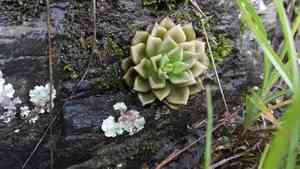
Indian sedum(Sinocrassula indica)

Indian sedum (Sinocrassula indica)

Also known as: Caucasian Stonecrop

Indian sedum, or Sinocrassula indica, is a small succulent that exhibits different characteristics based on its light exposure. When grown in shade, the plant usually maintains a soft green hue. However, under full sun, its foliage often turns a striking scarlet color. Post-flowering, Indian sedum may either die or produce new offshoots from its base. Propagation is straightforward; simply place a leaf cutting on moist soil, and it will eventually develop roots.

Attributes of Indian sedum

Lifespan
Perennial
Plant Type
Succulent
Plant Height
15 cm to 60 cm
Spread
45 cm
Leaf Color
Dark green to blackish
Flower Size
5 cm to 10 cm
Flower Color
Yellow Green Red

ForwardPlant - Identify plants with a snap

Identify and diagnose plants, get toxicity alerts, and explore safety guides for all types of fungi.

Try for Free

Quickly Identify Indian sedum

1
Identify Sinocrassula indica by its dense, rosette-shaped clusters of fleshy, pointed leaves which are dark green to blackish in color. The leaves are tightly packed together, giving it a compact and spiky appearance.

Scientific Classification of Indian sedum

Phylum
Vascular plants
Class
Dicotyledons
Order
Saxifrages, stonecrops and allies
Family
Stonecrop
Genus
Chinese Crassula
Species
Indian sedum

Planting and Growing of Indian sedum

Care Difficulty
Easy
Watering Schedule
Every 2 days
Sunlight Requirements
Partial sun
Sunshine Duration
4-8 hours
Ideal Temperature
60-70℉
Soil Type
Potting Mix, Peat Mix
Soil pH
6.5-7.5
Fertilizer Type
Balanced
Pruning Season
Spring, Summer
Pruning Area
Branches, Leaves
Pruning Frequency
2 times a year
Repotting Season
Spring
Pot Type
Plastic, Ceramic

water icon How to Water Indian sedum?

When watering Sinocrassula indica, ensure the soil is evenly moist but not waterlogged. Aim to soak the soil thoroughly but let excess water drain away to prevent root rot.
What are the symptoms of an underwatered Indian sedum?
What should I do if my Indian sedum is not getting enough water?
What are the symptoms of an overwatered Indian sedum?
How to save an overwatered Indian sedum?
More About Watering Techniques

sunlight icon What Are the Sunlight Requirements for Indian sedum?

Sunlight Requirements: Partial sun, Full sun
Duration of light: 4 to 6 hours
A partial to full sun range is optimal. This level of light ensures Sinocrassula indica receives the correct amount of photosynthesis energy, crucial for maintaining its compact form and vibrant leaf health.
How much light does Sinocrassula indica need?
What solutions are there if the plant isn't getting enough natural sunlight?
What benefits does proper lighting condition offer to this plant?
More About Sunlight Requirements Techniques

temperature icon What Is the Ideal Temperature Range for Indian sedum?

Ideal Temperature: 60 ~ 70℉
For optimal growth, Sinocrassula indica plants thrive in mild temperatures ranging between 60°F and 70°F. These conditions simulate the plant's natural habitat, ensuring proper metabolism and growth patterns. By maintaining this range, you provide an environment conducive to robust development and flowering.

soil icon What Soil is Best for Indian sedum?

Soil type: Sandy soil, Sandy loam
Soil PH: 6.5 ~ 7.5
Sinocrassula indica thrives in well-drained soil to prevent root rot. Sandy and sandy loam soils are ideal as they allow excellent water drainage while retaining enough moisture essential for plant growth, providing a balanced environment. A pH range between 6.5 and 7.5 is ideal for Sinocrassula indica. Such pH levels ensure optimal nutrient availability, promoting healthy root development and vibrant foliage, essential for succulent plants. This plant prefers soil that isn't too rich in nutrients. Overly fertile soil may encourage excessive growth which can lead to plant stress. Choosing a nutrient-light profile supports healthy compact growth characteristic of Sinocrassula indica. More About Soil

fertilize icon How to Fertilize Indian sedum?

Fertilizer type: Balanced
For Sinocrassula indica, a light-hand approach with fertilizers is ideal. Use a diluted liquid fertilizer at half the recommended strength for succulents. Ensure not to over-concentrate the solution as this might burn the roots and harm the plant.

prune icon How to Prune Indian sedum?

Pruning Time: Spring, Autumn
Begin by sterilizing your pruning shears with rubbing alcohol to prevent the spread of disease. Examine the plant and identify any dead, damaged, or yellowing leaves. Gently remove these by cutting at the base where the leaf meets the stem. If the plant has become elongated, you can make a clean cut above a leaf node to encourage bushier growth. Avoid removing more than one-third of the plant at a time to reduce shock. After pruning, give your Sinocrassula indica a few days to recover before resuming normal watering and care.

propagate icon How to Propagate Indian sedum plant?

Propagate Time: Spring, Early summer
1
Choose a healthy plant and use sterilized scissors to cut a stem or leaf. Allow the cutting to dry for a few days to form a callus, which helps prevent rot when planted.
2
Sprinkle seeds over a moist, well-draining soil mix, lightly covering them. Keep the soil slightly damp and provide indirect light to encourage germination.
3
Carefully remove the plant from its pot and gently separate the offsets from the parent plant. Replant each division into its own container filled with a succulent soil mix.

repot icon How to Repot Indian sedum plant?

Repotting frequency: Every 2-3 years
1
Sinocrassula indica shows clear signals when it requires repotting. If you notice the roots coming out of the drainage holes or the plant appears overcrowded, it's a strong indicator that repotting is needed. This typically happens during the active growing season in spring or autumn, ensuring minimal stress to the plant.
2
Select a pot that provides at least one extra inch for the roots to spread, ideally with drainage holes. A shallow, wide pot works best as it mimics its natural environment. Using a pot slightly larger than the current one prevents excessive water retention, reducing the risk of root rot, and provides adequate space for the succulent to expand.
3
Opt for a well-draining soil mix, specifically formulated for cacti and succulents. Such a mix usually contains sand, perlite, and coarse soil. This combination ensures excellent drainage, preventing waterlogging and promoting healthy root growth, which is crucial for succulents like Sinocrassula indica.

ForwardPlant - Identify plants with a snap

Find the best spots for them to optimize their health, simply using your phone.

Try for Free

Toxicity of Indian sedum

Is Indian sedum toxic to humans?

Indian sedum exhibits a mild degree of toxicity in humans, as all parts of the plant can lead to poisoning if consumed. Upon ingestion, individuals may experience various symptoms, including gastrointestinal distress such as nausea, vomiting, and diarrhea. The intensity of these symptoms can differ based on the amount ingested. Since every part of indian sedum is poisonous, it is crucial for individuals to take precautions to avoid accidental consumption, particularly in areas where the plant grows. Awareness of these potential dangers is especially vital in homes with children or pets, who may unintentionally ingest portions of the plant.

Is Indian sedum toxic to cat?

Indian sedum demonstrates a mild toxicity level for cats. It is possible for felines to accidentally consume portions of indian sedum, which may result in signs of physical distress and health issues. The whole plant contains toxic characteristics, and while the specific toxic agents remain unidentified, cat owners must be proactive in restricting their pets' access to indian sedum. If ingestion is suspected, it is crucial to obtain prompt medical care at a veterinary clinic to safeguard the health of the affected cat.

Is Indian sedum toxic to dog?

Indian sedum carries a slight toxicity risk for dogs. Dogs may inadvertently consume portions of indian sedum, which may lead to possible poisoning. The complete plant is poisonous, and ingestion could cause symptoms like digestive disturbance or skin irritation. If a dog shows signs of discomfort after being in contact with indian sedum, it is crucial to obtain prompt veterinary assistance to secure the best possible recovery for the animal.

Identify toxic plants for your safety

Learn which plants are harmful to you and your pets, and make informed choices for a safer home!

Try for Free
WARNING
The judgment on toxicity and danger is for reference only. We DO NOT GUARANTEE any accuracy of such judgment. Therefore, you SHALL NOT rely on such judgment. It is IMPORTANT TO SEEK PROFESSIONAL ADVICE in advance when necessary.
More About Toxic Techniques

