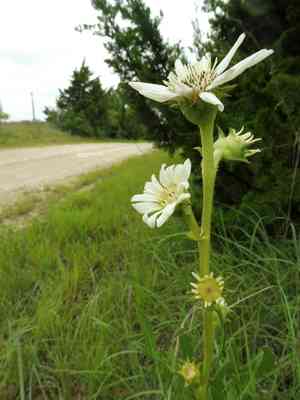
White rosinweed (Silphium albiflorum)
Also known as: White Rosinweed
White Wild Indigo (Baptisia alba) showcases beautiful white flowers that stand out against its vibrant green leaves. This hardy perennial flourishes in well-drained soils and full sunlight, commonly appearing in prairies and open woodlands. Its sturdy, upright stems provide resilience through changing seasons, making it a magnet for pollinators drawn to its prominent blooms.
In This Article
Attributes of White rosinweed
Lifespan
Perennial
Plant Type
Herb
Plant Height
30 cm to 91 cm
Spread
1 to 2 feet
Leaf Color
Green
Flower Size
2 to 3 inches
Flower Color
White
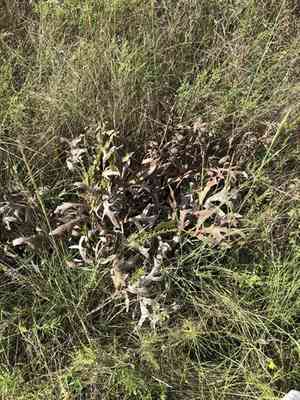
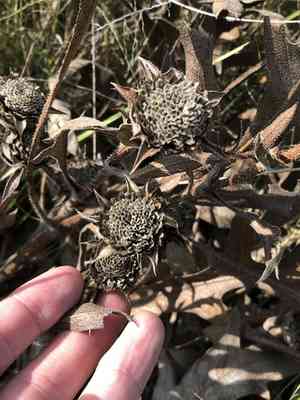
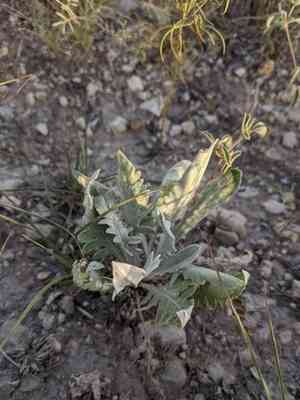
Images of White rosinweed

Quickly Identify White rosinweed
1
Identify Silphium albiflorum by its white flowers and coarse, sandpapery leaves. The plant typically has a strong, upright stem and is often seen in prairie or open woodland environments.
Scientific Classification of White rosinweed
Phylum
Vascular plants
Class
Dicotyledons
Order
Asterales
Family
Daisy
Genus
Rosinweeds
Species
White rosinweed
Planting and Growing of White rosinweed
Care Difficulty
Easy
Watering Schedule
Every 3 days
Sunlight Requirements
Full sun
Sunshine Duration
4-8 hours
Ideal Temperature
60-75℉
Soil Type
Potting Mix, Peat Mix
Soil pH
6.5-7.5
Fertilizer Type
Balanced
Pruning Season
Spring, Summer
Pruning Area
Branches, Leaves
Pruning Frequency
2 times a year
Repotting Season
Spring
Pot Type
Plastic, Ceramic
 How to Water White rosinweed?
Silphium albiflorum is a hardy plant that doesn’t require copious amounts of water. Each watering session should involve approximately 500 milliliters. The soil should be damp, not soggy, ensuring moisture reaches the roots without drowning them.
What are the symptoms of an underwatered White rosinweed?
›
What should I do if my White rosinweed is not getting enough water?
›
What are the symptoms of an overwatered White rosinweed?
›
How to save an overwatered White rosinweed?
›
 What Are the Sunlight Requirements for White rosinweed?
Silphium albiflorum thrives best in full to partial sun, benefiting from 6 to 8 hours of direct sunlight. This range supports vigorous growth and enhances flower production, offering lush green leaves and vibrant white blooms.
What is the best position for Silphium albiflorum to receive ideal sunlight?
›
How can I ensure my Silphium albiflorum gets consistent sunlight?
›
What are the benefits of providing Silphium albiflorum with optimal light conditions?
›
 What Is the Ideal Temperature Range for White rosinweed?
Silphium albiflorum thrives best within an ideal temperature range of 60 to 75 degrees Fahrenheit. This range allows for optimal growth and physiological processes. Maintaining temperatures within this range ensures that the plant's metabolic activities such as photosynthesis and respiration occur at peak efficiency. This range simulates the plant’s natural environment, facilitating healthier growth and blooming.
 What Soil is Best for White rosinweed?
Silphium albiflorum thrives best in well-drained soils, preventing root rot and promoting healthy root growth. This ensures the plant has a robust foundation, capable of weathering periods of drought and supporting tall, vigorous growth. This plant benefits from soils rich in organic matter, which supply essential nutrients needed for lush, white blooms. A nutrient-rich soil supports sustained blooming and leafy growth, enhancing the overall aesthetic of garden spaces. A balance in moisture retention is vital for Silphium albiflorum, as it prefers soils that hold moisture without becoming waterlogged. This ensures that the plant remains hydrated during dry spells, while excess water during heavy rains is efficiently drained away.
 How to Fertilize White rosinweed?
For Silphium albiflorum, ensure the fertilizer amount is balanced—adequate for growth but not too concentrated. Use about 1/4 cup of liquid fertilizer per gallon of water or 1-2 tablespoons of slow-release fertilizer per square foot. The plant does not require heavy feeding, so adjusting the quantity according to its size and growth stage is crucial.
 How to Prune White rosinweed?
Start by assessing the plant's entire shape and structure. Use clean, sharp pruning shears to make precise cuts. Begin pruning from the top, removing dead or damaged branches first. Trim the plant back to its desired shape, leaving enough foliage for photosynthesis. Regularly removing old flower heads will promote new blooms. For a healthier Silphium albiflorum, engage in thinning to improve air circulation by selectively removing certain branches. Consider cutting back main stems by one-third to foster bushier growth. Use a clean saw for thicker stems, ensuring cuts are smooth to prevent disease. Always follow the plant's natural growth pattern to maintain a balanced structure.
More About Pruning Techniques→
 How to Propagate White rosinweed plant?
1
Collect mature seeds in late autumn. Clean the seeds thoroughly to remove any debris, and store them in a cool, dry place until sowing in early spring.
2
Select healthy, non-flowering stems. Cut about 4-6 inches of the stem just below a node. Remove lower leaves and dip the cut end in rooting hormone for better results.
3
Carefully dig up mature plants in late spring. Divide the root ball using a sharp knife, ensuring each division has at least one healthy shoot and a portion of roots.
 How to Repot White rosinweed plant?
1
Watch for roots emerging from pot drainage holes, slow plant growth, or soil drying out rapidly. These are clear signs that your Silphium albiflorum needs repotting. Spring and early summer are ideal times as the plant is actively growing, allowing it to recover swiftly and establish itself in its new container.
2
Select a pot slightly larger than the current one, ideally 1-2 inches wider in diameter. This prevents overwhelming the roots with excessive soil, which can retain water and lead to root rot. A pot with drainage holes is essential, ensuring excess water doesn't stagnate and fostering a healthy root environment.
3
Opt for sandy, well-draining soil that replicates the plant's natural habitat. This type of soil promotes excellent drainage, reduces the risk of root rot, and supports the plant's need for aeration. An ideal mix might include equal parts of sand, loam, and a dash of organic matter to retain necessary nutrients.
Learn More About White rosinweed Diseases
Anthracnose
Bacterial Leaf Spot
Bacterial Wilt
Crown Gall
Cyst Nematode
Damping-off
Downy Mildew
Drought Stress
Fusarium Wilt
Gray Mold
Leaf Spot
Mosaic
Nutrient Deficiency
Nutrient Toxicity
Powdery Mildew
Root Rot
Root-knot Nematode
Rusts
Sooty Mold
Spider Mites
Temperature Stress
Thrips Damage
White Mold



