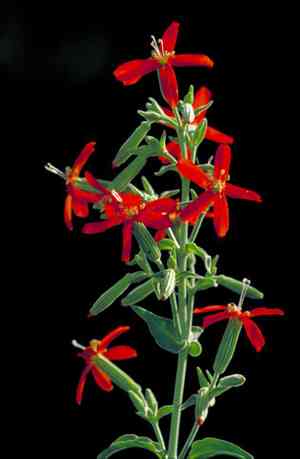
Royal catchfly (Silene regia)
Also known as: Royal catchfly
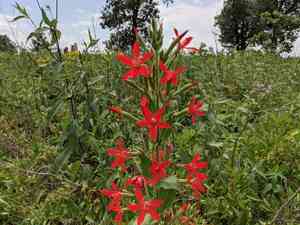
Silene regia, also known as royal catchfly, is indigenous to the central United States. The plant features multiple upright stems that can reach heights of up to 1.6 meters. Its leaves are lanceolate to oval-shaped, measuring up to 12 cm in length and becoming progressively smaller as they ascend the stem. The plant's vibrant red flowers have corolla lobes that are 1 to 2 cm long.
In This Article
Attributes of Royal catchfly
Lifespan
Perennial
Plant Type
Herb
Plant Height
91 cm to 1.8 m
Spread
Approximately 1 foot (30 cm)
Leaf Color
Green
Flower Size
1 to 1.5 inches (2.5 to 3.8 cm)
Flower Color
Bright red
Images of Royal catchfly
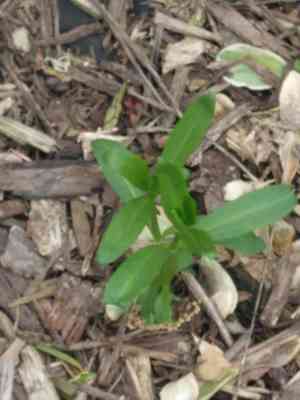
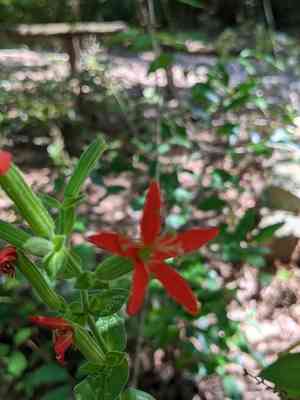
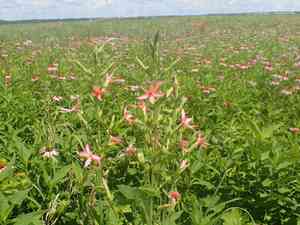
Quickly Identify Royal catchfly
1
Look for tall, slender stems with bright red, star-shaped flowers featuring five petals. Leaves are lance-shaped and arranged oppositely on the stem.
Scientific Classification of Royal catchfly
Phylum
Vascular plants
Class
Dicotyledons
Order
Caryophyllales
Family
Pink
Genus
Campions
Species
Royal catchfly
Planting and Growing of Royal catchfly
Care Difficulty
Moderate
Watering Schedule
Every 4 days
Sunlight Requirements
Full sun
Sunshine Duration
6-10 hours
Ideal Temperature
65-75℉
Soil Type
Potting Mix, Peat Mix
Soil pH
6.5-7.5
Fertilizer Type
Balanced
Pruning Season
Spring, Summer
Pruning Area
Branches, Leaves
Pruning Frequency
2 times a year
Repotting Season
Spring
Pot Type
Plastic, Ceramic
 How to Water Royal catchfly?
For Silene regia, ensuring the soil remains barely moist without being waterlogged is crucial. A deep soak of about 250ml ensures the water reaches the root level, reducing the frequency while providing adequate hydration.
What are the symptoms of an underwatered Royal catchfly?
›
What should I do if my Royal catchfly is not getting enough water?
›
What are the symptoms of an overwatered Royal catchfly?
›
How to save an overwatered Royal catchfly?
›
 What Are the Sunlight Requirements for Royal catchfly?
Silene regia thrives best in full or partial sun environments, with 6-8 hours of sunlight daily significantly enhancing its flowering and growth. This ensures robust health, full foliage, and vibrant bloom display.
What are the ideal lighting conditions for Silene regia?
›
How to achieve ideal light conditions for Silene regia?
›
Benefits of ideal lighting conditions for Silene regia?
›
 What Is the Ideal Temperature Range for Royal catchfly?
The ideal temperature range for Silene regia is between 65°F and 75°F. This range provides optimal conditions for growth and flowering, ensuring that the plant has enough warmth to stimulate metabolism and physiological processes while avoiding stress from excessive heat.
 What Soil is Best for Royal catchfly?
Silene regia thrives best in well-drained soil, preventing root rot and allowing for adequate air circulation around the roots. This promotes healthy growth and vibrant blooms. This plant prefers soil with moderate levels of organic material that provides necessary nutrients without causing overly aggressive growth, which might otherwise weaken the plant's structure. While it requires moist soil conditions, it is crucial that the soil doesn't retain excessive water. Proper moisture levels ensure robust root development and effective nutrient uptake.
 How to Fertilize Royal catchfly?
For Silene regia, the recommended amount of fertilizer is moderate. Use approximately 1/4 to 1/2 teaspoon of a balanced liquid fertilizer per gallon of water for liquid applications. Solid fertilizers should be used sparingly, with no more than 1 tablespoon per square foot, ensuring the granules are evenly distributed around the base of the plant.
 How to Prune Royal catchfly?
Start by removing any dead, damaged, or diseased stems. Cut these at the base to prevent infection spreading to healthy parts. This initial step is crucial to maintain overall plant health. Focus on creating a balanced shape by trimming old flower heads and leggy stems. Keep cuts above a leaf node, encouraging new growth that will bear the next set of vibrant blooms. Once pruning is complete, give the plant a once-over for any missed stems or uneven growth. Ensuring an open center helps with air circulation, reducing the chance of fungal infections.
More About Pruning Techniques→
 How to Propagate Royal catchfly plant?
1
To propagate Silene regia by seeds, collect the mature seeds and let them dry for a few days. Start by sowing the seeds in a well-draining seedling mix. Cover them lightly with soil and keep them moist until germination occurs.
2
Select healthy stems and cut approximately 4-6 inches long, ensuring at least two nodes are present. Remove the leaves from the lower half and dip the cut end in rooting hormone to encourage root development.
3
Dig up the plant clump during the recommended season and gently separate the roots into smaller clumps. Replant the divisions in a prepared location and water them thoroughly to establish new growth.
 How to Repot Royal catchfly plant?
1
Silene regia should be repotted when the roots become crowded in their current pot, which is often noticeable when roots start to grow out of the drainage holes or become visible on the soil's surface. This usually happens every couple of years, signaling it’s time for repotting.
2
Select a pot slightly larger than the current one, with ample drainage holes to prevent water-logging. A clay pot is often beneficial as it allows air movement through the pot walls, reducing the risk of root rot by letting moisture escape more easily.
3
Opt for well-draining, sandy loam as it offers excellent drainage and aeration, crucial for Silene regia. This soil composition ensures roots have access to adequate moisture without becoming waterlogged, thus fostering healthy growth.
Learn More About Royal catchfly Diseases
Anthracnose
Bacterial Leaf Spot
Bacterial Wilt
Crown Gall
Cyst Nematode
Damping-off
Downy Mildew
Drought Stress
Fusarium Wilt
Gray Mold
Leaf Spot
Mosaic
Nutrient Deficiency
Nutrient Toxicity
Powdery Mildew
Root Rot
Root-knot Nematode
Rusts
Sooty Mold
Spider Mites
Temperature Stress
Thrips Damage
White Mold



