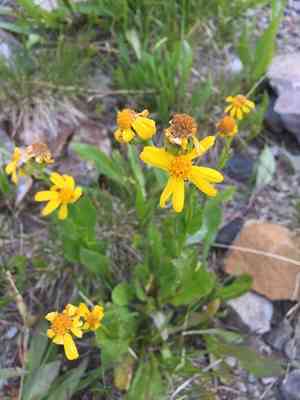
Thickleaf ragwort (Senecio crassulus)
Also known as: Senecio succulentus
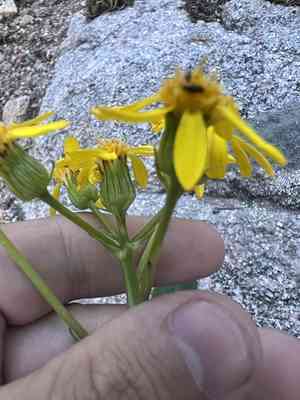
Thickleaf ragwort, a succulent plant, features fleshy, ovate leaves that spiral around its stem, forming distinctive rosettes. Its foliage ranges from green to blue-gray and often has purple-tinged edges, an adaptation to intense sunlight in its arid native environment. During spring, it produces bright yellow, daisy-like flowers that stand out in rocky terrains, adding vibrant color to the landscape.
In This Article
Attributes of Thickleaf ragwort
Lifespan
Perennial
Plant Type
Herb, Succulent
Plant Height
20 cm to 66 cm
Spread
10-15 cm
Leaf Color
Green or bluish-green
Flower Size
1-2 cm
Flower Color
Yellow
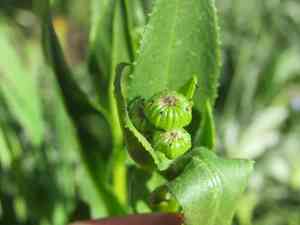
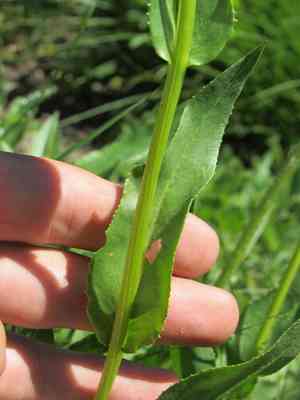
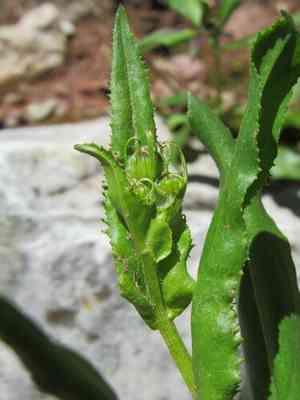
Images of Thickleaf ragwort
Quickly Identify Thickleaf ragwort
1
Look for thick, fleshy leaves that are typically green or bluish-green. The plant may also produce small, daisy-like flowers.
Scientific Classification of Thickleaf ragwort
Phylum
Vascular plants
Class
Dicotyledons
Order
Asterales
Family
Daisy
Genus
Ragworts
Species
Thickleaf ragwort
Planting and Growing of Thickleaf ragwort
Care Difficulty
Easy
Watering Schedule
Every 2 days
Sunlight Requirements
Partial sun
Sunshine Duration
6-10 hours
Ideal Temperature
65-75℉
Soil Type
Potting Mix, Peat Mix
Soil pH
6.5-7.5
Fertilizer Type
Balanced
Pruning Season
Spring, Summer
Pruning Area
Branches, Leaves
Pruning Frequency
2 times a year
Repotting Season
Spring
Pot Type
Plastic, Ceramic
 How to Water Thickleaf ragwort?
Senecio crassulus prefers a moderate watering routine where the soil is allowed to dry out completely between waterings. Water the plant thoroughly, ensuring the soil becomes evenly moist but not soggy. About 150 ml should suffice, depending on the pot size.
What are the symptoms of an underwatered Thickleaf ragwort?
›
What should I do if my Thickleaf ragwort is not getting enough water?
›
What are the symptoms of an overwatered Thickleaf ragwort?
›
How to save an overwatered Thickleaf ragwort?
›
 What Are the Sunlight Requirements for Thickleaf ragwort?
Senecio crassulus thrives in environments with partial sun exposure, ideally 4 to 6 hours a day. This light range supports healthy photosynthesis and assures vibrant, healthy growth.
What is the ideal lighting condition for Senecio crassulus?
›
How can I ensure my plant gets the ideal light amount?
›
What are the benefits of ideal lighting for this plant?
›
 What Is the Ideal Temperature Range for Thickleaf ragwort?
The ideal temperature range for Senecio crassulus is between 65°F and 75°F. This temperature range closely mimics the plant's natural habitat, promoting healthy growth and optimal water retention. By maintaining these temperatures, you can ensure the plant remains stress-free and focused on vital processes like photosynthesis.
 What Soil is Best for Thickleaf ragwort?
Senecio crassulus thrives in well-draining soil, preventing root rot by quickly dispersing excess water. This characteristic supports healthy root development and reduces waterlogged conditions that could damage the plant. A nutrient-rich medium is vital for the healthy growth of Senecio crassulus, providing essential vitamins and minerals. This encourages robust growth, vibrant foliage, and enhances the plant's natural resilience to pests and diseases. Soil with moderate moisture retention supports Senecio crassulus by maintaining a consistent moisture level without becoming soggy. This promotes steady growth and helps the plant withstand drier conditions, making it ideal for its natural climatic preferences.
 How to Fertilize Thickleaf ragwort?
For Senecio crassulus, it is essential to apply fertilizers in moderation. Use a light, balanced liquid fertilizer mixed at half strength. Normally, 1/4 teaspoon per gallon of water is suitable, ensuring the nutrients are not overpowering.
 How to Prune Thickleaf ragwort?
Start by identifying stems that look dead, damaged, or overly leggy. Focus on areas where the plant appears to be overgrown or has not produced leaves in some time. Cut at an angle just above a healthy node or side branch. This encourages the plant to produce new shoots in these areas, promoting a bushier and fuller appearance.
More About Pruning Techniques→
 How to Propagate Thickleaf ragwort plant?
1
Select a healthy stem from the parent plant, ideally one with multiple leaves. It's best to choose a stem with no signs of damage or disease for optimal propagation success.
2
Using sterilized pruning shears, make a clean cut about 2 to 4 inches below the leaf node. Remove any leaves at the bottom to prevent them from touching the potting soil.
3
Dip the base of the cutting in rooting hormone and insert it into a pot with well-draining soil, ensuring it's stable and upright. Lightly water the soil to settle the cutting.
 How to Repot Thickleaf ragwort plant?
1
Repot your Senecio crassulus when you notice its roots are coming out of the drainage holes, or if the plant appears to have stopped growing. Spring is the optimal season as the plant is embarking on its growing phase, allowing it to adapt more effectively to a new environment.
2
Select a pot that is one size larger than the current one, with adequate drainage holes. This ensures that excess water can escape, preventing root rot and allowing the plant roots ample room to grow and stabilize.
3
Opt for a well-draining soil mix, ideally a cactus mix, which is vital for preventing water retention. This type of soil emulates the plant's natural environment, promoting healthy root development and safeguarding against rot.
Toxicity
Ingestion
WARNING
The judgment on toxicity and danger is for reference only. We DO NOT GUARANTEE any accuracy of such judgment. Therefore, you SHALL NOT rely on such judgment. It is IMPORTANT TO SEEK PROFESSIONAL ADVICE in advance when necessary.



