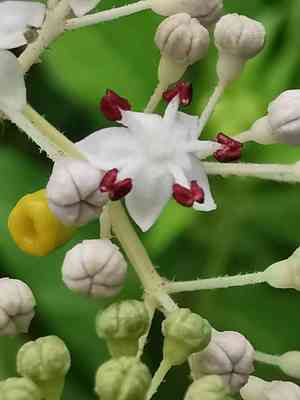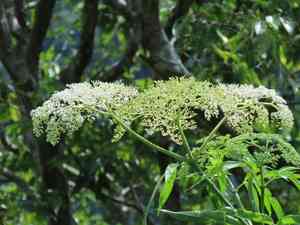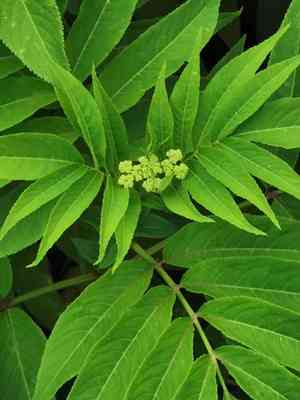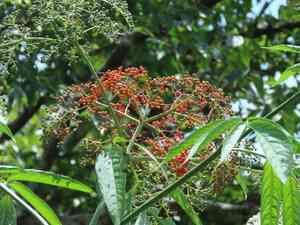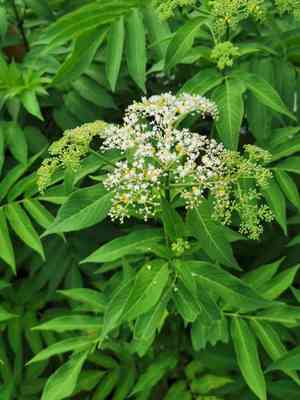
Chinese elder(Sambucus javanica)

Chinese elder (Sambucus javanica)

Also known as: Rimbundahan

Sambucus javanica, or Chinese elder, is a medicinal plant native to subtropical and tropical regions of Asia, including countries like Bhutan, Burma, Cambodia, China (excluding the northern regions), India, Indonesia, Japan, Laos, Malaysia, the Philippines, Thailand, and Vietnam. This perennial herb or small shrub typically grows to a height of 1–2 meters. Traditionally, different parts of the plant are employed for various medicinal purposes. It is used as an analgesic for pain relief, a blood purifier, and a stimulant for bowel and bladder function. Additionally, it is utilized to address conditions such as numbness, rheumatism, muscle spasms, swelling, trauma, and to promote bone and circulatory health. Always seek professional medical advice before using herbal treatments.

Attributes of Chinese elder

Lifespan
Perennial
Plant Type
Herb, Shrub
Plant Height
1 m to 2 m
Spread
90 cm to 1.2 m
Leaf Color
Green
Flower Size
2.5 cm
Flower Color
White

ForwardPlant - Identify plants with a snap

Identify and diagnose plants, get toxicity alerts, and explore safety guides for all types of fungi.

Try for Free

Images of Chinese elder

Chinese elder(Sambucus javanica)

Quickly Identify Chinese elder

1
The plant can be identified by its pinnate leaves with 5-9 leaflets, white or cream-colored flowers in flat-topped or convex clusters, and small, dark berries. It typically grows as a shrub or small tree with a characteristic elderberry fragrance.

Scientific Classification of Chinese elder

Phylum
Vascular plants
Class
Dicotyledons
Order
Honeysuckles, moschatels and allies
Family
Moschatel
Genus
Sambucus
Species
Chinese elder

Planting and Growing of Chinese elder

Care Difficulty
Easy
Watering Schedule
Every 4 days
Sunlight Requirements
Partial sun
Sunshine Duration
6-10 hours
Ideal Temperature
60-75℉
Soil Type
Potting Mix, Peat Mix
Soil pH
6.5-7.5
Fertilizer Type
Balanced
Pruning Season
Spring, Summer
Pruning Area
Branches, Leaves
Pruning Frequency
2 times a year
Repotting Season
Spring
Pot Type
Plastic, Terracotta

water icon How to Water Chinese elder?

Sambucus javanica prefers to be watered until the soil is evenly moist but not soggy. It’s crucial to ensure excess water drains properly, as this plant’s roots need access to oxygen. Watering should mimic natural rainfall patterns, allowing the topsoil to dry out slightly before the next round of watering.
What are the symptoms of an underwatered Chinese elder?
What should I do if my Chinese elder is not getting enough water?
What are the symptoms of an overwatered Chinese elder?
How to save an overwatered Chinese elder?

sunlight icon What Are the Sunlight Requirements for Chinese elder?

Sunlight Requirements: Partial sun, Partial shade
Duration of light: 4-6 hours sunlight daily
Partial sun with dappled light mimics natural habitat conditions for Sambucus javanica. This light range supports healthy growth, vigorous foliage development, and flowering by providing sufficient energy for photosynthesis without causing stress.
Why does Sambucus javanica need partial sun?
What if the plant receives too much direct sun?
How does optimal light affect its growth and health?

temperature icon What Is the Ideal Temperature Range for Chinese elder?

Ideal Temperature: 60 ~ 75℉
For Sambucus javanica, the ideal temperature range is between 60°F and 75°F. Within this range, the plant's metabolic processes, including photosynthesis and nutrient uptake, are optimal, leading to healthy growth and development.

soil icon What Soil is Best for Chinese elder?

Soil type: Loam, Sandy loam
Soil PH: 6.5 ~ 7.5
Sambucus javanica thrives in soil that offers moderate drainage. This helps prevent root rot and ensures that the plant can access essential nutrients without suffering from waterlogging. Enriched with organic matter, the soil becomes a nutrient reservoir. This sustains the plant’s growth throughout its development by providing a consistent supply of essential nutrients. A well-aerated soil texture ensures ample oxygen reaches the roots of Sambucus javanica, promoting vigorous and healthy growth by facilitating better nutrient uptake.

fertilize icon How to Fertilize Chinese elder?

Fertilizer type: Balanced
For Sambucus javanica, use a balanced fertilizer with equal parts nitrogen, phosphorus, and potassium. Typically, apply 1 tablespoon of fertilizer per gallon of soil. Adjust the quantity based on plant size, given its growth rate and environmental conditions.

prune icon How to Prune Chinese elder?

Pruning Time: Spring, Summer
When pruning Sambucus javanica, aim to maintain an open center to allow light penetration and airflow. Start by removing dead, diseased, or damaged branches, then focus on thinning crowded areas. This will encourage healthy growth and a well-structured canopy. Cut back overly long, drooping, or leggy branches by about one-third of their length. This action encourages a compact shape and promotes the development of new shoots, resulting in a denser foliage. More About Pruning Techniques

propagate icon How to Propagate Chinese elder plant?

Propagate Time: Spring,Early spring,Late spring
1
Collect seeds from mature Sambucus javanica plants and clean them thoroughly. Stratify the seeds by chilling them in the refrigerator for a few weeks to mimic natural winter conditions.
2
Select a healthy stem and cut a 4-6 inches section below a node. Remove the lower leaves and dip the cut end in rooting hormone to encourage root development.
3
Lift the entire plant from the ground and gently separate the root clumps. Each division should have roots and shoots. Replant immediately in prepared soil.
More About Propagating Techniques

repot icon How to Repot Chinese elder plant?

Repotting frequency: Every 2-3 years
1
Look for overcrowded roots peeking through the drainage holes as an indication for repotting. If the growth appears stunted, or water sits on the surface for long, it's time to consider relocating your Sambucus javanica to a larger pot.
2
Opt for a pot that's 2 inches larger in diameter than the current one. Preferably one that's deep with good drainage holes; this will aid proper root expansion and prevent waterlogging, ensuring healthier root growth.
3
Choose a moist, well-draining soil mix, enriched with organic matter. This combination retains adequate moisture while preventing the roots from sitting in water, which can lead to root rot.

ForwardPlant - Identify plants with a snap

Find the best spots for them to optimize their health, simply using your phone.

Try for Free