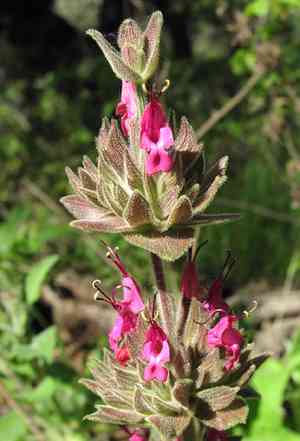
California Hummingbird Sage (Salvia spathacea)
Also known as: Pitcher Sage
The plant you're referring to is Salvia spathacea, commonly known as California Hummingbird Sage. This evergreen perennial features flowering stems that emerge from a woody base. It is native to central and southern California and is well-loved for its sweet, fragrant scent. California Hummingbird Sage is frequently grown in gardens for its aromatic qualities and attractive flowers.
In This Article
Attributes of California Hummingbird Sage
Lifespan
Perennial
Plant Type
Herb
Plant Height
1 m
Spread
1 m
Leaf Color
Green
Flower Size
1.5 to 2 inches (3.8 to 5 cm)
Flower Color
Purple Red
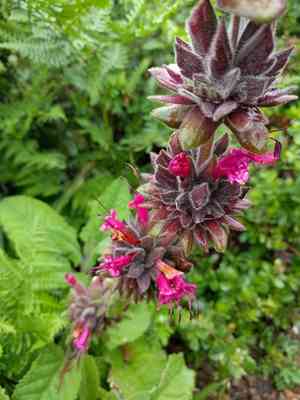
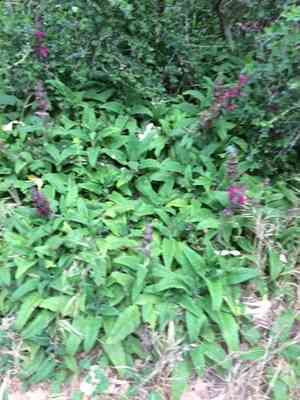
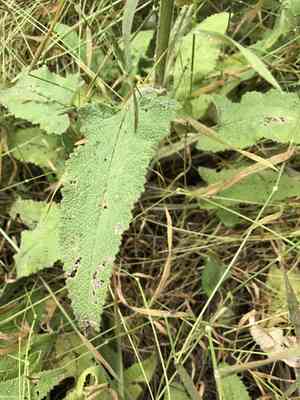
Images of California Hummingbird Sage
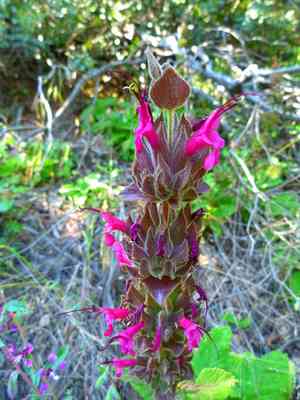
Quickly Identify California Hummingbird Sage
1
Wrinkled, arrow-shaped light green leaves up to 6 inches (15 cm) long.
2
Deep rose-pink flowers on tall 30-inch (76 cm) stalks in pagoda-like clusters.
3
Low, mounding habit reaching 1-2 feet (30-60 cm) tall and spreading up to 4 feet (1.2 m) wide.
4
Aromatic foliage with a slightly sticky texture and hairy underside.
5
Semi-evergreen herbaceous perennial with varying water requirements, thriving in full sun to partial shade.
Scientific Classification of California Hummingbird Sage
Phylum
Vascular plants
Class
Dicotyledons
Order
Lamiales
Family
Mint
Genus
Sages
Species
California Hummingbird Sage
Planting and Growing of California Hummingbird Sage
Care Difficulty
Easy
Watering Schedule
Every 2 days
Sunlight Requirements
Full sun
Sunshine Duration
4-8 hours
Ideal Temperature
65-75℉
Soil Type
Potting Mix, Peat Mix
Soil pH
6.5-7.5
Fertilizer Type
Balanced
Pruning Season
Spring, Summer
Pruning Area
Branches, Leaves
Pruning Frequency
2 times a year
Repotting Season
Spring
Pot Type
Plastic, Ceramic
 How to Water California Hummingbird Sage?
For Salvia spathacea, ensure the soil is thoroughly moist, but not soggy. You should aim to water until you see a slight runoff from the drainage holes. This ensures the entire root system is hydrated without leaving the plant's roots sitting in water, which could lead to rot.
What are the symptoms of an underwatered California Hummingbird Sage?
›
What should I do if my California Hummingbird Sage is not getting enough water?
›
What are the symptoms of an overwatered California Hummingbird Sage?
›
How to save an overwatered California Hummingbird Sage?
›
 What Are the Sunlight Requirements for California Hummingbird Sage?
The plant prefers exposure to full to partial sun. This means it thrives outdoors in direct sunlight or indoors near sunny windows, leading to maximal growth and flowering, ensuring robust health and a dynamic aesthetic appeal.
More About Sunlight Requirements Techniques→
What are the ideal lighting conditions?
›
How can I achieve these lighting conditions?
›
What benefits occur under ideal lighting?
›
 What Is the Ideal Temperature Range for California Hummingbird Sage?
Salvia spathacea thrives best in temperatures ranging from 65°F to 75°F. This temperature range ensures optimal growth and flowering. Keeping the plant within these temperatures will help maintain its vibrant foliage and prevent stress.
 What Soil is Best for California Hummingbird Sage?
Salvia spathacea thrives in well-draining soil, which prevents waterlogging. This is essential to avoid root rot and promote healthy root growth, ensuring the plant's longevity and vibrancy. The plant prefers soil enriched with organic matter. This nutrient richness supports its robust flowering and foliage, providing essential elements for optimal growth. While nutrient-rich, the soil should not be overly fertile, which can lead to excessive foliage at the expense of blooms. A balanced fertility level ensures a harmonious balance between growth and flowering.
 How to Fertilize California Hummingbird Sage?
For Salvia spathacea, a moderate amount of fertilizer is ideal. When using liquid fertilizer, mix it to half the recommended strength to avoid excessive nutrients which can harm the plant. Typically, 1 teaspoon per gallon of water is sufficient. For slow-release fertilizers, use roughly 1 tablespoon for a medium-sized plant once every four months.
 How to Prune California Hummingbird Sage?
Begin by removing any dead or diseased stems. Next, trim the plant back by about one third to encourage bushier growth. Cut just above a pair of leaves or nodes, as this promotes new shoots. For shaping, follow the natural form of the plant to avoid removing too much at once. Regularly clearing out interior growth will ensure good air flow within the plant. Every few years, perform a more drastic pruning in early spring. Cut back the oldest stems close to the base to encourage new, vigorous growth. This helps rejuvenate the plant and improves its overall vitality. Ensure that when you cut, the tools are sharp and clean to prevent infections.
More About Pruning Techniques→
 How to Propagate California Hummingbird Sage plant?
1
Collect seeds from the Salvia spathacea, ensuring they are dry and free of debris. Stratify the seeds by placing them in a cool, moist environment for a few weeks to simulate winter conditions. This process breaks dormancy and encourages germination.
2
Select healthy stems from the plant and cut them approximately 4-6 inches long. Remove lower leaves to reduce moisture loss and dip the cut ends in rooting hormone to enhance root development. Use sterile equipment to avoid contamination.
3
Dig around the base of the plant to access the root ball. Use a sharp knife to divide the plant into smaller sections, ensuring each section has a healthy root system attached. Replant the divisions immediately to avoid root drying.
 How to Repot California Hummingbird Sage plant?
1
Signs that Salvia spathacea needs repotting include roots poking out from drainage holes, slower growth, and soil that dries out too quickly after watering. The ideal time for repotting is during the active growing periods in spring or autumn to ensure minimal stress on the plant.
2
Select a pot that is one size larger than the current one, ensuring it has adequate drainage holes. A slightly larger pot provides room for root growth without waterlogging, promoting healthy development.
3
Opt for a well-draining sandy mix, which simulates the plant's natural habitat. This soil type will prevent root rot by allowing excess water to drain while retaining essential nutrients and moisture.
Toxicity
N/A
WARNING
The judgment on toxicity and danger is for reference only. We DO NOT GUARANTEE any accuracy of such judgment. Therefore, you SHALL NOT rely on such judgment. It is IMPORTANT TO SEEK PROFESSIONAL ADVICE in advance when necessary.
Learn More About California Hummingbird Sage Diseases
Anthracnose
Bacterial Leaf Spot
Bacterial Wilt
Crown Gall
Cyst Nematode
Damping-off
Downy Mildew
Drought Stress
Fusarium Wilt
Gray Mold
Leaf Curl
Leaf Spot
Mosaic
Nutrient Deficiency
Nutrient Toxicity
Powdery Mildew
Root Rot
Root-knot Nematode
Rusts
Sooty Mold
Spider Mites
Temperature Stress
Thrips Damage
White Mold



