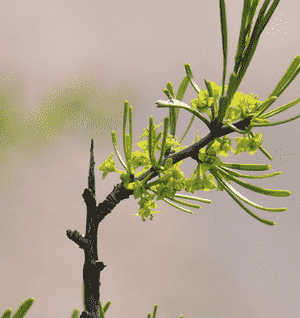
European buckthorn (Rhamnus lycioides)
Also known as: Mediterranean buckthorn
Desert Thorn (Lycium spp.) is an incredibly resilient plant, flourishing in gritty and eroded soils. Its thorny branches deter grazing animals, ensuring that its nutrient-rich berries are available for small birds in arid and dry forest habitats. Additionally, the berries of Desert Thorn can be harvested for various uses, including traditional medicine.
In This Article
Attributes of European buckthorn
Lifespan
Perennial
Plant Type
Shrub
Plant Height
1.5 m to 3 m
Spread
Up to 2 meters (6.5 feet)
Leaf Color
Green
Flower Size
0.2-0.4 cm (0.08-0.16 inches)
Flower Color
Yellow Green
Images of European buckthorn
Quickly Identify European buckthorn
1
Look for thorny branches and small, greenish flowers. The leaves are small, narrow, and usually have a distinctive pattern of veins.
Scientific Classification of European buckthorn
Phylum
Vascular plants
Class
Dicotyledons
Order
Rosales
Family
Buckthorn
Genus
Buckthorns
Species
European buckthorn
Planting and Growing of European buckthorn
Care Difficulty
Easy
Watering Schedule
Every 2 days
Sunlight Requirements
Full sun
Sunshine Duration
6-10 hours
Ideal Temperature
60-77℉
Soil Type
Potting Mix, Peat Mix
Soil pH
6.5-7.5
Fertilizer Type
Balanced
Pruning Season
Spring, Summer
Pruning Area
Branches, Leaves
Pruning Frequency
Once a year
Repotting Season
Spring
Pot Type
Plastic, Ceramic
 How to Water European buckthorn?
Rhamnus lycioides should be watered with approximately 500 ml of water per session. The principle to follow is to water deeply, ensuring the entire root system receives moisture, without leaving pools of standing water at the base.
What are the symptoms of an underwatered European buckthorn?
›
What should I do if my European buckthorn is not getting enough water?
›
What are the symptoms of an overwatered European buckthorn?
›
How to save an overwatered European buckthorn?
›
 What Are the Sunlight Requirements for European buckthorn?
Rhamnus lycioides ideally needs 6 to 8 hours of full sun to partial sun. This balance ensures optimal energy for photosynthesis, promoting healthy physiological functions and growth.
More About Sunlight Requirements Techniques→
What is the ideal lighting for Rhamnus lycioides?
›
How can I ensure ideal lighting for Rhamnus lycioides?
›
What are the benefits of proper lighting for Rhamnus lycioides?
›
 What Is the Ideal Temperature Range for European buckthorn?
Rhamnus lycioides thrives best in temperatures between 60°F and 77°F. These conditions mimic its native habitat, promoting optimal growth and health. This range allows for proper enzymatic activities and nutrient absorption, essential for its vigor.
 What Soil is Best for European buckthorn?
Rhamnus lycioides thrives in well-drained soils which prevent root rot by allowing excess water to escape. This condition nurtures healthy root development and overall plant vigor. This plant favors calcareous soils due to their calcium richness, vital for cell wall structure. The abundance of calcium helps in sturdy growth and resilience against diseases. Rhamnus lycioides benefits from loamy soils that offer a balanced nutrient composition, ensuring the plant receives essential nutrients for optimum growth and berry production.
 How to Fertilize European buckthorn?
Rhamnus lycioides prefers a moderate quantity of fertilizer. For liquid fertilizers, use a solution diluted to half the recommended strength to avoid root burn. Apply approximately 500ml of this solution per plant each month. For slow-release fertilizers, follow the instructions to apply around 30 grams per plant three times a year.
 How to Prune European buckthorn?
Start by examining the bush to identify any dead, diseased, or crowded branches. Removing these first will help you see the plant's natural structure. Make clean cuts close to the branch base, avoiding too deep cuts into the trunk. This approach minimizes injury to the plant, promoting quicker healing. Focus on trimming the inner branches to improve airflow and sunlight penetration. This reduces the risk of fungal infections, promoting overall plant health.
More About Pruning Techniques→
 How to Propagate European buckthorn plant?
1
Fill seed trays or pots with a light, well-draining potting mix. This provides a hospitable environment for seeds to germinate or cuttings to root, reducing the risk of rot.
2
Scatter the seeds evenly on the surface of the soil. Cover lightly with additional soil, as Rhamnus lycioides seeds need light to germinate. Water gently to avoid washing away the seeds.
3
Cut a healthy shoot about 10-15 cm long from the parent plant. Remove the lower leaves and dip the cutting in rooting hormone to encourage root development.
 How to Repot European buckthorn plant?
1
Rhamnus lycioides should be repotted when you notice the roots beginning to grow through the drainage holes or if the plant's growth has noticeably stalled. These are clear signs that the current pot is too small and limiting the plant's development.
2
Select a pot that is only one size larger than the current one. A slightly larger pot prevents the risk of overwatering and gives the roots enough room to grow. Opt for a pot with good drainage to prevent waterlogging, which can lead to root rot.
3
Choose a well-draining sandy soil mix to mimic the Rhamnus lycioides' natural environment. This type of soil allows for adequate water flow and aeration, which are crucial for healthy root development and preventing waterlogged conditions.
Toxicity
Ingestion
WARNING
The judgment on toxicity and danger is for reference only. We DO NOT GUARANTEE any accuracy of such judgment. Therefore, you SHALL NOT rely on such judgment. It is IMPORTANT TO SEEK PROFESSIONAL ADVICE in advance when necessary.
Learn More About European buckthorn Diseases
Anthracnose
Bacterial Leaf Spot
Crown Gall
Cyst Nematode
Damping-off
Downy Mildew
Drought Stress
Fusarium Wilt
Gray Mold
Leaf Spot
Mosaic
Nutrient Deficiency
Nutrient Toxicity
Powdery Mildew
Root Rot
Root-knot Nematode
Rusts
Sooty Mold
Spider Mites
Temperature Stress
Thrips Damage
White Mold
Chemical Injury



