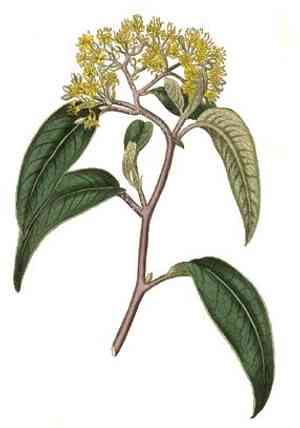
Japanese buckthorn (Rhamnus japonica)
Also known as: Japanese buckthorn
The shrub in question is the Japanese barberry (Berberis thunbergii), a hardy plant native to Asia. It features glossy, oblong leaves with serrated edges and small, yellow flowers. Japanese barberry thrives in diverse environments and is commonly found in woodlands and thickets. It plays a vital role in the ecosystem by offering habitat and nourishment for wildlife. Its red berries, which ripen in the fall, are especially attractive to birds.
In This Article
Attributes of Japanese buckthorn
Lifespan
Perennial
Plant Height
1.5-2.5 meters
Spread
1-2 meters
Leaf Color
Green
Flower Size
0.2-0.3 centimeters
Flower Color
Greenish
Images of Japanese buckthorn
Quickly Identify Japanese buckthorn
1
Japanese buckthorn can be identified by its elliptical, glossy green leaves with finely toothed margins. The small, greenish flowers appear in clusters, and its fruits are berries that turn black when ripe.
Scientific Classification of Japanese buckthorn
Phylum
Vascular plants
Class
Dicotyledons
Order
Rosales
Family
Buckthorn
Genus
Buckthorns
Species
Japanese buckthorn
Planting and Growing of Japanese buckthorn
Care Difficulty
Moderate
Watering Schedule
Every 4 days
Sunlight Requirements
Partial sun
Sunshine Duration
6-10 hours
Ideal Temperature
60-75℉
Soil Type
Potting Mix, Peat Mix
Soil pH
6.5-7.5
Fertilizer Type
Balanced
Pruning Season
Spring, Summer
Pruning Area
Branches, Leaves
Pruning Frequency
2 times a year
Repotting Season
Spring
Pot Type
Terracotta, Plastic
 How to Water Japanese buckthorn?
Rhamnus japonica thrives when its soil is kept moderately moist. Allocate approximately 500 milliliters per watering, ensuring the water reaches deep enough to touch the entire root system. This practice stimulates deep root growth, essential for overall plant health.
What are the symptoms of an underwatered Japanese buckthorn?
›
What should I do if my Japanese buckthorn is not getting enough water?
›
What are the symptoms of an overwatered Japanese buckthorn?
›
How to save an overwatered Japanese buckthorn?
›
 What Are the Sunlight Requirements for Japanese buckthorn?
Rhamnus japonica thrives when exposed to partial to full sun conditions. The ideal lighting enhances vigorous growth, strong structural stability, and vibrant leaf coloration vital for its ornamental appeal.
How to Achieve Ideal Lighting?
›
Optimal Positioning for Growth
›
Signs of Optimal Lighting
›
 What Is the Ideal Temperature Range for Japanese buckthorn?
For optimal growth of Rhamnus japonica, the ideal temperature range is between 60°F and 75°F. This ensures that the plant has the necessary warmth for proper physiological functions such as photosynthesis and nutrient absorption, without exposing it to potential heat stress.
 What Soil is Best for Japanese buckthorn?
Rhamnus japonica thrives in well-drained soil to prevent root rot, promote healthy root growth, and improve access to essential nutrients. Well-drained soil ensures that water doesn't stagnate around the roots, which can otherwise lead to disease and weakened plant structures. The plant prefers soil with moderate moisture retention to maintain adequate hydration without waterlogging. This balance ensures the roots remain sufficiently moist for nutrient absorption while avoiding an overly wet environment that could lead to fungal issues. Presence of organic matter in the soil enhances fertility by providing essential nutrients and improving soil structure. This enriches the nutrient profile available to Rhamnus japonica, supporting vigorous growth and healthy foliage.
 How to Fertilize Japanese buckthorn?
For Rhamnus japonica, it is essential to use a balanced fertilizer blend, typically with an N-P-K ratio like 10-10-10. Apply about 1/4 cup of liquid fertilizer diluted in water for every plant. Solid or slow-release fertilizers should be applied at about 1/2 cup per plant annually.
 How to Prune Japanese buckthorn?
Begin by identifying any branches that are disrupting the desired shape of your Rhamnus japonica. Use sharp and clean pruning shears to cut back these branches. Aim to maintain a balanced and aesthetically pleasing form. Always cut just above a node or lateral branch to encourage new healthy growth. Inspect the plant thoroughly for any dead, diseased, or damaged branches. These should be removed to prevent the spread of disease and to enhance air circulation within the plant. Make clean, precise cuts to minimize the risk of infection. To promote bushier growth, consider occasionally cutting back some of the older and longer branches. This will stimulate the growth of new shoots, enhancing the shrub's fullness and vibrancy during the growing season.
More About Pruning Techniques→
 How to Propagate Japanese buckthorn plant?
1
Ripe seeds should be collected from mature Rhamnus japonica shrubs in late summer. Ensure the seeds are cleaned and free from pulp before storage or planting to prevent mold development.
2
Select healthy semi-hardwood cuttings during late spring or early summer. Each cutting should be about 10-15cm in length. Make sure to cut just below a node to encourage rooting.
3
Bend a low branch to the ground, covered with some soil and secured with a peg. This method encourages root formation while the branch is still attached to the parent plant, ensuring a steady supply of nutrients.
 How to Repot Japanese buckthorn plant?
1
Rhamnus japonica should be repotted in spring when signs such as roots poking out of the pot's drainage holes appear, or if the plant becomes too large for its current container. These are indicators that it has outgrown its space and needs a fresh environment to grow better.
2
Select a pot that is one size larger than the current one with good drainage holes. This ensures the roots have ample space to expand, preventing root-bound conditions and promoting healthy growth while allowing excess water to escape, thus minimizing the risk of overwatering.
3
Use a well-draining loamy soil mix to ensure proper aeration and moisture retention. This type of soil provides Rhamnus japonica with a balanced environment that holds nutrients effectively while preventing waterlogging, which can lead to root rot.
Toxicity
ingestion
WARNING
The judgment on toxicity and danger is for reference only. We DO NOT GUARANTEE any accuracy of such judgment. Therefore, you SHALL NOT rely on such judgment. It is IMPORTANT TO SEEK PROFESSIONAL ADVICE in advance when necessary.



