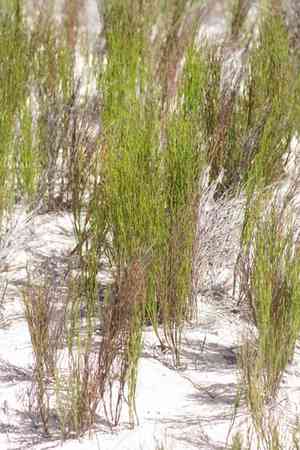
Beach pegreed (Restio eleocharis)
Also known as: Cape Reed, Elegia Eleocharis
Beach pegreed is characterized by its reed-like appearance, with tall, slender stems and minimal leaf presence, an adaptation geared towards conserving water in its native habitats. These greenish-brown stems are tufted and jointed, thriving in wetlands where they form dense, tussock-like clusters. This plant's striking form not only provides architectural interest but is also indicative of its resilience in marshy conditions.
In This Article
Attributes of Beach pegreed
Lifespan
Perennial
Plant Type
Grass
Plant Height
1.5-2 meters
Spread
0.5-1 meters
Leaf Color
Green (small scale-like leaves)
Flower Size
0.5-1 cm (flower spikelets)
Flower Color
Brown to yellowish
Images of Beach pegreed
Quickly Identify Beach pegreed
1
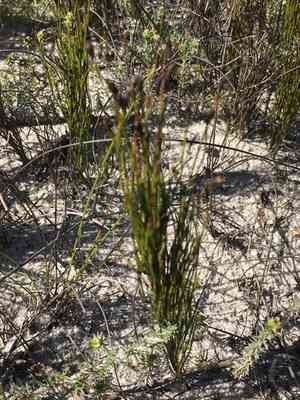
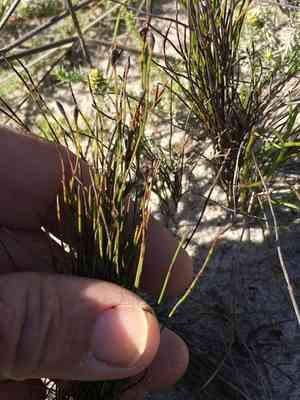
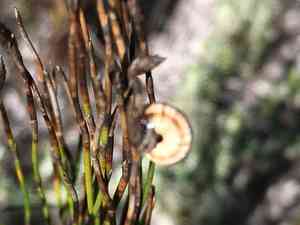
Restio eleocharis can be identified by its tall, reed-like stems that grow in dense clumps. The plant lacks true leaves; instead, it has small, scale-like structures along the stems. Flowering typically occurs in dense, spike-like arrangements.
Scientific Classification of Beach pegreed
Phylum
Vascular plants
Class
Monocotyledons
Order
Poales
Family
Jointed rushes
Genus
True capereeds
Species
Beach pegreed
Planting and Growing of Beach pegreed
Care Difficulty
Moderate
Watering Schedule
Every 2 days
Sunlight Requirements
Full sun
Sunshine Duration
4-6 hours
Ideal Temperature
60-75℉
Soil Type
Potting Mix, Peat Mix
Soil pH
6.5-7.5
Fertilizer Type
Balanced
Pruning Season
Spring, Summer
Pruning Area
Branches, Leaves
Pruning Frequency
2 times a year
Repotting Season
Spring
Pot Type
Plastic, Ceramic
 How to Water Beach pegreed?
Restio eleocharis requires a moderate amount of water. It's crucial to water it enough to thoroughly moisten the soil without drowning the roots. Generally, 300ml is sufficient as long as there is proper drainage and the soil isn't left waterlogged.
What are the symptoms of an underwatered Beach pegreed?
›
What should I do if my Beach pegreed is not getting enough water?
›
What are the symptoms of an overwatered Beach pegreed?
›
How to save an overwatered Beach pegreed?
›
 What Are the Sunlight Requirements for Beach pegreed?
Restio eleocharis prospers with plenty of sunshine; full sun exposure ensures vibrant growth and overall health by maximizing its photosynthetic potential and resilience to environmental stresses.
What type of environment is ideal?
›
How to achieve optimal lighting?
›
Benefits of ideal lighting conditions?
›
 What Is the Ideal Temperature Range for Beach pegreed?
For optimal growth, Restio eleocharis thrives within temperatures ranging from 60°F to 75°F. This range allows for the best balance between photosynthesis and respiration, promoting healthy growth and development of the plant.
 What Soil is Best for Beach pegreed?
Restio eleocharis loves well-draining soil as it prevents root rot. Ensuring water doesn't linger around the roots allows the plant to flourish in its native habitat, mimicking the sandy plains. This plant thrives in loam or sandy loam soils rich in organic matter. The nutrients support robust growth and resilience against environmental stressors, maintaining its vibrant green hues. Keeping the soil consistently moist yet not soggy is crucial. This balance emulates its natural environment, aiding in maintaining the fine balance between hydration and drainage, ensuring healthy growth.
 How to Fertilize Beach pegreed?
For Restio eleocharis, a balanced and gentle nutrient supply is optimal. Use a water-soluble fertilizer at 1/4 strength diluted in one gallon of water to prevent any nutrient burn or stress. This ensures healthy growth without overwhelming the plant’s native substrate conditions. Overfed plants may exhibit unpleasant symptoms, but hence, such moderate fertilization helps retain its lush vitality.
 How to Prune Beach pegreed?
To prune Restio eleocharis, start by identifying the older stems that have turned yellow or brown. Use a pair of sharp, clean pruning shears to cut these stems close to the base of the plant. Avoid cutting the green and healthy stems as they are essential for the plant’s growth and vitality. After pruning, ensure to clean up any fallen debris to prevent fungal infections. If you're looking to control the size or shape of your Restio eleocharis, you can selectively remove the longer stems that disrupt its natural form. Cut these protruding stems back to the preferred length, which helps keep the plant tidy and enhances its overall landscape presence.
More About Pruning Techniques→
 How to Propagate Beach pegreed plant?
1
Prepare the seed mix with well-draining soil in a seed tray. Sow the seeds evenly on the surface and lightly cover them with soil. Maintain moisture with gentle watering and ensure the tray is placed in indirect sunlight to encourage germination.
2
For division, choose a healthy, mature plant. Carefully dig it up and gently tease apart root sections ensuring each has a portion of the root system. Replant each division in a prepared area or pot, ensuring they are planted at the same depth as they were originally growing.
3
Immediately water the seeds or divisions after planting to settle the soil and remove air pockets. Keep the soil consistently moist without waterlogging, and monitor regularly for growth and health.
 How to Repot Beach pegreed plant?
1
For Restio eleocharis, monitor for overcrowding in its current pot. Indications such as roots spiraling at the base or stunted growth indicate repotting is necessary. Ideally, carry this out in spring or autumn when the plant's growth is actively adapting to changes.
2
Select a pot that is slightly larger than the current one, with adequate drainage holes. This ensures excess water can escape, minimizing root rot risk. Clay pots are ideal as they allow moisture regulation. Ensure the new pot accommodates the plant's spreading habit while providing stability.
3
Opt for a sandy loam mixed with some grit to ensure excellent drainage as Restio eleocharis thrives in well-drained conditions. Using this soil mix will help prevent waterlogging and root rot, giving the plant optimal conditions to flourish.



