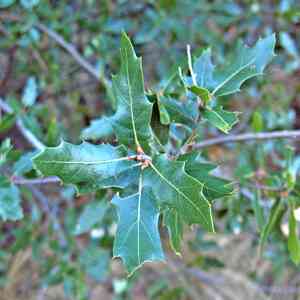
Sandpaper oak (Quercus vaseyana)
Also known as: Vasey Oak
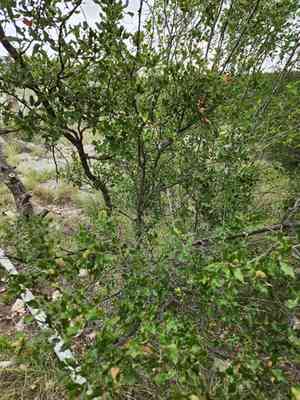
The shrub live oak, also known as the sandpaper oak (Quercus pungens), thrives in the arid regions of the southwestern United States. This resilient oak can appear as a small tree or shrub and features thick, leathery leaves with a dark green upper surface and a fuzzy white underside. Its rough, dark bark blends seamlessly with the rugged landscape, offering protection from the harsh environment. The acorns of the shrub live oak play a crucial role in sustaining local wildlife, thereby supporting the ecosystem.
In This Article
Attributes of Sandpaper oak
Lifespan
Perennial
Plant Type
Tree
Plant Height
3.5 m to 11 m
Spread
9 to 12 meters
Leaf Color
Dark green
Flower Size
0.5 to 1 cm (inconspicuous)
Flower Color
Yellowish-green
Images of Sandpaper oak
Quickly Identify Sandpaper oak
1
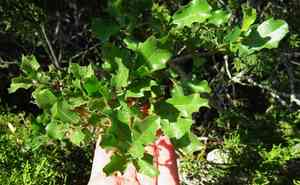
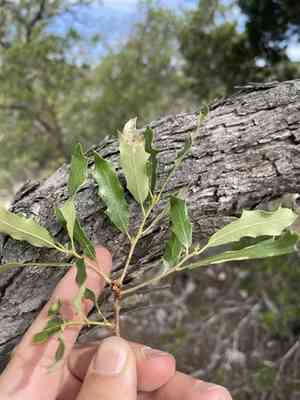
The Vasey Oak can be identified by its rounded, lobed leaves that are dark green on the upper surface and lighter beneath. Its bark is gray and rough, and it produces small acorns that are about 1 to 1.5 cm long.
Scientific Classification of Sandpaper oak
Phylum
Vascular plants
Class
Dicotyledons
Order
Fagales
Family
Beech
Genus
Oaks
Species
Sandpaper oak
Planting and Growing of Sandpaper oak
Care Difficulty
Moderate
Watering Schedule
Every 2 days
Sunlight Requirements
Full sun
Sunshine Duration
6-12 hours
Ideal Temperature
60-80℉
Soil Type
Potting Mix, Peat Mix
Soil pH
6.5-7.5
Fertilizer Type
Balanced
Pruning Season
Spring, Summer
Pruning Area
Branches, Leaves
Pruning Frequency
2 times a year
Repotting Season
Spring
Pot Type
Plastic, Ceramic
 How to Water Sandpaper oak?
The Quercus vaseyana, commonly known as the Vasey's Oak, thrives with a moderate watering schedule. It is best to water deeply but infrequently, ensuring the soil is moist without becoming waterlogged. Each watering should allow the soil to absorb 1000 milliliters of water, providing sufficient moisture to the roots without causing flooding.
What are the symptoms of an underwatered Sandpaper oak?
›
What should I do if my Sandpaper oak is not getting enough water?
›
What are the symptoms of an overwatered Sandpaper oak?
›
How to save an overwatered Sandpaper oak?
›
 What Are the Sunlight Requirements for Sandpaper oak?
Quercus vaseyana prefers full to partial sun, basking in sunlight enhances its growth and vigor, supporting nutrient synthesis and fortifying the plant against environmental challenges.
Where should I ideally place it?
›
How do I ensure it gets the ideal lighting?
›
What are the benefits of ideal lighting?
›
 What Is the Ideal Temperature Range for Sandpaper oak?
Quercus vaseyana thrives best in temperatures ranging from 60°F to 80°F. This range ensures that the metabolic processes of the plant are functioning optimally, which promotes healthy growth and development. Maintaining such temperatures mimics the natural habitat of the plant, ensuring it is neither too hot nor too cold.
 What Soil is Best for Sandpaper oak?
Quercus vaseyana thrives best in well-draining soil to prevent root rot. This requirement ensures that excess water does not suffocate the roots, thus promoting healthy root development. A nutrient-rich soil provides essential elements for Quercus vaseyana's growth. The availability of nutrients ensures robust leaf development and aids in the plant’s overall health and resistance to diseases. With a tolerance for a slightly alkaline pH, maintaining this balance ensures Quercus vaseyana efficiently absorbs nutrients like calcium and magnesium, essential for foliage and stem strength.
 How to Fertilize Sandpaper oak?
For Quercus vaseyana, the fertilizer amount should be moderate. Typically, a mature tree requires 1 pound of nitrogen per year of tree age, up to a maximum of 10 pounds per year. This ensures the tree receives enough nutrients to thrive without overloading the soil.
 How to Prune Sandpaper oak?
Gather the right tools such as sharp shears, loppers, and a saw for larger branches. Wearing gloves and protective eyewear is advisable. Ensure all tools are sanitized to prevent disease spread. Begin by removing dead, diseased, or damaged branches. Focus on cutting back crossing branches and any that contribute to a crowded canopy. This can increase light penetration and air flow, promoting healthier growth. While pruning, aim to maintain the tree's natural shape. Avoid excessive trimming, which can lead to stress and uneven growth patterns. Focus on enhancing the tree's inherent architectural beauty.
More About Pruning Techniques→
 How to Propagate Sandpaper oak plant?
1
Collect mature acorns from Quercus vaseyana and soak them in water for 24 hours to soften the seed coat. This will help speed up the germination process by allowing water to penetrate and activate the seed embryo.
2
Select healthy, young twigs with at least three nodes from the parent plant. Use sterilized pruning shears to make a clean cut, ensuring no damage to the cutting. Dip the cut end in rooting hormone to encourage root development.
3
Choose a suitable rootstock, preferably from a similar or compatible oak species. Make a T-budding or whip graft cut on the rootstock and attach a scion from Quercus vaseyana. Secure the graft with grafting tape and monitor for successful union.
 How to Repot Sandpaper oak plant?
1
Quercus vaseyana shows clear signs when it's ready for repotting. Look for roots breaking through the drainage holes or circling at the surface. Also, if growth is stunted, it's a good signal the plant needs more space to thrive. Repot during active growing seasons like spring or early summer when the plant is resilient to changes.
2
Select a pot slightly larger than the current one, ideally 2-3 inches more in diameter, to avoid over-potting. Ensure it has ample drainage holes. This facilitates healthy root expansion and prevents waterlogging, allowing your Quercus vaseyana to establish robust roots.
3
Opt for well-draining, sandy loam soil to mimic the natural conditions needed by Quercus vaseyana. This soil mix ensures proper aeration and prevents root rot by allowing excess water to escape. It's essential for maintaining the plant's health and promoting vigorous growth.
Toxicity
Ingestion
WARNING
The judgment on toxicity and danger is for reference only. We DO NOT GUARANTEE any accuracy of such judgment. Therefore, you SHALL NOT rely on such judgment. It is IMPORTANT TO SEEK PROFESSIONAL ADVICE in advance when necessary.



