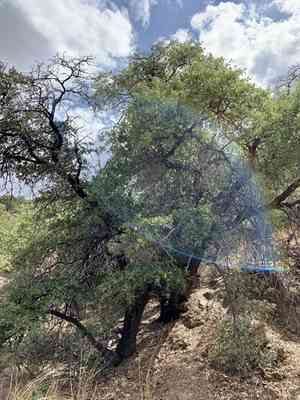
Emory Oak (Quercus emoryi)
Also known as: Western Black Oak, Holly Oak, Roble Negro
The Emory oak (*Quercus emoryi*) is a perennial evergreen tree native to the southwestern United States. It features a rounded canopy and produces yellow catkin flowers in the spring. Its acorns, which mature in the fall, are notable for their red shells with yellow caps. This tree supports local wildlife, attracting butterflies, moths, bees, and various birds. Additionally, its acorns provide essential nourishment for deer, turkeys, squirrels, and numerous bird species.
In This Article
Attributes of Emory Oak
Lifespan
Perennial
Plant Type
Tree
Plant Height
9 m to 15 m
Spread
23 m
Leaf Color
Green
Flower Size
2.5 cm to 5 cm
Flower Color
Yellow Green
Images of Emory Oak
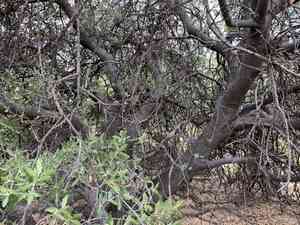

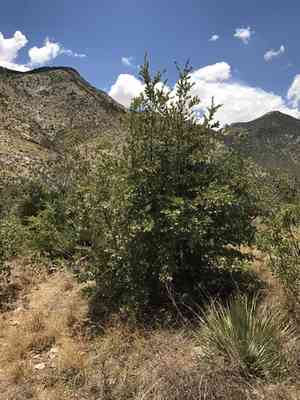
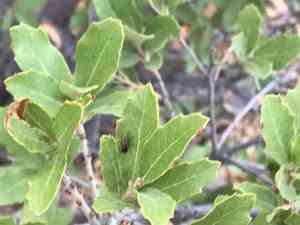
Quickly Identify Emory Oak
1
Identify Quercus emoryi by its distinctive, oblong, leathery leaves with serrated edges and its dark, smooth bark. The leaves typically measure 3-7 cm in length. Another identifying feature is its acorns, which have a narrow, pointed cap.
Scientific Classification of Emory Oak
Phylum
Vascular plants
Class
Dicotyledons
Order
Fagales
Family
Beech
Genus
Oaks
Species
Emory Oak
Planting and Growing of Emory Oak
Care Difficulty
Easy
Watering Schedule
Every 2 days
Sunlight Requirements
Full sun
Sunshine Duration
6-10 hours
Ideal Temperature
60-75℉
Soil Type
Potting Mix, Peat Mix
Soil pH
6.5-7.5
Fertilizer Type
Balanced
Pruning Season
Spring, Summer
Pruning Area
Branches, Leaves
Pruning Frequency
2 times a year
Repotting Season
Spring
Pot Type
Terracotta, Plastic
 How to Water Emory Oak?
For Quercus emoryi, also known as Emory Oak, water should be applied until the soil is moist but not soggy. The recommended quantity is approximately 1500 milliliters per session, ensuring that the moisture penetrates down to the root zone. This encourages deep rooting, which is crucial for the tree's stability and drought resistance.
What are the symptoms of an underwatered Emory Oak?
›
What should I do if my Emory Oak is not getting enough water?
›
What are the symptoms of an overwatered Emory Oak?
›
How to save an overwatered Emory Oak?
›
 What Are the Sunlight Requirements for Emory Oak?
Quercus emoryi ideally requires full sun or partial sun conditions to flourish. Adequate sunlight supports its photosynthesis processes, encouraging strong growth, high resistance to pests, and maintaining its appealing canopy structure.
More About Sunlight Requirements Techniques→
What is the optimal sun exposure?
›
How can we achieve ideal light conditions?
›
What are the benefits of optimal light exposure?
›
 What Is the Ideal Temperature Range for Emory Oak?
The ideal temperature range for the healthy growth of Quercus emoryi is between 60°F and 75°F. This range ensures optimal photosynthesis and metabolic activities, providing the best conditions for absorbing nutrients and supporting growth, including leaf development, root expansion, and overall plant health.
 What Soil is Best for Emory Oak?
Quercus emoryi thrives in well-drained soils, preventing water from pooling around roots and ensuring proper aeration. This is crucial as it helps the tree avoid root rot and other water-related stress. This oak species prefers soils with moderate nutrient content. While it can tolerate poorer soils, a balanced amount of nutrients supports healthy and vigorous growth, enhancing its overall resilience. While Quercus emoryi can tolerate slightly acidic to neutral pH levels, maintaining a balance between 6.5 and 7.5 is ideal. Such conditions help in optimal nutrient uptake, contributing to the tree's overall health.
 How to Fertilize Emory Oak?
Quercus emoryi, commonly known as Emory oak, benefits from a balanced approach to fertilization. When applying liquid fertilizers every two weeks, aim for a solution diluted to half strength to prevent root burn. For solid, slow-release fertilizers, distribute 1-2 pounds (0.45-0.9 kg) per tree annually, ideally before the start of the growing season.
 How to Prune Emory Oak?
Start by inspecting the tree to identify dead, diseased, or crossing branches. Use clean, sharp tools to make clean cuts. Remove deadwood first, then thin out crowded branches to allow better air circulation. Focus on maintaining a natural shape. For young Quercus emoryi, structural pruning is essential. Select a central leader and subordinate competing branches. Space lateral branches evenly to create a balanced canopy. This helps to establish a strong framework as the tree matures. Ensure your safety by wearing protective gear such as gloves and goggles. Use a stable ladder for hard-to-reach areas. Be cautious of heavy branches that may fall, and clear the area of obstructions to prevent accidents.
More About Pruning Techniques→
 How to Propagate Emory Oak plant?
1
Collect acorns from mature Quercus emoryi trees in autumn. Ensure that the acorns are free from damage and signs of pest infestation to increase the chances of successful germination.
2
Stratify the collected acorns by placing them in a plastic bag with moist sand in the refrigerator. This cold treatment should last for about 60-90 days to break seed dormancy and stimulate germination.
3
After stratification, sow the seeds about 1-2 inches deep in a seed tray filled with a quality potting mix. Keep the tray in a warm, well-lit area and maintain consistent moisture levels to encourage seedling emergence.
 How to Repot Emory Oak plant?
1
The ideal time to repot your Quercus emoryi is when you notice roots growing out of the drainage holes or if the soil dries out too quickly after watering. These are telltale signs that your plant has outgrown its pot and needs more space to thrive.
2
Select a pot that is one size larger than the current one, ensuring it has proper drainage holes. Using a pot that fits just right allows for optimal root growth while preventing waterlogging, which can be detrimental to your oak.
3
Choose a well-draining, loamy soil mix that provides ample nutrients while allowing excess water to escape. The right soil mix supports healthy root development and prevents root rot, a common issue in poorly draining soils.
Toxicity
ingestion
WARNING
The judgment on toxicity and danger is for reference only. We DO NOT GUARANTEE any accuracy of such judgment. Therefore, you SHALL NOT rely on such judgment. It is IMPORTANT TO SEEK PROFESSIONAL ADVICE in advance when necessary.



