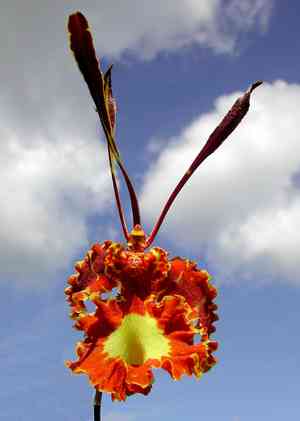
Butterfly orchid (Psychopsis papilio)
Also known as: Butterfly Orchid
The butterfly orchid (Psychopsis papilio), originating from South America, captivates ornamental gardeners with its butterfly-like, vibrant flowers. This orchid thrives in warm, humid environments and is sensitive to frost, requiring temperatures between 65-80°F (18-27°C) and high humidity levels of 50-70%. Its distinctive and long-lasting blooms make it a standout choice for gardeners, contributing to its popularity. Additionally, the butterfly orchid played a notable role in the "orchid mania" of 19th-century Europe, attracting significant attention and admiration.
In This Article
Attributes of Butterfly orchid
Lifespan
Perennial
Plant Type
Vine
Plant Height
15 cm to 30 cm
Spread
20 cm to 30 cm
Leaf Color
Green Red
Flower Size
13 cm to 15 cm
Flower Color
Yellow Red Brown Orange
Images of Butterfly orchid
Quickly Identify Butterfly orchid
1
Psychopsis papilio can be identified by its unique butterfly-like flowers and long, erect inflorescences. The leaves are typically leathery and oblong. The pseudobulbs are oval and green, and the plant often produces a single flower at a time.
Scientific Classification of Butterfly orchid
Phylum
Vascular plants
Class
Monocotyledons
Order
Asparagales
Family
Orchid
Genus
Butterfly orchid
Species
Butterfly orchid
Planting and Growing of Butterfly orchid
Care Difficulty
Moderate
Watering Schedule
Every 4 days
Sunlight Requirements
Partial sun
Sunshine Duration
4-6 hours
Ideal Temperature
65-75℉
Soil Type
Potting Mix, Peat Mix
Soil pH
6.5-7.5
Fertilizer Type
Balanced
Pruning Season
Spring, Summer
Pruning Area
Branches, Leaves
Pruning Frequency
2 times a year
Repotting Season
Spring
Pot Type
Terracotta, Plastic
 How to Water Butterfly orchid?
For the splendid Psychopsis papilio, it is crucial to follow a regimen of moderate watering. Ensure that you water until the medium is thoroughly moistened, but avoid letting the plant sit in excess water. Approximately 150ml per session is adequate.
More About Watering Techniques→
What are the symptoms of an underwatered Butterfly orchid?
›
What should I do if my Butterfly orchid is not getting enough water?
›
What are the symptoms of an overwatered Butterfly orchid?
›
How to save an overwatered Butterfly orchid?
›
 What Are the Sunlight Requirements for Butterfly orchid?
Psychopsis papilio prefers partial sun, drawing benefits such as enhanced leaf health and increased flowering, promoting vibrant and sustained growth.
More About Sunlight Requirements Techniques→
Is Psychopsis papilio partial to any specific light conditions?
›
How can I achieve optimal lighting for this orchid?
›
What are the benefits of proper lighting for Psychopsis papilio?
›
 What Is the Ideal Temperature Range for Butterfly orchid?
The ideal temperature range for Psychopsis papilio, a delicate and beautiful orchid, is between 65°F to 75°F. This range encourages optimal growth and blooming, simulating the conditions of its native tropical habitat. Keeping the plant within this temperature band is crucial for maintaining its vigor and preventing stress.
 What Soil is Best for Butterfly orchid?
Psychopsis papilio requires well-draining soil to prevent root rot. Loamy or sandy loam soils offer excellent drainage, mimicking the orchid's natural habitat. This helps the roots breathe and promotes healthier growth. The plant thrives in rich, organic soil that provides ample nutrients. A substrate rich in decayed plant material such as bark or sphagnum moss promotes vibrant growth and enhances flowering potential. An aerated soil structure ensures proper root oxygenation, crucial for Psychopsis papilio. The airy composition of these soils supports healthy root development and overall plant vitality.
More About Soil→
 How to Fertilize Butterfly orchid?
For Psychopsis papilio, the fertilizer should be applied lightly to avoid overwhelming its delicate root system. It's advisable to use a balanced fertilizer diluted to one-fourth of the recommended strength for typical houseplants. This ensures the orchid receives essential nutrients without risk of nutrient burn.
More About Fertilizing Techniques→
 How to Prune Butterfly orchid?
Gently cut away any dead or yellowing leaves from the base of the plant. This encourages new, healthy growth and prevents the spread of potential diseases. After flowering, inspect the spikes. If there are any dead flower stalks, trim them close to the base, ensuring the plant's energy is directed towards new blooms. Psychopsis papilio has a unique growth habit. When pruning, be mindful of its natural growth patterns to avoid disrupting the plant's habitual development.
More About Pruning Techniques→
 How to Propagate Butterfly orchid plant?
1
Begin by carefully removing the Psychopsis papilio from its current pot, shaking off excess soil. Gently separate sections of the plant's rhizome with roots intact. Ensure each division has at least one pseudobulb and some roots.
2
Place each plant division into its own pot filled with orchid bark mix. Ensure the rhizome is just above the medium. Press down gently to stabilize the plant without damaging the roots.
3
Select healthy plant tissues and place them in a sterilized medium designed for orchid propagation. This needs to be done under sterile conditions to prevent contamination and ensure successful growth.
 How to Repot Butterfly orchid plant?
1
Repotting should be done when you notice the roots spilling out of the pot or the potting mix has broken down significantly. Also, look for signs of slowed growth or visibly stressed foliage as indicators.
2
Choose a pot slightly larger than the current one, with ample drainage holes to prevent waterlogging. A good pot will balance the plant while ensuring the roots have room to breathe and expand.
3
The ideal soil is a loose, well-draining orchid bark mix, which mimics natural conditions, providing oxygen and preventing root rot. This allows Psychopsis papilio to thrive by offering a stable but airy medium.



