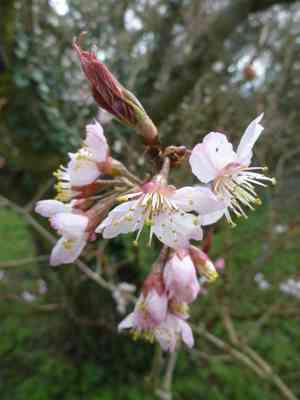
Chinese sour cherry (Prunus pseudocerasus)
Also known as: Chinese cherry, Cherry blossom
The Chinese sour cherry (Prunus pseudocerasus) is a small, bushy tree native to China, where it has been grown for over 2,000 years. While prized for its early spring blossoms, making it a popular ornamental plant worldwide, its primary value in China lies in its tart, edible fruit. The fruit is enjoyed fresh, dried, or processed into various products such as jams, juices, and wines. It's important to note that the seeds are bitter and can be toxic if consumed.
In This Article
Attributes of Chinese sour cherry
Lifespan
Perennial
Plant Type
Tree
Plant Height
8 m
Spread
3.5 m
Leaf Color
Green
Flower Size
2 cm
Flower Color
White Pink
Images of Chinese sour cherry
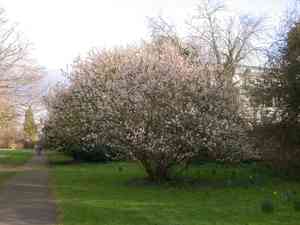
Quickly Identify Chinese sour cherry
1
To identify Prunus pseudocerasus, look for a medium-sized deciduous tree with ovate to oblong-ovate leaves that have a serrated margin. The flowers are typically small, pink or white, and bloom in clusters. The fruit is small, typically red or dark red, and has a sour taste.
Scientific Classification of Chinese sour cherry
Phylum
Vascular plants
Class
Dicotyledons
Order
Roses, elms, figs, and allies
Family
Rose
Genus
Prunus
Species
Chinese sour cherry
Planting and Growing of Chinese sour cherry
Care Difficulty
Easy
Watering Schedule
Every 4 days
Sunlight Requirements
Full sun
Sunshine Duration
4-8 hours
Ideal Temperature
59-68℉
Soil Type
Potting Mix, Peat Mix
Soil pH
6.5-7.5
Fertilizer Type
Balanced
Pruning Season
Spring, Summer
Pruning Area
Branches, Leaves
Pruning Frequency
2 times a year
Repotting Season
Spring
Pot Type
Plastic, Ceramic
 How to Water Chinese sour cherry?
When watering Prunus pseudocerasus, aim for a deep saturation of about 500 milliliters. Ensure that the water reaches the root system without creating runoff. This allows the roots to absorb the moisture effectively.
What are the symptoms of an underwatered Chinese sour cherry?
›
What should I do if my Chinese sour cherry is not getting enough water?
›
What are the symptoms of an overwatered Chinese sour cherry?
›
How to save an overwatered Chinese sour cherry?
›
 What Are the Sunlight Requirements for Chinese sour cherry?
Prunus pseudocerasus thrives best in conditions with full sun to partial sun, offering it a generous 6 to 8 hours of light. These lighting conditions ensure vigorous flowering and lush foliage, contributing to overall plant health and resilience.
More About Sunlight Requirements Techniques→
How to achieve the ideal lighting?
›
What measures to take for proper lighting?
›
What benefits from ideal lighting?
›
 What Is the Ideal Temperature Range for Chinese sour cherry?
For Prunus pseudocerasus, the ideal temperature range is between 59°F and 68°F. This range provides optimal conditions for growth, promoting healthy foliage and fruit development. Staying within these temperatures helps to ensure the plant's physiological processes, such as photosynthesis and respiration, function efficiently. It is crucial to monitor the temperature closely, especially during the critical stages of growth, to maintain the plant's overall health and productivity.
 What Soil is Best for Chinese sour cherry?
Prunus pseudocerasus thrives best in well-drained soil. Adequate drainage prevents root rot and ensures the roots receive proper oxygenation, promoting healthier growth and abundant blossoming. This plant requires soil that retains enough moisture without becoming waterlogged. Consistent moisture helps sustain the plant during dry spells, thus maintaining its vigor and flowering potential. A nutrient-rich substrate is vital for Prunus pseudocerasus to flourish. The presence of organic matter enriches the soil, fostering better nutrient uptake and enhancing the tree's overall growth and fruit production.
 How to Fertilize Chinese sour cherry?
For Prunus pseudocerasus, fertilization should be carefully balanced to ensure optimal growth. Typically, provide about 0.5 to 1 ounce of balanced 10-10-10 NPK fertilizer per plant during the active growing season. It's essential to adjust the amount based on soil fertility and plant growth conditions. Ensure that the amount is spread evenly and not concentrated in one spot to avoid root burn and ensure uniform nutrient distribution.
 How to Prune Chinese sour cherry?
Begin by carefully inspecting the tree for any signs of disease or decay. Remove dead, diseased, or crossing branches first to open up the canopy and promote healthy growth. After removing damaged wood, focus on shaping the tree. Prune to maintain a natural shape, ensuring the center is open enough to allow sunlight and air through. This helps the inner branches grow, and ensures a balanced, aesthetically pleasing form. Make clean cuts slightly above healthy outward-facing buds or branches, to encourage new growth in a desirable direction. Cutting too close to the buds can harm them, while leaving too long a stub may invite disease. To prevent the spread of pathogens, disinfect your tools between cuts, especially when switching from pruning diseased to healthy parts of the tree. Use a household disinfectant or a solution of one part bleach to nine parts water.
More About Pruning Techniques→
 How to Propagate Chinese sour cherry plant?
1
To break dormancy for Prunus pseudocerasus seeds, a stratification period simulating the natural winter conditions is required. This involves chilling the seeds in a moist medium at low temperatures for several weeks before planting.
2
Select healthy, semi-hardwood cuttings from a mature plant. Cut at an angle below a node and ensure each cutting is about 10-15 cm in length with several leaves.
3
Grafting involves joining a bud or scion of Prunus pseudocerasus onto another plant. Choose a compatible rootstock, make precise cuts, and ensure good contact between the cambium layers of both graft partners.
 How to Repot Chinese sour cherry plant?
1
The best time to repot Prunus pseudocerasus is when you notice its roots protruding from the drainage holes, or if the growth rate has notably slowed. These are signals that the plant needs more space and fresh soil to continue thriving.
2
Select a pot slightly larger than the current one, ensuring it has adequate drainage holes. This prevents waterlogging and root rot. A pot that's too large might retain excess moisture, which is not ideal for cherry plants, promoting root health and proper growth.
3
Choose a well-draining loamy soil rich in organic material. This type of soil offers the right balance of nutrients, ensuring the roots don't sit in water, which could lead to decay. It also provides the necessary aeration for healthy root development.
Toxicity
ingestion, skin contact
WARNING
The judgment on toxicity and danger is for reference only. We DO NOT GUARANTEE any accuracy of such judgment. Therefore, you SHALL NOT rely on such judgment. It is IMPORTANT TO SEEK PROFESSIONAL ADVICE in advance when necessary.



