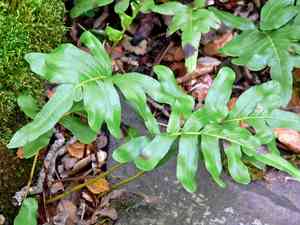
Leathery polypody (Polypodium scouleri)
Also known as: Leathery Polypody, Scouler's Polypody
Polypodium scouleri, commonly referred to as the leather-leaf fern, is native to certain regions of North America. It thrives in coastal habitats, often found on cliffs, rocks, and trees, where it benefits from the moisture provided by ocean fog and sea spray.
In This Article
Attributes of Leathery polypody
Lifespan
Perennial
Plant Type
Herb
Plant Height
15 cm
Spread
1.5 m
Leaf Color
Green
Flower Size
N/A
Flower Color
N/A
Images of Leathery polypody
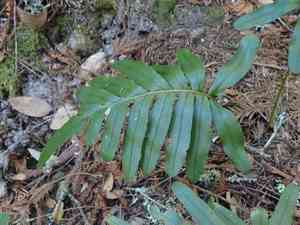
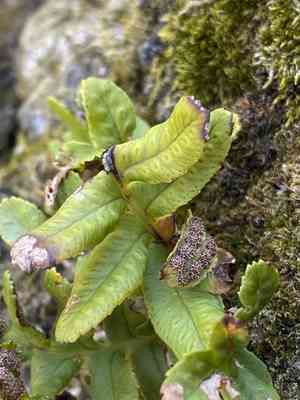
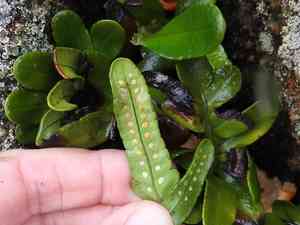
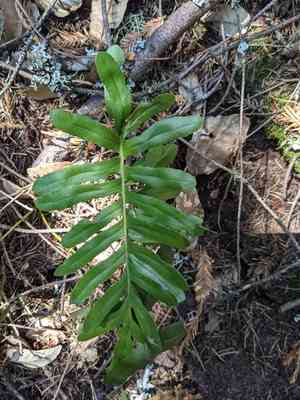
Quickly Identify Leathery polypody
1
To identify Polypodium scouleri, look for its thick, leathery fronds that are usually 10-60 cm long. The fronds are evergreen and pinnatifid, with broad lobes. It often grows in clusters and may be found on rocky outcrops or attached to tree trunks in coastal regions.
Scientific Classification of Leathery polypody
Phylum
Vascular plants
Class
Ferns
Order
Polypodiales
Family
Polypody
Genus
Polypodies
Species
Leathery polypody
Planting and Growing of Leathery polypody
Care Difficulty
Easy
Watering Schedule
Every 2 days
Sunlight Requirements
Partial sun
Sunshine Duration
6-10 hours
Ideal Temperature
60-75℉
Soil Type
Potting Mix, Peat Mix
Soil pH
6.5-7.5
Fertilizer Type
Balanced
Pruning Season
Spring, Summer
Pruning Area
Branches, Leaves
Pruning Frequency
2 times a year
Repotting Season
Spring
Pot Type
Plastic, Ceramic
 How to Water Leathery polypody?
Polypodium scouleri should be watered thoroughly until water drains from the bottom of the pot. This ensures the roots are adequately hydrated without leaving them in excessively moist soil, which could lead to rot.
What are the symptoms of an underwatered Leathery polypody?
›
What should I do if my Leathery polypody is not getting enough water?
›
What are the symptoms of an overwatered Leathery polypody?
›
How to save an overwatered Leathery polypody?
›
 What Are the Sunlight Requirements for Leathery polypody?
A partial sun to full shade setting provides the best conditions for Polypodium scouleri, ensuring ample growth and vibrant foliage. Ideal light fosters photosynthesis and nutrient absorption, critical for plant vitality.
More About Sunlight Requirements Techniques→
What is the best lighting condition?
›
How to achieve this ideal lighting?
›
What are the benefits of ideal lighting?
›
 What Is the Ideal Temperature Range for Leathery polypody?
The ideal temperature range for Polypodium scouleri is between 60°F and 75°F, which mimics the conditions of its natural habitat. This range supports active growth and photosynthesis, ensuring that the plant thrives and remains healthy. In this temperature band, the plant experiences optimal conditions for nutrient uptake and metabolic processes.
 What Soil is Best for Leathery polypody?
Polypodium scouleri requires well-drained soil to prevent root rot. Proper drainage ensures the roots remain healthy and aerated, promoting vigorous growth and lush foliage. This fern prefers a nutrient-rich soil to support its growth. A fertile substrate provides essential minerals and organic matter, aiding in the plant's robust health and vibrant appearance. The soil should retain moisture without becoming waterlogged. Balanced moisture helps maintain the fern's hydration, ensuring consistent growth and healthy leaves.
 How to Fertilize Leathery polypody?
For Polypodium scouleri, it's crucial to apply the right amount of fertilizer to ensure healthy growth. Use liquid fertilizer at a dilution of half the recommended strength for typical houseplants, as this plant does not require heavy feeding. For slow-release fertilizer, apply evenly around the base, following the package instructions for the specific granules you're using. This typically equates to about a teaspoon per square foot of soil surface.
 How to Prune Leathery polypody?
Though Polypodium scouleri can be pruned in Spring, Summer, and Autumn, avoid pruning during extreme temperatures. Ideal conditions ensure that recovery and growth post-pruning are swift and robust. Avoid tugging or pulling at the fronds when pruning. Instead, use gentle, deliberate cuts to reduce stress on the plant, ensuring an overall smooth pruning process. During pruning, be cautious around new growth areas. Preserve these sections to encourage continued lush development and maintain the plant’s natural shape and size.
More About Pruning Techniques→
 How to Propagate Leathery polypody plant?
1
Choose a healthy mother plant of Polypodium scouleri with a well-developed rhizome system. This ensures the divisions will have the best chance for successful replanting and growth.
2
Gently lift the plant from the soil and clean off excess soil to expose the rhizomes. Identify sections where the rhizomes can be divided without damaging the primary growth nodes.
3
Place each rhizome division into a prepared, well-draining potting mix and ensure that they are positioned at the same soil depth as they were before division. Water thoroughly to settle the soil.
 How to Repot Leathery polypody plant?
1
Polypodium scouleri requires repotting whenever you notice its roots are growing out of the drainage holes or if the plant becomes root-bound. During these times, the plant could exhibit stunted growth or a decline in health, indicating a need for more space and nutrients.
2
Choose a pot that is slightly larger than the current one, with ample drainage holes. A pot that is too large could lead to overwatering issues, while one too small would restrict root growth. The right sized pot provides balance, ensuring proper root development and allowing for necessary drainage.
3
Select a well-draining, organic-rich soil mix. This type of soil ensures that excess water doesn't stay trapped, which could rot the roots, while the organic matter provides essential nutrients to support healthy growth over time.



