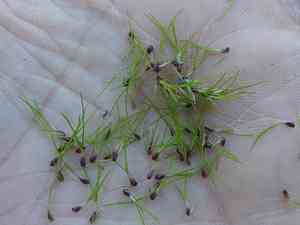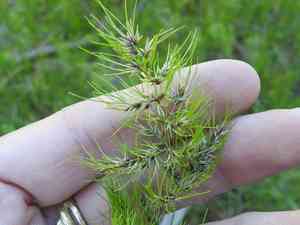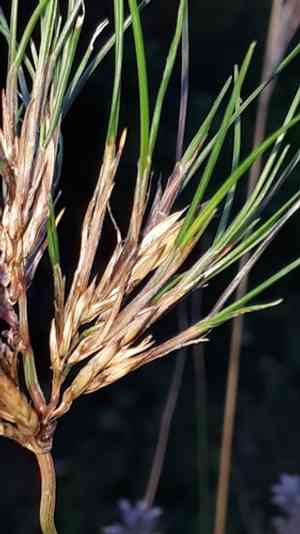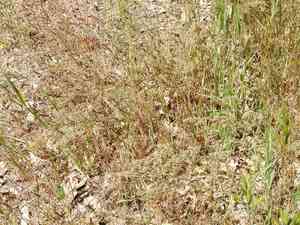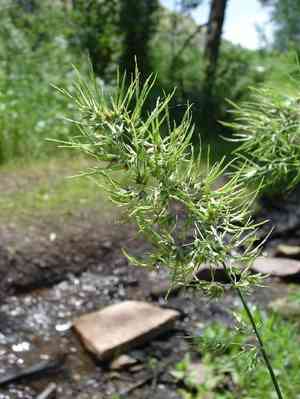
Bulbous bluegrass(Poa bulbosa)

Bulbous bluegrass (Poa bulbosa)

Also known as: Bulbous Speargrass, Bulbous poa

Bulbous bluegrass (Poa bulbosa) is a perennial grass that typically reaches heights between 15 and 71 cm. Originating from regions in Europe, Asia, and Africa, it has the potential to become invasive in parts of the Americas. Known for its remarkable drought resistance, it features bulb-like structures at the base of its stems, which aid in its survival in arid conditions.

Uses include:
1. **Soil Stabilization**: It is frequently employed in reseeding disturbed areas to curb erosion.
2. **Forage**: The grass serves as a food source for various wildlife, including elk, deer, mice, and squirrels.
3. **Habitat Support**: It supports a diverse range of insects, contributing to local biodiversity.

This grass is particularly valuable in dry environments due to its adaptability and resilience.

Attributes of Bulbous bluegrass

Lifespan
Perennial
Plant Type
Herb
Plant Height
15 cm to 61 cm
Spread
10-30 cm
Leaf Color
Green
Flower Size
3 mm to 6 mm
Flower Color
Yellow Green Red

ForwardPlant - Identify plants with a snap

Identify and diagnose plants, get toxicity alerts, and explore safety guides for all types of fungi.

Try for Free

Images of Bulbous bluegrass

Bulbous bluegrass(Poa bulbosa)

Quickly Identify Bulbous bluegrass

1
Poa bulbosa can be identified by its bulbous base, slender leaves, and small flower clusters. The nodes are often bulging, and the plant typically grows in tufts.

Scientific Classification of Bulbous bluegrass

Phylum
Vascular plants
Class
Monocotyledons
Order
Poales
Family
Grass
Genus
Meadow-grasses
Species
Bulbous bluegrass

Planting and Growing of Bulbous bluegrass

Care Difficulty
Easy
Watering Schedule
Every day
Sunlight Requirements
Full sun
Sunshine Duration
4-8 hours
Ideal Temperature
60-75℉
Soil Type
Potting Mix, Peat Mix
Soil pH
6.5-7.5
Fertilizer Type
Balanced
Pruning Season
Spring, Summer
Pruning Area
Branches, Leaves
Pruning Frequency
2 times a year
Repotting Season
Spring
Pot Type
Plastic, Terracotta

water icon How to Water Bulbous bluegrass?

For Poa bulbosa, watering should follow the principle of ensuring that the soil is moist but not waterlogged. Approximately 75 ml of water can be used each time, enough to reach the root level but avoid standing water.
What are the symptoms of an underwatered Bulbous bluegrass? ›
What should I do if my Bulbous bluegrass is not getting enough water? ›
What are the symptoms of an overwatered Bulbous bluegrass? ›
How to save an overwatered Bulbous bluegrass? ›

sunlight icon What Are the Sunlight Requirements for Bulbous bluegrass?

Sunlight Requirements: Full sun
Duration of light: 6 to 8 hours
Full sun exposure is ideal for Poa bulbosa, as it maximizes growth and photosynthetic activity, ensuring optimal development and resilience in various climates and conditions.
What is the ideal lighting condition for Poa bulbosa? ›
How can I ensure Poa bulbosa receives its ideal amount of light? ›
What are the benefits of Poa bulbosa getting its ideal lighting? ›

temperature icon What Is the Ideal Temperature Range for Bulbous bluegrass?

Ideal Temperature: 60 ~ 75℉
The ideal temperature for Poa bulbosa to thrive is between 60-75°F. This range allows the plant to maintain healthy metabolic processes, ensuring optimal photosynthesis and growth. It is crucial to keep the plant within this temperature range to prevent stress and promote robust development.

soil icon What Soil is Best for Bulbous bluegrass?

Soil type: Sandy loam, Calcareous soil, Loam
Soil PH: 6.5 ~ 7.5
Poa bulbosa thrives best in well-drained soils that allow water to flow freely. Such soils prevent waterlogging, reducing the risk of root rot. This condition is ideal for the plant as it promotes vigorous root growth and better nutrient absorption. This plant prefers soils with moderate fertility levels. Excess nutrients can lead to lush above-ground growth but weak root support, so balanced fertility ensures healthy, sturdy growth. A light, loamy soil texture is preferred as it offers a balance of moisture retention and drainage. This texture allows roots to explore and establish efficiently while maintaining access to necessary air and nutrients.

fertilize icon How to Fertilize Bulbous bluegrass?

Fertilizer type: Balanced
Poa bulbosa, or bulbous bluegrass, requires a balanced approach to fertilization. For liquid fertilizers, use a diluted solution with a ratio of 10-10-10 (N-P-K), applying approximately 1-2 tablespoons per plant. Ensure the soil is moist before application. In terms of solid fertilizers, a small handful (around 5 grams) of slow-release granules is appropriate for each application, evenly distributed around the plant's base.

prune icon How to Prune Bulbous bluegrass?

Pruning Time: Spring, Summer
Start by carefully examining the plant and identifying any dead or damaged blades. These should be the first to be removed to encourage healthy growth. Focus on trimming overgrown areas of Poa bulbosa to maintain its desired shape. Precision is key in this step for achieving a naturally balanced look. When pruning, follow the natural growth patterns of the plant. This will help maintain its organic appearance and ensure that new growth aligns harmoniously with existing foliage. More About Pruning Techniques→

propagate icon How to Propagate Bulbous bluegrass plant?

Propagate Time: Spring, Early spring
1
Choose healthy, established Poa bulbosa plants for division. Avoid any with signs of disease or pest infestation, as these can compromise the success rate of propagation.
2
Carefully dig up the clump of grass using a spade. Gently shake off excess soil to expose the roots, then use the spade or a knife to cut the clump into smaller sections, each with roots attached.
3
Replant each division at the same depth it was originally growing, in well-prepared soil. Firm down the soil and water thoroughly to help the plant settle in and remove air pockets around the roots.

repot icon How to Repot Bulbous bluegrass plant?

Repotting frequency: Every 2-3 years
1
Poa bulbosa should be repotted when you notice that its roots are peeking out of the drainage holes or if the growth has significantly slowed down, indicating that it's likely root-bound. Spring and autumn are optimal to minimize stress.
2
Select a pot that is 2-3 inches larger in diameter than the current one. Ensure it has ample drainage holes to prevent waterlogging. A slightly wider pot allows for sideways root growth, promoting a stable and healthy plant structure.
3
Opt for a well-draining sandy soil mix to prevent root rot. The mix should allow water to drain freely, simulating the natural environment of Poa bulbosa, which thrives in soils that don’t retain too much moisture.

ForwardPlant - Identify plants with a snap

Find the best spots for them to optimize their health, simply using your phone.

Try for Free