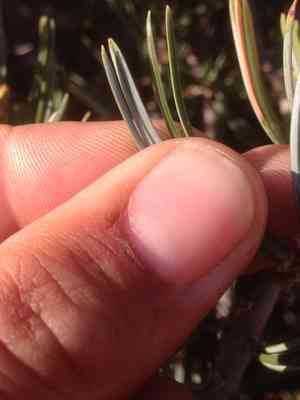
Parry pinyon (Pinus quadrifolia)
Also known as: Parry pine
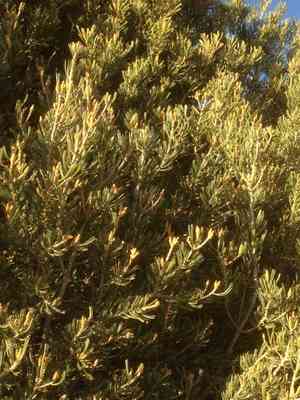
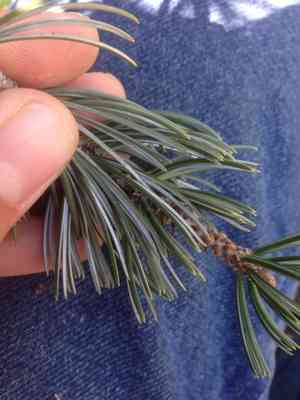
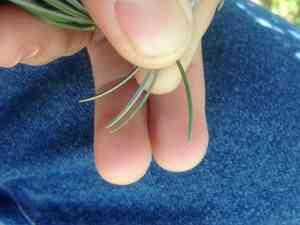
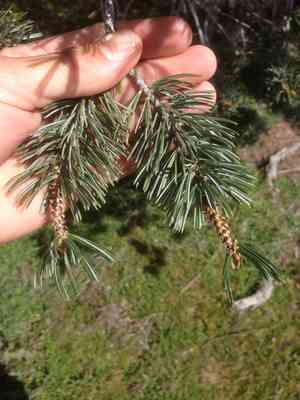
The Parry pinyon (Pinus quadrifolia) is a conifer distinguished by its unique clusters of four slender, flexible needles, which are grouped in fascicles and give the tree a soft appearance. Adapted to arid environments, this tree typically exhibits a compact, rounded growth form that helps minimize water loss. The Parry pinyon also produces small, resin-coated cones, which are well-suited to its dry, low-rainfall habitats.
In This Article
Attributes of Parry pinyon
Lifespan
Perennial
Plant Height
3.5 m to 11 m
Spread
Up to 8 meters
Leaf Color
Bluish-green
Flower Size
N/A (Conifers typically do not produce prominent flowers)
Flower Color
N/A
Images of Parry pinyon
Quickly Identify Parry pinyon
1
Look for bluish-green needles that are grouped in fascicles of four; the tree also produces small, edible pine nuts. The branches often have a dense and rounded habit.
Scientific Classification of Parry pinyon
Phylum
Vascular plants
Class
Conifers
Order
Pinales
Family
Pine
Genus
Pines
Species
Parry pinyon
Planting and Growing of Parry pinyon
Care Difficulty
Moderate
Watering Schedule
Every 2 days
Sunlight Requirements
Full sun
Sunshine Duration
6-12 hours
Ideal Temperature
60-70℉
Soil Type
Potting Mix, Peat Mix
Soil pH
6.5-7.5
Fertilizer Type
Balanced
Pruning Season
Spring, Summer
Pruning Area
Branches, Leaves
Pruning Frequency
Once a year
Repotting Season
Spring
Pot Type
Plastic, Ceramic
 How to Water Parry pinyon?
Pinus quadrifolia thrives in arid environments, so it requires a balanced approach to watering. The goal is to simulate a naturally dry setting while still providing enough moisture to sustain growth. Water should be applied until the surrounding soil is moist but not waterlogged.
What are the symptoms of an underwatered Parry pinyon?
›
What should I do if my Parry pinyon is not getting enough water?
›
What are the symptoms of an overwatered Parry pinyon?
›
How to save an overwatered Parry pinyon?
›
 What Are the Sunlight Requirements for Parry pinyon?
Pinus quadrifolia favors full sun exposure, benefiting from 6-8 hours of sunlight daily. Ideal sunlight promotes healthy growth and fortifies the plant's resilience to environmental stresses.
What is the optimal light intensity?
›
How can one achieve ideal light conditions?
›
What benefits does ideal lighting bring?
›
 What Is the Ideal Temperature Range for Parry pinyon?
The ideal temperature range for Pinus quadrifolia is between 60°F and 70°F. This range provides optimal conditions for growth and metabolism, allowing the plant to photosynthesize efficiently and maintain healthy tissue development.
 What Soil is Best for Parry pinyon?
Pinus quadrifolia thrives in well-drained soils that prevent waterlogging, which can lead to root rot. This helps the plant maintain a healthy root system and access nutrients efficiently. This pine species can grow in nutrient-poor soils, reducing competition with more nutrient-demanding plants. By adapting to such conditions, it establishes successfully in its native habitat. Pinus quadrifolia is accustomed to dry environments, making it well-suited for soils that retain minimal water. This characteristic allows the plant to conserve resources during prolonged dry spells.
 How to Fertilize Parry pinyon?
For Pinus quadrifolia, it's essential to use a balanced fertilizer. Generally, apply about 1 ounce per square foot of soil surface for granular fertilizers. Liquid fertilizers should be mixed according to the package instructions, usually around a quarter to half strength dilution.
 How to Prune Parry pinyon?
When pruning Pinus quadrifolia, begin by removing any dead, diseased, or damaged branches using clean and sharp pruning shears. Focus on enhancing air circulation and sunlight penetration by selectively thinning crowded areas. It's essential to make cuts at the branch collar to ensure proper healing. Aim to shape the tree naturally, maintaining its characteristic aesthetics.
More About Pruning Techniques→
 How to Propagate Parry pinyon plant?
1
Collect ripe cones and extract the seeds. Stratify them in a refrigerator for 4-6 weeks to break dormancy, mimicking winter conditions.
2
Sow stratified seeds in a seedling tray with well-draining soil. Keep them at a temperature of around 18-20°C, ensuring moist conditions until germination occurs.
3
Select healthy rootstock and scion with fresh growth. Use a grafting knife to make the cuts, and secure the union with grafting tape, ensuring proper contact.
 How to Repot Parry pinyon plant?
1
Pinus quadrifolia shows signs like roots appearing from the drainage holes and stunted growth when it needs repotting. Spring and summer are the optimal repotting seasons, ensuring the tree gets ample time to adjust. Allow the plant to display these signals naturally, showing patience for its organic rhythm.
2
Choose a pot that is 2 inches larger in diameter than the current one, with several drainage holes. This allows for growth without overwhelming the roots. A ceramic or terracotta pot is preferred for its breathability, which is ideal for this pine's well-being, facilitating a healthy moisture balance.
3
Opt for a well-draining soil mix specifically blended for pines, comprising sandy loam and organic matter. This composition ensures proper drainage while providing essential nutrients, aiding root expansion and overall health. Customize the blend to regulate moisture retention based on environmental conditions.



