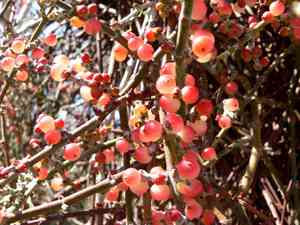
Desert Mistletoe (Phoradendron californicum)
Also known as: California Mesquite Mistletoe
Phoradendron californicum, known as desert mistletoe, is a hemiparasitic plant native to the Southwestern United States and northern Mexico. It parasitizes host trees like mesquite and palo verde to obtain water and nutrients but also performs photosynthesis.
**Characteristics:**
1. **Leafless Stems:** It has slender, jointed stems with small, scale-like leaves.
2. **Flowering:** Produces small, inconspicuous flowers in the winter.
3. **Fruit:** Female plants produce red berries.
**Ecological Role:**
1. **Parasitism:** Extracts resources from host trees, potentially reducing their growth.
2. **Wildlife Support:** Its berries serve as a crucial food source for birds such as the phainopepla, aiding in seed dispersal.
3. **Cultural Significance:** Historically, native people harvested the berries, though they are considered toxic today.
Despite its parasitic nature, desert mistletoe supports various wildlife and contributes to the ecosystem's biodiversity.
Attributes of Desert Mistletoe
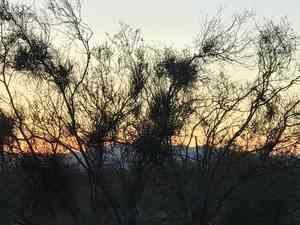
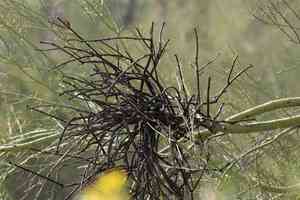
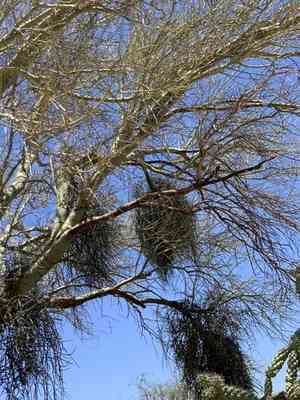
Images of Desert Mistletoe
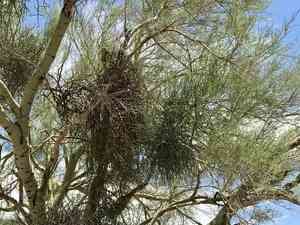
Quickly Identify Desert Mistletoe
Scientific Classification of Desert Mistletoe
Planting and Growing of Desert Mistletoe
 How to Water Desert Mistletoe?
 What Are the Sunlight Requirements for Desert Mistletoe?
 What Is the Ideal Temperature Range for Desert Mistletoe?
 What Soil is Best for Desert Mistletoe?
 How to Fertilize Desert Mistletoe?
 How to Prune Desert Mistletoe?
 How to Propagate Desert Mistletoe plant?
 How to Repot Desert Mistletoe plant?
Toxicity
ingestion



