Persicaria odorata(Persicaria odorata)

Persicaria odorata (Persicaria odorata)

Also known as: Vietnamese coriander, hot mint

Persicaria odorata, popularly known as Vietnamese coriander, rau răm, laksa leaf, phak phai, praew leaf, hot mint, Cambodian mint, and Vietnamese mint, is a herb whose leaves hold an essential role in Southeast Asian and Northeast Indian gastronomy. Intriguingly, although bearing 'coriander' and 'mint' in some of its common names, it shares no familial ties with mints or coriander and belongs to neither the mint family Lamiaceae nor the coriander's family Apiaceae. Yet, it does bear certain resemblance to them in terms of its overall aesthetics and aroma. It's main family, however, is Polygonaceae, often termed as 'smartweeds' or 'pinkweeds'. The likeness in flavor profiles and fragrances among Persicaria, mint, and coriander can likely be ascribed to the process of convergent evolution.

Attributes of Persicaria odorata

Lifespan
Perennial
Plant Height
0.3m - 0.8m
Spread
N/A
Leaf Color
Green
Flower Size
N/A
Flower Color
Pink

ForwardPlant - Identify plants with a snap

Identify and diagnose plants, get toxicity alerts, and explore safety guides for all types of fungi.

Try for Free

Images of Persicaria odorata

Persicaria odorata(Persicaria odorata)

Quickly Identify Persicaria odorata

1
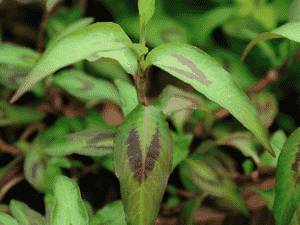
This plant can be identified by its long, pointy leaves which have a unique, spicy flavor. It also features small pink flowers.

Scientific Classification of Persicaria odorata

Phylum
Tracheophyta
Class
Magnoliopsida
Order
Caryophyllales
Family
Polygonaceae
Genus
Persicaria
Species
P. odorata

Planting and Growing of Persicaria odorata

Care Difficulty
Easy
Watering Schedule
Every 8 days
Sunlight Requirements
Partial sun
Sunshine Duration
6-10 hours
Ideal Temperature
68-86℉
Soil Type
Potting Mix, Peat Mix
Soil pH
5.5-7
Fertilizer Type
Balanced
Pruning Season
Spring, Summer
Pruning Area
Branches, Leaves
Pruning Frequency
2 times a year
Repotting Season
Spring
Pot Type
Plastic, Ceramic

water icon How to Water Persicaria odorata?

Persicaria odorata enjoys a consistently moist environment but doesn’t want to be flooded. You should aim to provide around 250 ml of water per session, ensuring that the top inch of the soil remains moist but not waterlogged. This allows the roots to have constant access to moisture without sitting in a swampy base, which could lead to rot.
What are the symptoms of an underwatered Persicaria odorata?
What should I do if my Persicaria odorata is not getting enough water?
What are the symptoms of an overwatered Persicaria odorata?
How to save an overwatered Persicaria odorata?

sunlight icon What Are the Sunlight Requirements for Persicaria odorata?

Sunlight Requirements: Partial sun
Duration of light: 4 to 6 hours
Partial sun is ideal for Persicaria odorata, ensuring 4 to 6 hours of gentle sunlight. This light range encourages healthy oil production and keeps the plant bushy and green, which enhances its culinary value.
What is the ideal lighting condition for Persicaria odorata?
How can I ensure Persicaria odorata receives optimal light?
What are the benefits of providing the right lighting to Persicaria odorata?

temperature icon What Is the Ideal Temperature Range for Persicaria odorata?

Ideal Temperature: 68 ~ 86℉
Persicaria odorata thrives best when grown in temperatures ranging from 68°F to 86°F. These conditions simulate its native tropical habitat, providing optimal energy for photosynthesis, metabolism, and cellular growth. Such a temperature range ensures the plant can absorb nutrients effectively while maintaining robust growth and a healthy appearance.

soil icon What Soil is Best for Persicaria odorata?

Soil type: Loam, Sandy soil
Soil PH: 5.5 ~ 7
Persicaria odorata thrives in well-drained soil as it prevents root rot by ensuring excess water doesn't pool around the roots. This soil type supports optimal growth by providing sufficient aeration and moisture balance. This plant benefits from a nutrient-rich soil mix, which supplies essential nutrients for robust foliage and resistance against diseases. Incorporating organic matter, like compost, enriches the soil and supports healthy growth. Soils with good moisture retention are ideal for this plant, as they ensure consistent moisture levels. Maintaining this balance promotes vigorous growth and prevents dehydration, which can lead to wilting.

fertilize icon How to Fertilize Persicaria odorata?

Fertilizer type: Balanced
For Persicaria odorata, a general-purpose liquid fertilizer should be diluted at half strength. Apply approximately half a cup of the diluted liquid per plant during its active growing season, ensuring the soil is moist before application.

prune icon How to Prune Persicaria odorata?

Pruning Time: Spring, Summer, Autumn
Wear gloves to protect your hands from any sap or plant debris. Avoid heavy pruning in late autumn to prevent exposing fresh cuts to potential cold damage. Ensure you're cutting above a leaf node, as trimming too low can stunt growth. Always use clean, sharp tools to make precise cuts and reduce plant stress. More About Pruning Techniques

propagate icon How to Propagate Persicaria odorata plant?

Propagate Time: Spring, Summer
1
Select healthy stems and cut 4-6 inch sections just below a node. Remove leaves from the lower half to prevent rot and ensure the energy is directed towards root development.
2
Dip the cut end in rooting hormone, then place each cutting into a pot filled with a well-draining potting mix. Ensure at least a few nodes are buried to anchor the cutting effectively.
3
For division propagation, carefully dig up an existing plant during the spring or summer. Divide the root ball into sections with at least a few stems and roots in each. Replant the divisions immediately.

repot icon How to Repot Persicaria odorata plant?

Repotting frequency: Every 1-2 years
1
Repot your Persicaria odorata when you notice roots protruding from drainage holes or the plant's growth seems stunted. This usually occurs every 1-2 years, depending on growth rate. Spring and early summer are ideal times as the plant is in its active growth phase, allowing it to recover quickly.
2
Opt for a pot that is 1-2 inches larger in diameter than the current one. The pot should have adequate drainage holes to prevent waterlogging, which can lead to root rot. A pot that is too large could retain too much moisture, which is detrimental to the plant.
3
Choose a well-draining potting mix ideally formulated for herbs or general indoor plants. This soil type ensures that excess water drains swiftly, providing an environment that mimics the plant's natural habitat and preventing root diseases caused by water retention.

ForwardPlant - Identify plants with a snap

Find the best spots for them to optimize their health, simply using your phone.

Try for Free