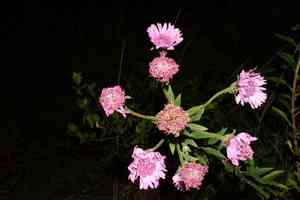
Sand palafox (Palafoxia hookeriana)
Also known as: Hooker's palafoxia, Showy palafox
Sand palafox, a hardy wildflower, features slender, upright stems topped with delicate pinkish-purple flowers. This plant excels in arid environments due to its deep root system that taps into limited water resources. Additionally, its narrow leaves help reduce water loss. Typically, sand palafox flourishes in late summer, a time when many other plants struggle with the intense heat.
In This Article
Attributes of Sand palafox
Lifespan
Annual
Plant Type
Herb
Plant Height
41 cm to 1.02 m
Spread
N/A - this plant does not form a traditional crown
Leaf Color
Green
Flower Size
1.3 cm
Flower Color
Purple Pink
Images of Sand palafox
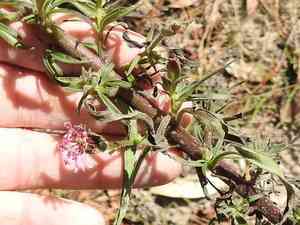
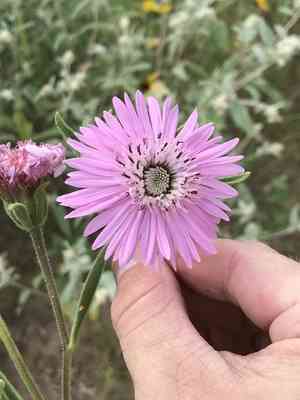
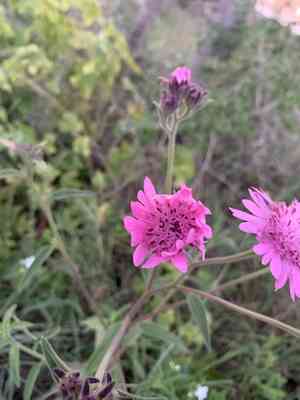
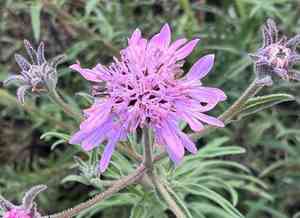
Quickly Identify Sand palafox
1
Look for its distinctive pink to purple daisy-like flowers, which typically have a central yellow disk. The plant generally has slender, branched stems and narrow, linear leaves. The flowers and its growth in sandy soils can help identify it correctly.
Scientific Classification of Sand palafox
Phylum
Vascular plants
Class
Dicotyledons
Order
Asterales
Family
Daisy
Genus
Palafox
Species
Sand palafox
Planting and Growing of Sand palafox
Care Difficulty
Easy
Watering Schedule
Every 3 days
Sunlight Requirements
Full sun
Sunshine Duration
4-8 hours
Ideal Temperature
65-75℉
Soil Type
Potting Mix, Peat Mix
Soil pH
6.5-7.5
Fertilizer Type
Balanced
Pruning Season
Spring, Summer
Pruning Area
Branches, Leaves
Pruning Frequency
2 times a year
Repotting Season
Spring
Pot Type
Plastic, Ceramic
 How to Water Sand palafox?
For Palafoxia hookeriana, it's essential to water until the soil is evenly moist but not soggy. A general guideline is to ensure around 500 ml per session, enough to moisten the soil deeply without drowning the roots.
What are the symptoms of an underwatered Sand palafox?
›
What should I do if my Sand palafox is not getting enough water?
›
What are the symptoms of an overwatered Sand palafox?
›
How to save an overwatered Sand palafox?
›
 What Are the Sunlight Requirements for Sand palafox?
Palafoxia hookeriana thrives in full sun with 6 to 8 hours of daily exposure. Ideal lighting ensures robust flowering, vibrant leaf color, and reduces the risk of fungal infections by promoting better air circulation.
What is the ideal lighting for Palafoxia hookeriana?
›
How to achieve ideal lighting conditions?
›
What benefits does ideal lighting provide?
›
 What Is the Ideal Temperature Range for Sand palafox?
For Palafoxia hookeriana, the ideal temperature range is between 65°F and 75°F. This range promotes optimal enzymatic and photosynthetic activities, ensuring the best growth and floral display. Maintaining temperatures within this range supports robust health and increases resilience to diseases and pests.
 What Soil is Best for Sand palafox?
Palafoxia hookeriana thrives in well-drained soil, preventing root rot and other moisture-related diseases. Ensuring proper drainage significantly enhances the plant's growth and overall health. The plant benefits from soil that is moderately rich in organic matter, aiding its vibrant flowering and overall vitality. Ensuring the soil is not too compact helps promote stronger root systems. The soil must be well-aerated, allowing for efficient gas exchange at root levels. This promotes healthy root function and ensures that the plant can grow optimally.
 How to Fertilize Sand palafox?
For Palafoxia hookeriana, the amount of fertilizer should be moderate due to its native habitat adaptations. A liquid fertilizer should be diluted to half strength to prevent nutrient shock and burn to the roots. Ensure the application provides enough to support blooming but not too much to foster excessive foliage growth.
 How to Prune Sand palafox?
Before you start pruning Palafoxia hookeriana, ensure that your pruning shears are sharp and sterilized. Sharp tools make clean cuts which help the plant heal faster and reduce the risk of disease transmission. You can sterilize your tools using a simple alcohol solution. Palafoxia hookeriana benefits most from light pruning, focusing on removing dead or broken stems, and any diseased portions. Start by visually inspecting the plant, and pinpoint the areas that look unhealthy or overly crowded, which may impede airflow and sunlight. Cut just above a leaf node or bud to encourage new growth. For diseased stems, cut significantly below the infected area to ensure complete removal. Always aim for an angular cut to prevent water from pooling on the wound, which can lead to decay.
More About Pruning Techniques→
 How to Propagate Sand palafox plant?
1
Fill the seed tray with a moisture-retentive potting mix, ensuring it's evenly spread out without compacting the soil. Lightly water the tray to provide initial moisture.
2
Scatter the Palafoxia hookeriana seeds across the surface of the potting mix. Cover lightly with a thin layer of soil and mist with water to settle the seeds. Avoid deep planting as the seeds require light for germination.
3
Place the seed tray in a warm, brightly lit location, but away from direct sunlight to prevent overheating. Maintain consistent moisture by misting the soil lightly when it begins to dry out.
 How to Repot Sand palafox plant?
1
Look for signs like roots protruding from the drainage holes or reduced new growth. These indicate it's time to repot, as the plant may be root-bound or lacking nutrients from depleted soil.
2
Choose a pot slightly larger than the current one, with drainage holes. This ensures adequate room for root growth and prevents waterlogging, reducing the risk of root rot and enhancing plant health.
3
Opt for well-draining soil with a sandy component, such as a cactus mix. This provides excellent aeration and prevents water retention, mimicking the native conditions, which helps the plant thrive.
Learn More About Sand palafox Diseases
Anthracnose
Bacterial Leaf Spot
Bacterial Soft Rot
Bacterial Wilt
Chemical Injury
Crown Gall
Cyst Nematode
Damping-off
Downy Mildew
Drought Stress
Fusarium Wilt
Gray Mold
Leaf Spot
Mosaic
Nutrient Deficiency
Nutrient Toxicity
Powdery Mildew
Root Rot
Root-knot Nematode
Rusts
Sooty Mold
Spider Mites
Temperature Stress
Thrips Damage
White Mold



