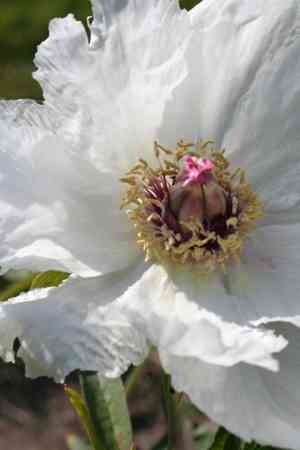
Paeonia ostii (Paeonia ostii)
Also known as: Tree Peony, Ostii Peony
Paeonia ostii, or Chinese tree peonies, are favored in cooler climates for their resilience and low maintenance needs. These perennials are celebrated for their large, fragrant blooms that come in various colors, shapes, and sizes. Their early spring flowering period, although brief at seven to ten days, adds a burst of beauty to gardens. Despite the short blooming season, their cut flowers are popular in the market during this limited time.
In This Article
Attributes of Paeonia ostii
Lifespan
Perennial
Plant Height
1.5 to 2 meters
Spread
1 to 1.5 meters
Leaf Color
Green
Flower Size
15 to 20 centimeters
Flower Color
White to pale pink
Images of Paeonia ostii
Quickly Identify Paeonia ostii
1
Look for large, deeply lobed leaves, woody branches, and large, white to slightly pink flowers that bloom in late spring. The plant typically grows upright and has a sturdy, woody structure.
Scientific Classification of Paeonia ostii
Phylum
Vascular plants
Class
Dicotyledons
Order
Saxifrages, stonecrops and allies
Family
Peony
Genus
Peonies
Species
Paeonia ostii
Planting and Growing of Paeonia ostii
Care Difficulty
Moderate
Watering Schedule
Every 2 days
Sunlight Requirements
Full sun
Sunshine Duration
4-6 hours
Ideal Temperature
60-75℉
Soil Type
Potting Mix, Peat Mix
Soil pH
6.5-7.5
Fertilizer Type
Balanced
Pruning Season
Spring, Summer
Pruning Area
Branches, Leaves
Pruning Frequency
2 times a year
Repotting Season
Spring
Pot Type
Plastic, Ceramic
 How to Water Paeonia ostii?
For Paeonia ostii, a substantial soak of approximately 500 ml helps maintain its health. This deep watering encourages a robust root system by reaching below the surface, where the majority of root growth takes place. Ensuring the soil is moistened adequately without being waterlogged is essential for its vitality.
What are the symptoms of an underwatered Paeonia ostii?
›
What should I do if my Paeonia ostii is not getting enough water?
›
What are the symptoms of an overwatered Paeonia ostii?
›
How to save an overwatered Paeonia ostii?
›
 What Are the Sunlight Requirements for Paeonia ostii?
Paeonia ostii thrives best under conditions of full sun to partial sun. Ideal sunlight fosters healthy development, ensuring vibrant flowers and lush foliage. Optimum light prevents diseases and elongates blooming durations.
Question 1
›
Question 2
›
Question 3
›
 What Is the Ideal Temperature Range for Paeonia ostii?
The ideal temperature range for Paeonia ostii is between 60°F and 75°F. This range provides the optimal environmental conditions necessary for growth, flowering, and overall health of the plant. Maintaining this range ensures that the physiological processes of the plant are not disrupted and that the peony can thrive.
 What Soil is Best for Paeonia ostii?
Paeonia ostii thrives in well-drained soil, preventing waterlogging and root rot. This type of soil allows excess moisture to escape, keeping roots healthy and promoting robust plant growth. Rich in organic matter, the soil should provide essential nutrients for optimal growth and flowering. The presence of compost or well-rotted manure enhances nutrient availability, ensuring lush foliage and vibrant blooms. Good aeration in the soil facilitates optimal root respiration and nutrient uptake. The presence of sand or perlite can improve air exchange, leading to stronger and more vigorous growth in Paeonia ostii.
 How to Fertilize Paeonia ostii?
When fertilizing Paeonia ostii, use a balanced 10-10-10 or 5-10-5 fertilizer. Apply 1 cup for mature plants every spring, as excessive amounts can harm. Spread evenly under the plant's drip line, avoiding leaves and stems to prevent burn.
 How to Prune Paeonia ostii?
Prune in early spring before the new growth begins, or shortly after flowering to ensure the plant recovers well and produces vigorous blooms in the coming season. While reshaping the plant, avoid cutting more than one-third of the plant's total branches at any given time. Over-pruning can stress the plant and lead to fewer blooms or stunted growth. After pruning, it's advisable to apply a layer of mulch around the base of the plant. This helps retain moisture, moderates soil temperature, and reduces the risk of fungal infections.
More About Pruning Techniques→
 How to Propagate Paeonia ostii plant?
1
Collect seeds from mature plants in the autumn. Soak them in water for 24 hours before sowing. Use seed trays with good drainage. Ensure seeds are buried to an adequate depth and keep the soil moist until germination occurs.
2
Cut healthy, mature stems about 10-15 cm long. Remove lower leaves and dip the cut end in rooting hormone before planting in a well-draining potting mix. Maintain a humid environment using a plastic cover.
3
In early spring, carefully dig up the plant. Clean the roots and use a sharp knife to divide the root ball into sections, ensuring each section has at least one viable shoot and root system. Replant immediately.
 How to Repot Paeonia ostii plant?
1
Repotting Paeonia ostii is best done when you notice the roots are crowding the pot or the plant exhibits reduced flowering. These signs indicate that the plant has outgrown its current container and needs more space for healthy growth.
2
Select a pot with a diameter at least 2 inches larger than the current one with drainage holes. A larger pot provides room for root expansion, preventing root-bound conditions and promoting robust blooming.
3
Opt for well-draining loamy soil to prevent waterlogging. Such soil retains enough moisture for root health, while avoiding rot and supporting the nutrient needs of Paeonia ostii for vibrant foliage and blossoms.
Learn More About Paeonia ostii Diseases
Anthracnose
Bacterial Leaf Spot
Bacterial Soft Rot
Bacterial Wilt
Black Spot
Chemical Injury
Crown Gall
Cyst Nematode
Damping-off
Downy Mildew
Drought Stress
Fusarium Wilt
Gray Mold
Leaf Curl
Leaf Spot
Mosaic
Nutrient Deficiency
Nutrient Toxicity
Powdery Mildew
Root Rot
Root-knot Nematode
Rusts
Sooty Mold
Spider Mites
Temperature Stress
Thrips Damage
White Mold



