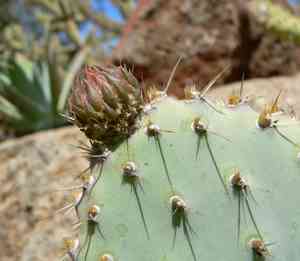
Beavertail cactus (Opuntia basilaris)
Also known as: Trelease's Beavertail Pricklypear , Grand canyon beavertail, Short-joint beaver-tail cactus
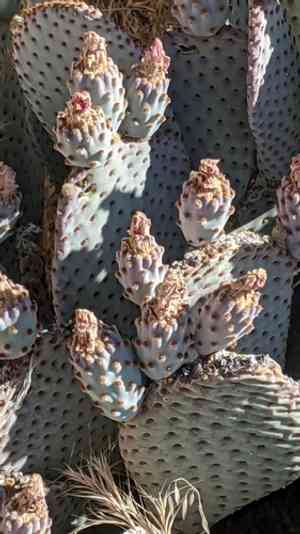
The Beavertail Cactus (Opuntia basilaris) is a sprawling cactus characterized by its gray-blue, broad, fleshy pads that resemble a beaver's tail. From spring to summer, it showcases bright rose-purple flowers. These are followed by prickly pear fruits that attract birds. It thrives in full sunlight and well-drained soil.
In This Article
Attributes of Beavertail cactus
Lifespan
Perennial
Plant Type
Tree, Shrub
Plant Height
30 cm
Spread
1.8 m
Leaf Color
Blue-gray (pads, as it is a cactus)
Flower Size
5 cm to 8 cm
Flower Color
Red Purple White
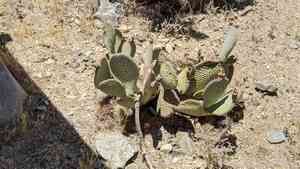
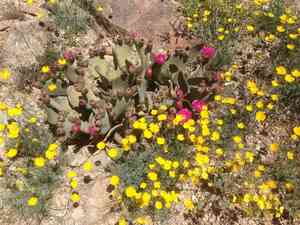
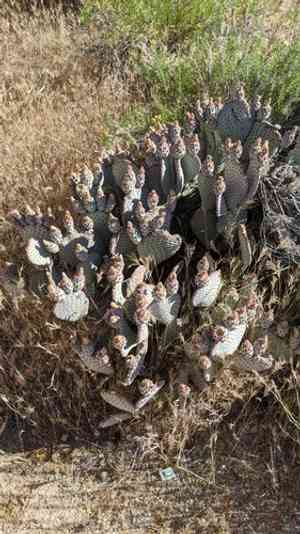
Images of Beavertail cactus
Quickly Identify Beavertail cactus
1
Look for flat, paddle-shaped pads and bright magenta flowers that bloom in the spring. The pads are typically blue-gray in color and covered in small, hair-like spines called glochids.
Scientific Classification of Beavertail cactus
Phylum
Vascular plants
Class
Dicotyledons
Order
Caryophyllales
Family
Cactuses
Genus
Prickly pear
Species
Beavertail cactus
Planting and Growing of Beavertail cactus
Care Difficulty
Easy
Watering Schedule
Every day
Sunlight Requirements
Full sun
Sunshine Duration
6-8 hours
Ideal Temperature
65-80℉
Soil Type
Potting Mix, Peat Mix
Soil pH
6.5-8.5
Fertilizer Type
Balanced
Pruning Season
Spring, Summer
Pruning Area
Branches, Leaves
Pruning Frequency
2 times a year
Repotting Season
Spring
Pot Type
Plastic, Ceramic
 How to Water Beavertail cactus?
Opuntia basilaris, also known as Beavertail Cactus, requires careful attention to watering. The key principle is to allow the soil to dry out completely between waterings. Water thoroughly until you see water draining from the hole at the bottom of the pot, ensuring root hydration without waterlogging.
What are the symptoms of an underwatered Beavertail cactus?
›
What should I do if my Beavertail cactus is not getting enough water?
›
What are the symptoms of an overwatered Beavertail cactus?
›
How to save an overwatered Beavertail cactus?
›
 What Are the Sunlight Requirements for Beavertail cactus?
Opuntia basilaris thrives perfectly in full to partial sunlight. Ideal lighting contributes to robust growth and enhances its adaptability in arid conditions.
More About Sunlight Requirements Techniques→
What is the ideal sunlight for Opuntia basilaris?
›
How can I achieve the ideal lighting for my plant?
›
What benefits does ideal lighting provide?
›
 What Is the Ideal Temperature Range for Beavertail cactus?
The ideal temperature range for growing Opuntia basilaris is between 65 and 80 degrees Fahrenheit. This range ensures optimal growth and health, providing the best conditions for photosynthesis, and protecting the plant from temperature-induced stress.
 What Soil is Best for Beavertail cactus?
Opuntia basilaris thrives best in well-drained soil, such as sandy or sandy loam. Well-drained soil ensures that water does not stagnate, preventing root rot and allowing for good air circulation. Such drainage promotes healthy root systems, vital for the plant’s growth. This cactus prefers soil where nutrients are sparse. Growing in nutrient-poor environments encourages the plant to concentrate its growth in drought tolerance mechanisms, such as water storage in its pads, rather than excessive vegetative growth which can be detrimental in arid habitats. While Opuntia basilaris can tolerate variations, a stable, slightly alkaline pH is preferable. A pH range between 6.5 and 8.5 is ideal, as it facilitates optimal nutrient absorption and maintains the structural integrity of the plant’s cell walls, supporting overall plant vigor.
 How to Fertilize Beavertail cactus?
Opuntia basilaris requires careful fertilization, typically with a balanced 10-10-10 liquid fertilizer. Use about half the recommended dose for cacti per application to avoid overfeeding. This cactus thrives with minimal intervention, so over-fertilization should be avoided.
 How to Prune Beavertail cactus?
Identify pads that are damaged, overly crowded, or growing in undesirable directions. Remove these by cutting just above the pad's joint, ensuring a clean cut to minimize damage to the plant. For pads that have grown too large or are causing imbalance, find a natural joint along the pad's base. Gently cut away the pad, using caution to avoid damaging nearby pads.
 How to Propagate Beavertail cactus plant?
1
Harvest seeds from mature fruits in late spring. Allow the fruits to dry, then extract the seeds. Clean them properly to remove any residue that could hinder germination.
2
Select a healthy segment of the cactus and use a sterilized knife to cut a 3-6 inch piece. Leave the cutting aside in a shaded location for a few days until a callus forms over the cut surface.
3
Fill a tray with cactus potting mix and evenly disperse the seeds on the surface. Lightly cover them with a thin layer of soil. Keep the tray in a warm area with indirect sunlight.
 How to Repot Beavertail cactus plant?
1
Opuntia basilaris should be repotted when you notice its roots becoming cramped within its current container, or when the soil has compacted significantly, inhibiting drainage. Another signal is if water starts to pool on the surface longer than usual. Spring is the ideal time because the plant is coming out of dormancy and can handle root disturbance better.
2
Select a pot that is slightly larger than the current one, ideally 1-2 inches wider. Ensure it has good drainage holes to allow excess water to escape, as Opuntia basilaris is susceptible to root rot if left in standing water. Terracotta pots are a good choice as they allow for air exchange and moisture regulation, providing a healthier environment for the cactus.
3
Opt for a cactus or succulent-specific potting mix. This soil is well-draining, which is crucial for Opuntia basilaris as it thrives in arid conditions. A well-aerated mix prevents root rot and allows for the rapid evaporation of excess moisture, simulating its natural desert habitat. Consider adding perlite or pumice for additional drainage.



