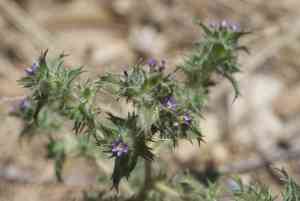
Hollyleaf pincushionplant (Navarretia atractyloides)
Also known as: Hollyleaf Skunkweed
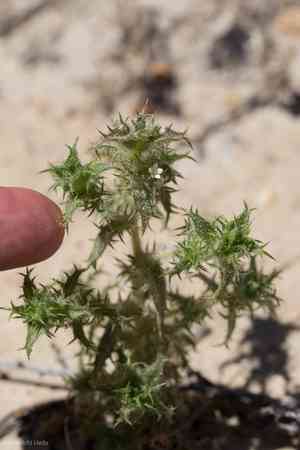
The Hollyleaf pincushionplant (Navarretia atractyloides) is distinguished by its low, mat-forming growth that thrives in the dry, rocky soils typical of its native chaparral and coastal scrub habitats. The plant features spiny, holly-like leaves that help minimize water loss. Its small, clustered flowers are designed to attract various insect pollinators. Additionally, the plant's extensive root system is adept at reaching deep moisture and securely anchoring it in loose soil, allowing it to withstand arid conditions and nutrient-poor environments.
In This Article
Attributes of Hollyleaf pincushionplant
Lifespan
Annual
Plant Type
Herb
Plant Height
5 to 20 centimeters
Spread
10 to 30 centimeters
Leaf Color
Dark green
Flower Size
0.5 to 1 centimeters
Flower Color
White to pale lavender
Images of Hollyleaf pincushionplant
Quickly Identify Hollyleaf pincushionplant
1
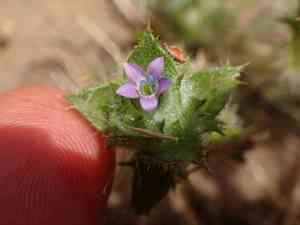
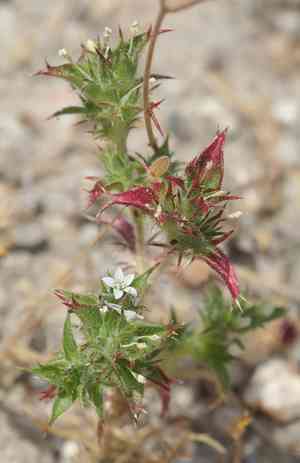
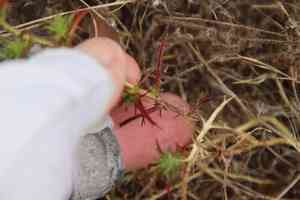
Navarretia atractyloides can be identified by its strong, skunky odor and its spiny, holly-like leaves. The plant is low-growing, typically forming a mat on the ground, and produces clusters of small, tubular flowers that are white to pale lavender in color.
Scientific Classification of Hollyleaf pincushionplant
Phylum
Vascular plants
Class
Dicotyledons
Order
Ericales
Family
Phlox
Genus
Navarretia
Species
Hollyleaf pincushionplant
Planting and Growing of Hollyleaf pincushionplant
Care Difficulty
Moderate
Watering Schedule
Every 2 days
Sunlight Requirements
Full sun
Sunshine Duration
6-10 hours
Ideal Temperature
65-75℉
Soil Type
Potting Mix, Peat Mix
Soil pH
6.5-7.5
Fertilizer Type
Balanced
Pruning Season
Spring, Summer
Pruning Area
Branches, Leaves
Pruning Frequency
2 times a year
Repotting Season
Spring
Pot Type
Plastic, Ceramic
 How to Water Hollyleaf pincushionplant?
When watering Navarretia atractyloides, aim to provide approximately 200ml of water each time. This quantity ensures that the soil is adequately moistened to reach the root zone but not waterlogged. It's important to pour slowly so that the water can evenly distribute and infiltrate the soil deeply, allowing root absorption. Waiting until the soil is mostly dry before rewatering prevents oversaturation.
What are the symptoms of an underwatered Hollyleaf pincushionplant?
›
What should I do if my Hollyleaf pincushionplant is not getting enough water?
›
What are the symptoms of an overwatered Hollyleaf pincushionplant?
›
How to save an overwatered Hollyleaf pincushionplant?
›
 What Are the Sunlight Requirements for Hollyleaf pincushionplant?
Navarretia atractyloides prefers full sun, which enhances its growth and flowering potential. Ideal sunlight is crucial for its photosynthesis process, ensuring vigorous growth, robust health, and an abundance of blooms.
How much sunlight does Navarretia atractyloides require?
›
What solutions are there for achieving ideal sunlight exposure?
›
What benefits come from ideal sunlight exposure for the plant?
›
 What Is the Ideal Temperature Range for Hollyleaf pincushionplant?
The ideal temperature range for Navarretia atractyloides is between 65°F and 75°F. This range provides an optimal environment for growth, ensuring that photosynthesis, metabolism, and other physiological processes occur at peak efficiency. Maintaining these temperatures can promote healthy foliage, strong root development, and vibrant flowering.
 What Soil is Best for Hollyleaf pincushionplant?
Navarretia atractyloides thrives best in well-drained soils. This requirement ensures that the roots do not sit in water for prolonged periods, preventing root rot and other moisture-related diseases. A well-drained soil structure promotes healthy root development and optimal nutrient absorption. Although hardy, this plant benefits significantly from nutrient-rich soils. Such soils provide an abundance of essential nutrients, ensuring robust growth and vibrant foliage. Fertile soil contributes to the plant's overall vigor and resistance to pests and diseases. Navarretia atractyloides prefers soils that maintain moderate moisture levels. This balance prevents desiccation of the plant while also avoiding waterlogging. Consistent moisture supports steady growth and enhances flowering potential.
 How to Fertilize Hollyleaf pincushionplant?
Navarretia atractyloides requires careful application of fertilizers to maintain optimal growth. For liquid fertilizers, dilute the solution to half the recommended strength and apply it at a rate of 250 ml per plant. For solid or granular fertilizers, apply about 20 grams per plant, ensuring even distribution around the root zone.
 How to Prune Hollyleaf pincushionplant?
Gathering the right tools is crucial before you start pruning Navarretia atractyloides. Use clean, sharp pruning shears to make precise cuts. Set up your workspace so you have easy access to the plant from all angles, and ensure you have a tarp or something similar to collect the clippings. Begin by identifying dead or diseased branches. Cut these back to healthy tissue, ensuring you don't leave stubs that can't heal. Next, target any crossing or overcrowded stems to improve airflow. Make cuts just above a leaf node or bud to promote new growth and shape the plant as desired.
More About Pruning Techniques→
 How to Propagate Hollyleaf pincushionplant plant?
1
Fill the seed tray with a well-draining potting mix. Ensure it is evenly firmed down but not compacted, allowing space for root growth. Moisten the soil before planting the seeds to facilitate better seed-to-soil contact.
2
Evenly distribute the seeds over the surface of the pre-moistened soil. Lightly cover the seeds with a thin layer of potting mix to protect them and support germination. Label the tray with the species name and sowing date for future reference.
3
Place the seed tray in a warm, bright location, ideally with indirect sunlight. Monitor the moisture level of the soil, keeping it consistently damp but not waterlogged. Consider using a propagator lid to maintain humidity.
 How to Repot Hollyleaf pincushionplant plant?
1
Navarretia atractyloides shows it's time for repotting when its roots start encircling the pot or poking through the drainage holes. Additionally, if water starts taking ages to drain, it’s a cue to repot, ideally during early spring before active growth begins.
2
Choose a pot with ample drainage holes, about one size larger than the current one. This provides room for growth without overwhelming the plant, ensuring excess water can escape, which reduces root rot risks significantly.
3
Opt for a well-draining sandy mix, possibly with a touch of organic matter. Such soil prevents water-logging, provides aeration, and lets the roots breathe, particularly crucial for plants like Navarretia that prefer drier conditions.



