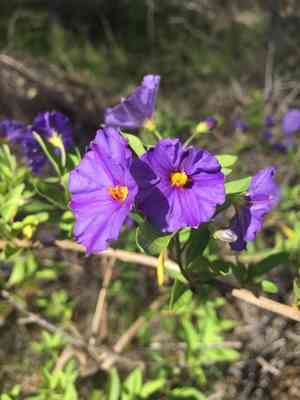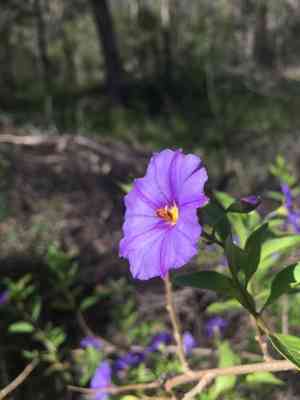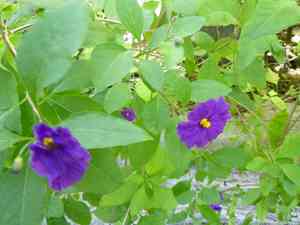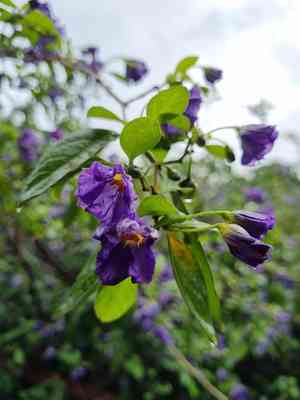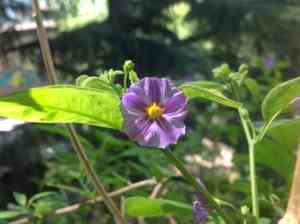
Blue potato bush(Lycianthes rantonnetii)

Blue potato bush (Lycianthes rantonnetii)

Also known as: Blue potato-shrub

Lycianthes rantonnetii, also known as the Blue Potato Bush, is an evergreen shrub that belongs to the Solanaceae (nightshade) family. Native to South America, this plant is cherished in gardens globally for its striking blue to violet blooms with yellow centers, which appear from spring through fall. The flowers eventually give way to bright red berries. The shrub typically grows to 6-10 feet in height and prefers full sun and well-drained soil. It's important to note that all parts of the plant are toxic if ingested.

Attributes of Blue potato bush

Lifespan
Perennial
Plant Type
Shrub
Plant Height
1.8 m
Spread
1.8 m to 3 m
Leaf Color
Green
Flower Size
2.5 cm
Flower Color
Purple Blue

ForwardPlant - Identify plants with a snap

Identify and diagnose plants, get toxicity alerts, and explore safety guides for all types of fungi.

Try for Free

Images of Blue potato bush

Blue potato bush(Lycianthes rantonnetii)

Quickly Identify Blue potato bush

1
Lycianthes rantonnetii can be identified by its woody stems, glossy green leaves, and distinctive star-shaped blue or violet flowers with a yellow center. The plant grows in a semi-upright or sprawling habit and may produce small, non-edible fruits.

Scientific Classification of Blue potato bush

Phylum
Vascular plants
Class
Dicotyledons
Order
Solanales
Family
Nightshade
Genus
Lycianthes
Species
Blue potato bush

Planting and Growing of Blue potato bush

Care Difficulty
Easy
Watering Schedule
Every 8 days
Sunlight Requirements
Full sun
Sunshine Duration
4-10 hours
Ideal Temperature
60-75℉
Soil Type
Potting Mix, Peat Mix
Soil pH
6.5-7.5
Fertilizer Type
Balanced
Pruning Season
Spring, Summer
Pruning Area
Branches, Leaves
Pruning Frequency
2 times a year
Repotting Season
Spring
Pot Type
Plastic, Terracotta

water icon How to Water Blue potato bush?

Lycianthes rantonnetii enjoys well-moisturized soil, requiring about 500 ml of water per session. This ensures soil penetration and root hydration. The watering should be uniform, soaking the soil thoroughly; too soaked leads to root rot, while dry soil stunts growth.
What are the symptoms of an underwatered Blue potato bush?
What should I do if my Blue potato bush is not getting enough water?
What are the symptoms of an overwatered Blue potato bush?
How to save an overwatered Blue potato bush?
More About Watering Techniques

sunlight icon What Are the Sunlight Requirements for Blue potato bush?

Sunlight Requirements: Full sun, Partial sun
Duration of light: 6 to 8 hours
Preferring full to partial sun, this plant benefits immensely from direct light, promoting healthy foliage and blooming while preventing issues linked to inadequate or excessive lighting conditions.
What amount of sunlight is optimal?
What should I do if only partial sunlight is available?
How does optimal light affect plant health?
More About Sunlight Requirements Techniques

temperature icon What Is the Ideal Temperature Range for Blue potato bush?

Ideal Temperature: 60 ~ 75℉
Lycianthes rantonnetii thrives best in a temperature range of 60 to 75 degrees Fahrenheit. This range allows the plant to maintain its vibrant growth and flowering capabilities. Staying within this ideal spectrum ensures that the metabolic functions of the plant operate optimally, leading to healthier foliage and more abundant blooms.

soil icon What Soil is Best for Blue potato bush?

Soil type: Loam, Sandy loam
Soil PH: 6.5 ~ 7.5
Why does Lycianthes rantonnetii need well-drained soil? Well, it helps in preventing root rot and ensures that the roots get enough oxygen. Good drainage facilitates the removal of excess water, which is essential for the plant's healthy growth. Should I provide nutrient-rich soil to Lycianthes rantonnetii? Absolutely! Nutrient-rich soil supports robust growth and vibrant blooms by supplying essential nutrients. It reduces the need for frequent fertilization and enhances the plant's natural resilience against pests and diseases. Why is pH important for soil? Lycianthes rantonnetii thrives in slightly acidic to neutral pH levels because it optimizes nutrient availability. This pH range facilitates better absorption of nutrients like nitrogen, phosphorus, and potassium, contributing to the plant's overall health. More About Soil

fertilize icon How to Fertilize Blue potato bush?

Fertilizer type: Balanced
When fertilizing Lycianthes rantonnetii, use a balanced 10-10-10 liquid fertilizer. Apply approximately 1 tablespoon per gallon of water. Ensure thorough mixing to avoid nutrient burn, catering to the plant’s vibrant blooms and lush foliage. More About Fertilizing Techniques

prune icon How to Prune Blue potato bush?

Pruning Time: Spring, Summer
Choose a cool morning or late afternoon to prune your Lycianthes rantonnetii. Avoid pruning in direct sunlight or during the hottest part of the day to reduce stress on the plant. Before and after pruning, sterilize your tools with a disinfectant to prevent the spread of disease. This is crucial, especially if you're working with multiple plants. Be cautious not to over-prune at any single time. Heavy pruning can shock the plant, causing reduced flowering and slower recovery. Instead, prune lightly but regularly. More About Pruning Techniques

propagate icon How to Propagate Blue potato bush plant?

Propagate Time: Late spring, Early summer
1
Choose non-flowering, healthy stems from a mature Lycianthes rantonnetii plant. Each cutting should be around 10-15 cm long with multiple leaves, but without flowers or buds, to conserve the cutting's energy for rooting.
2
Prepare a well-draining growing medium, typically a mix of sand and peat moss or perlite. This mix provides adequate moisture retention while ensuring proper drainage to prevent root rot.
3
Dip the cut end of each stem in rooting hormone and plant in the growing medium. Maintain about 2.5 cm between cuttings. Firm the medium around them to ensure they stand upright.
More About Propagating Techniques

repot icon How to Repot Blue potato bush plant?

Repotting frequency: Every 2-3 years
1
Lycianthes rantonnetii shows signs of needing repotting when its roots start to grow out of the bottom drainage holes or when the plant visibly slows down in growth despite good care. Ideally, repotting should be done during its active growth periods in spring or autumn.
2
Select a pot that is 1-2 inches larger in diameter than the current one. Ensure it has enough drainage holes. Choosing the right-sized pot helps prevent waterlogging and root rot, both of which can seriously affect the health of your plant.
3
A well-draining loamy soil mix with organic matter is ideal. Such soil retains essential nutrients and moisture necessary for growth while allowing excess water to escape, preventing root rot. Adding perlite or sand can enhance drainage.

ForwardPlant - Identify plants with a snap

Find the best spots for them to optimize their health, simply using your phone.

Try for Free

Toxicity of Blue potato bush

Is Blue potato bush toxic to humans?

The blue potato bush has a moderate degree of toxicity for humans, with every part of the plant posing a potential hazard if ingested. Accidental consumption can result in various symptoms associated with poisoning. These may encompass gastrointestinal issues like nausea, vomiting, and diarrhea, alongside more serious reactions such as dizziness, headaches, and in certain instances, respiratory problems. Due to the overall toxicity of the plant, it is essential for individuals to exercise caution to avoid any unintentional ingestion, especially in locations where the blue potato bush may grow. It is particularly crucial to supervise both children and pets around the blue potato bush to reduce the likelihood of poisoning.

Is Blue potato bush toxic to cat?

The blue potato bush presents a moderate toxicity threat to cats, necessitating vigilance from feline owners. Any ingestion of the plant's parts, all of which are deemed toxic, can lead to symptoms suggesting physical discomfort or illness in cats. Due to their inherently curious nature, cats may accidentally consume the plant. Prompt veterinary assistance is crucial if a cat has ingested blue potato bush, to guarantee appropriate treatment and reduce possible health complications.

Is Blue potato bush toxic to dog?

The blue potato bush is recognized as having a moderate toxicity level for dogs. All parts of this plant are harmful, and dogs can suffer from poisoning if they eat any portion of it. Symptoms that may arise from ingesting the blue potato bush include gastrointestinal distress, vomiting, and diarrhea. Dog owners must vigilantly supervise their pets and restrict their access to blue potato bush to prevent any accidental consumption. Should a dog ingest any part of this plant, it is vital to obtain prompt veterinary assistance to secure the best outcome for the animal.

Identify toxic plants for your safety

Learn which plants are harmful to you and your pets, and make informed choices for a safer home!

Try for Free
WARNING
The judgment on toxicity and danger is for reference only. We DO NOT GUARANTEE any accuracy of such judgment. Therefore, you SHALL NOT rely on such judgment. It is IMPORTANT TO SEEK PROFESSIONAL ADVICE in advance when necessary.
More About Toxic Techniques