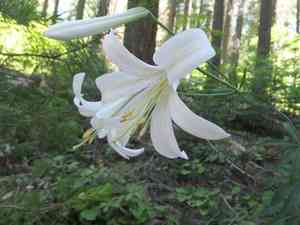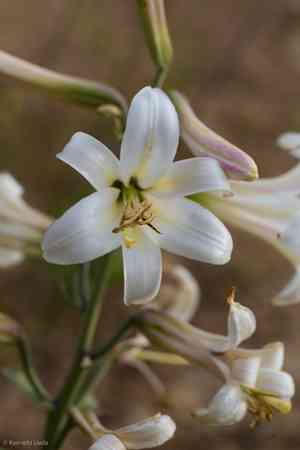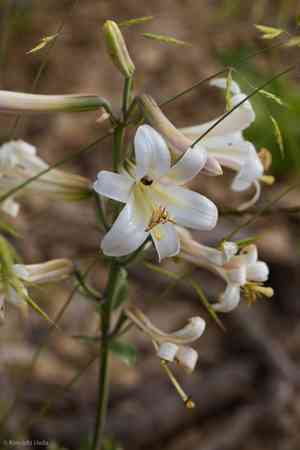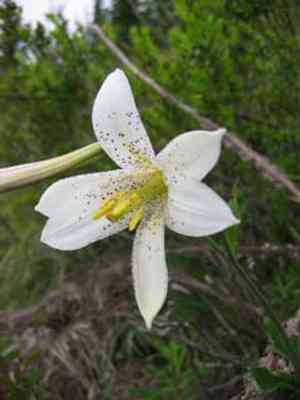
Washington lily(Lilium washingtonianum)

Washington lily (Lilium washingtonianum)

Also known as: Typical washington lily

The Washington lily (*Lilium washingtonianum*) is renowned for its elegant, trumpet-shaped flowers that range from white to shades of pink or lavender, often adorned with speckles inside. The plant can grow up to 6 feet tall, with slender stems and lance-shaped leaves arranged in whorls. These fragrant blooms typically appear in early to mid-summer and are highly attractive to native pollinators such as bees, butterflies, and hummingbirds. By providing a nectar source for these pollinators, the Washington lily plays a crucial role in maintaining the ecological balance of its mountainous habitats, which include the Sierra Nevada and Cascade ranges. Its presence also enhances the biodiversity of open woodlands and forest clearings, indicating a healthy ecosystem with minimal human impact.

Attributes of Washington lily

Lifespan
Perennial
Plant Type
Herb
Plant Height
61 cm to 2.5 m
Spread
0.5-1 foot
Leaf Color
Green
Flower Size
4-5 inches
Flower Color
White to light pink with purplish spots

ForwardPlant - Identify plants with a snap

Identify and diagnose plants, get toxicity alerts, and explore safety guides for all types of fungi.

Try for Free

Images of Washington lily

Washington lily(Lilium washingtonianum)

Quickly Identify Washington lily

1
Lilium washingtonianum can be identified by its tall, slender stem that can reach over 6 feet tall, large fragrant flowers with a color range from white to light pink having purplish spots, and its long, lanceolate leaves that arrange in whorls along the stem.

Scientific Classification of Washington lily

Phylum
Vascular plants
Class
Monocotyledons
Order
Liliales
Family
Lily
Genus
Lilies
Species
Washington lily

Planting and Growing of Washington lily

Care Difficulty
Hard
Watering Schedule
Every 2 days
Sunlight Requirements
Full sun
Sunshine Duration
4-8 hours
Ideal Temperature
60-75℉
Soil Type
Potting Mix, Peat Mix
Soil pH
6.5-7.5
Fertilizer Type
Balanced
Pruning Season
Spring, Summer
Pruning Area
Branches, Leaves
Pruning Frequency
2 times a year
Repotting Season
Spring
Pot Type
Plastic, Ceramic

water icon How to Water Washington lily?

For Lilium washingtonianum, watering should be thorough, ensuring the entire root system is moistened without leaving it waterlogged. Aim for about 500 ml per session to keep the soil consistently damp but not soggy.
What are the symptoms of an underwatered Washington lily?
What should I do if my Washington lily is not getting enough water?
What are the symptoms of an overwatered Washington lily?
How to save an overwatered Washington lily?

sunlight icon What Are the Sunlight Requirements for Washington lily?

Sunlight Requirements: Full sun, Partial sun
Duration of light: 4 to 6 hours
Lilium washingtonianum thrives best in a light range of partial to full sun. This balance ensures the plant receives enough energy for robust blooms while minimizing the risk of sunburn, promoting overall vitality.
What is the best location for Lilium washingtonianum?
How can I optimize the lighting for indoor Lilium washingtonianum?
What are the benefits of ensuring proper lighting for Lilium washingtonianum?

temperature icon What Is the Ideal Temperature Range for Washington lily?

Ideal Temperature: 60 ~ 75℉
For optimal growth, Lilium washingtonianum thrives best in a temperature range of 60 to 75°F. This range allows for adequate photosynthesis and nutrient absorption, ensuring healthy foliage and blooms. Maintaining this range can help simulate the plant’s native environment, promoting vigorous growth and flowering cycles.

soil icon What Soil is Best for Washington lily?

Soil type: Loam, Sandy loam
Soil PH: 6.5 ~ 7.5
Lilium washingtonianum thrives in well-draining soil, which prevents water from pooling around the roots, reducing the risk of root rot. This requirement is crucial because it ensures the plant can access air pockets in the soil, promoting healthy root growth and nutrient uptake. Rich, organic soil is essential for Lilium washingtonianum. The abundance of nutrients supports robust growth and vibrant blooms. This characteristic provides the plant with the necessary minerals and elements required to sustain its lifecycle and flourish. Soil that retains some moisture while not being waterlogged is ideal for Lilium washingtonianum. This balance keeps the plant hydrated without drowning it, which is beneficial for maintaining vigor and preventing dehydration stress.

fertilize icon How to Fertilize Washington lily?

Fertilizer type: Balanced
When fertilizing Lilium washingtonianum, ensure that the liquid fertilizer concentration is at half the recommended strength for general flowering plants. This adjustment prevents root burn, allowing the plant to absorb nutrients gradually and effectively.

prune icon How to Prune Washington lily?

Pruning Time: Summer
Once the Lilium washingtonianum finishes blooming, remove the spent flowers by cutting the flower stalks down to where they meet the leaves. This prevents seed production and diverts energy back to the bulb for next year’s growth. Allow the leaves and stems to die back naturally after flowering. Once they have turned yellow and are dry, cut them back to ground level. This process ensures that the bulb stores enough nutrients for the next season. More About Pruning Techniques

propagate icon How to Propagate Washington lily plant?

Propagate Time: Spring, Early spring, Late spring
1
Begin by selecting healthy seeds from a reputable supplier or from your existing Lilium washingtonianum plants. Ensure seeds are free from damage and disease to increase germination success. Soak them in water for 24 hours to soften the seed coat, enhancing germination.
2
For seed propagation, prepare a medium made of peat and perlite. This mix provides excellent drainage and air circulation, which are crucial for seed germination. For cuttings, use a rooting hormone to enhance root development, and plant in a well-draining medium.
3
Once seedlings or rooted cuttings are strong enough to handle, transplant them to individual pots or directly into the garden. Ensure they are planted at the same depth they were growing in their earlier medium, and water them thoroughly to settle the soil around the roots.
More About Propagating Techniques

repot icon How to Repot Washington lily plant?

Repotting frequency: Every 2-3 years
1
Pot your Lilium washingtonianum when you notice it becoming root-bound in its current container or when drainage issues become apparent. Early spring is ideal, as the plant is just beginning its active growth phase and is better equipped to handle the stress of repotting. You might also consider repotting in autumn, giving it a fresh start before going dormant.
2
Choose a pot that is one size larger than the current one to give the roots adequate room to grow. A pot with ample drainage holes is crucial to prevent waterlogging, which can lead to root rot. Opt for materials like clay or terracotta to help regulate moisture levels, as they allow excess moisture to evaporate more easily.
3
Select a well-draining, sandy soil mix for repotting. This type of soil provides the Lilium washingtonianum with excellent drainage, essential for preventing root rot, and mimics its natural habitat. Incorporating organic matter like compost can enhance soil fertility and retain enough moisture to support the plant's growth.

ForwardPlant - Identify plants with a snap

Find the best spots for them to optimize their health, simply using your phone.

Try for Free